We’re increasingly using AI to rank web pages, then using AI to tell us what to write so that those pages will rank well.
People talk about “AI slop” as if slop were something new, as if a golden age of thoughtful writing has just been drowned by a wave of machine-generated content. But slop has always existed. The difference now is that it’s better written. For years, the internet was already full of disposable articles: keyword-stuffed, padded to meet word counts, assembled from clichés, and written to satisfy algorithms rather than readers. AI hasn’t changed that incentive structure. It has simply automated it.
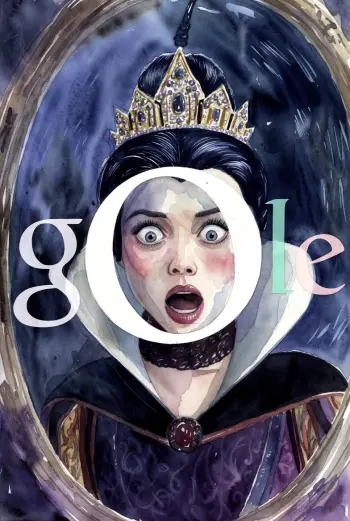
AI doesn’t create slop. It amplifies it. Like a magnifying mirror, it enlarges whatever intention is placed in front of it. If the goal is to hit SEO targets, chase engagement, and manufacture clicks, AI will do that with remarkable efficiency. It will happily produce endless streams of fluent, well-structured emptiness.
But the mirror works both ways. If someone actually has something to say—an insight, a perspective, a line of reasoning—AI can act as a scaffold. It can help with clarity, structure, and expression, especially for people who think clearly but write awkwardly. In that role, AI isn’t an author so much as an editor that never gets tired. This is where much of the debate goes wrong. The problem isn’t AI. It’s the system into which AI has been inserted.
The Closed Loop Problem
We’re increasingly using AI to rank web pages, then using AI to tell us what to write so that those pages will rank well. Content is generated to satisfy algorithms that are trained on content generated for algorithms. The loop quietly closes, and human judgment fades into the background. In that environment, originality becomes risky. Personal voice becomes inefficient. Anything that doesn’t map cleanly onto known signals is discouraged, not by censorship, but by invisibility. The system doesn’t need to forbid ideas; it simply withholds reward from them.
This is often framed as a failure of AI, but that misses the point. Tools don’t choose goals. They only execute them. Criticizing AI for this is like criticizing paper for bad books or pens for bad handwriting. The deeper shift is cultural. Instead of asking “Is this interesting?” or “Is this true?” or “Does this say what I mean?”, we ask “Will this rank?” or “Will this perform?” Over time, we stop trusting our own taste at all, outsourcing judgment to metrics and models.
Ironically, this is where AI’s real danger and real promise diverge. Used inside this closed loop, it accelerates homogenization. Used outside it—by someone with genuine intent—it can help ideas travel farther and land more clearly.
The risk, then, isn’t that AI will replace human writers. It’s that humans will stop writing as humans, surrendering not just grammar and structure but taste, curiosity, and judgment themselves. When that happens, content doesn’t just become slop; it becomes noise produced by machines for machines, with people reduced to caretakers of the process.
Perhaps “AI slop” isn’t a new problem at all. Perhaps it’s just slop with its excuses removed.






