Another weekend walk resulted in three species of mushrooms. One of them is highly poisonous, the other is edible even though it does not appear to be it, and the third is a species with medicinal properties.
Kolejny weekendowy spacer zaowocował 3-ma gatunkami grzybów. Jeden z nich jest silnie trujący, drugi choć na to nie wygląda jest jadalny, a trzeci jest gatunkiem o właściwościach leczniczych.
The forest can feed us, heal us, or poison us.
Las może nas wyżywić, wyleczyć lub otruć.
Cazuelilla - Sarcosphaera coronaria beautiful but deadly poisonous
Cazuelilla - Sarcosphaera coronaria piękny ale śmiertelnie trujący

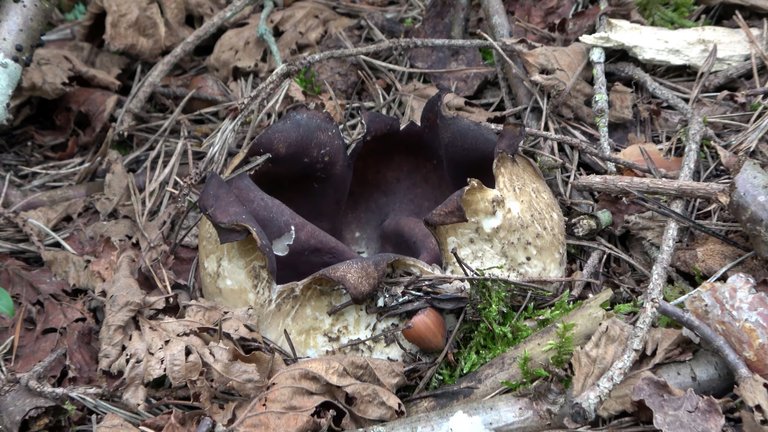
This unusual mushroom has two stages in its life. First, it is an underground fungus, most often taking a spherical form, and only later it rises to the surface, matures, and gradually breaks into triangular petals, thus giving the spores a chance to extend the species.
Ten niezwykły grzyb ma dwa etapy w swoim życiu. Najpierw jest grzybem podziemnym, przybierając najczęściej formę kulistą, a dopiero później wychyla się na powierzchnię, dojrzewa, i stopniowo pęka tworząc trójkątne płatki i dając tym samym szansę zarodnikom na przedłużenie gatunku.


It can reach up to 20 cm in diameter. Initially, the interior of the mushroom is whitish, with time it is purple and smooth. The outer shell is mostly gray-white. The flesh is white and brittle. The mushroom in its raw state is highly, even deadly, poisonous.
Może osiągnąć nawet 20 cm średnicy. Wnętrze grzyba początkowo jest białawe, z czasem fioletowe, gładkie. Zewnętrzna skorupa jest najczęściej szarobiała. Miąższ jest biały i kruchy. Grzyb w stanie surowym jest silnie, a nawet śmiertelnie trujący.


It is a rare species, it can be found in forests mixed with a calcareous substrate, for this the region of the Kraków-Częstochowa Jurassic is an ideal environment for it. The first fruiting bodies appear already in early spring, and in June you can find quite a lot of this species.
Jest rzadkim gatunkiem, można go spotkać w lasach mieszanych z wapiennym podłożem, dla tego region jury Krakowsko -Częstochowskiej jest dla niego idealnym środowiskiem. Pierwsze owocniki pojawiają się już wczesną wiosną, a w czerwcu można spotkać dość dużą ilość tego gatunku.

Rooting Shank looks like a toadstool but is edible.
Pieniążkówka gładkotrzonowa wygląda jak muchomor, ale jest jadalna.


Of course, I do not encourage people with no experience to collect this species of mushrooms, similar to poisonous toadstools. The rule is simple, if you have any doubts, leave it in the forest.
Oczywiście nie zachęcam do zbierania tego gatunku grzybów, podobnych do trujących muchomorów ludziom bez doświadczenia. Zasada jest tu prosta, jeśli masz choć cień wątpliwości, zostaw osobnika w lesie.


The cap of this mushroom can reach a diameter of 12 cm. It is gray-yellow, light brown in color. The surface of the hat is smooth, sometimes radially wrinkled. It becomes sticky and rough when wet.
Kapelusz tego grzybka może osiągnąć średnicę 12 cm. Ma kolor szarożółty, jasnobrązowy. Powierzchnia kapelusza jest gładka, czasami pomarszczona promieniście. Gdy jest mokra, staje się kleista i szorstka.

The young fruiting body has a bell-shaped, conical shape with a small hump. The gills are white in color, rare. The leg is cylindrical, slender, don20 cm high, hollow in the center. The flesh is white, odorless and mildly flavored.
Młody owocnik ma dzwonkowaty, stożkowaty kształt z małym garbkiem. Blaszki są koloru białego, rzadkie. Nóżka jest cylindryczna smukła, don20 cm wysokości, w środku pusta. Miąższ koloru białego, bez zapachu o łagodnym smaku.

The fungus appears already in June, and its favorite place is rotting trunks, old wood buried in moist soil, mainly in deciduous and beech forests.
Grzyb pojawia się już w czerwcu, a jego ulubionym stanowiskiem są próchniejące pnie, stare drewno zagrzebane w wilgotnej ziemi, głównie w lasach liściastych, bukowych.

Turkey tail, a forest remedy for Lyme disease, herpes and more
Wrośniak różnobarwny leśne lekarstwo na boreliozę, opryszczkę i nie tylko
This species of mushroom in Europe is not classified as an edible species, but in some countries, such as Mexico and the Far East, it is eaten.
Ten gatunek grzyba w Europie nie jest zaliczany do gatunków jadalnych, ale w niektórych krajach na przykład w Meksyku i na Dalekim Wschodzie bywa spożywany.

The fungus is an arboreal species that grows laterally to the substrate. The fruiting bodies are clustered into groups, strung together to form rosette-shaped, fan-shaped clusters with a diameter of up to 120 mm. The surface of the mushroom is slightly hairy, multicolored, reddish, bluish, yellowish, steel black and concentrically zoned. The brim of the hat is sharp and wavy.
Grzyb jest gatunkiem nadrzewnym, i przyrasta do podłoża bocznie. Owocniki skupione są w grupy, pozrastane tworząc rozetkowate, wachlarzowate skupienia o średnicy do 120 mm. Powierzchnia grzyba jest lekko owłosiona, wielobarwna, czerwonawo, niebieskawo, żółtawo, stalowo czarna i koncentrycznie strefowana. Brzeg kapelusza jest ostry, falisty.

The flesh is white in color and thin. It has no perceptible taste or smell. The fungus can be found practically on all continents. It does not disdain any place, it grows in forests of all types in parks, gardens and orchards. But its secret is health properties. Crimsonoma increases the number of white blood cells (leukocytes), thereby increasing resistance to pathogens and toxins. It supports the functioning of the small intestine, which is of no small importance in the fight against Lyme disease, it stimulates the immune system. It is used to treat herpes virus, hepatitis, lung diseases and mycosis. In Japan, it has been considered a full-fledged drug for the treatment of breast, esophagus, stomach and colon cancer for over 30 years.
Miąższ ma biały kolor i jest cienki. Nie posiada wyczuwalnego smaku ani zapachu. Grzyba można spotkać praktycznie na wszystkich kontynentach. Nie gardzi żadną miejscówką, rośnie w lasach wszystkich typów w parkach, ogrodach i sadach. Ale jego tajemnica, to właściwości zdrowotne. Wrośniak zwiększa liczbę krwinek białych (leukocytów), zwiększając tym samym odporność na patogeny i toksyny. Wspomaga funkcjonowanie jelita cienkiego, co ma niemałe znaczenie w walce z boreliozą, stymuluje układ odpornościowy. Leczy się nim wirusa opryszczki, zapalenie wątroby, choroby płuc, grzybicę. W Japonii od ponad 30 lat jest uważany za pełnoprawny lek do leczenia raka piersi, przełyku, żołądka, czy raka jelita grubego.
And a few other species found in the June forest
I jeszcze kilka innych gatunków spotkanych w czerwcowym już lesie


Enjoy 😉