
Jaskółka dymówka jest tam codziennie, czyli dom sołtysa
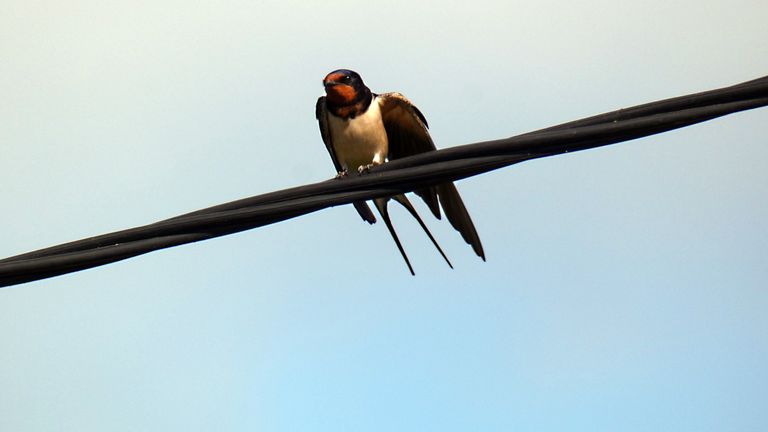
When I wouldn't show up at the Mayor's shop, she's there. He sits on the wires and watches the people sitting on the shop bench. She probably has a nest somewhere nearby, and has become attached to this place.
Kiedy bym się nie pojawił w sklepie u Sołtysa, ona tam jest. Siada sobie na przewodach i obserwuje ludzi siedzących na przysklepowej ławce. Prawdopodobie ma gdzieś blisko gniazdo, i przywiązała się do tego miejsca.

The mayor has a large population of homing pigeons, because he is a fanatic of them, but they do not get in each other's way and coexist harmoniously with the swallows.
Sołtys posiada sporą populację gołębi pocztowych, bo jest ich fanatykiem, ale nie wchodzą one sobie w drogę i zgodnie współżyją z jaskółkami.

The bird that swings on the wires every day is a barn swallow. How to distinguish it, since there are quite a lot of swallow species?
Ptaszek, który codziennie huśta się na przewodach to jaskółka dymówka. W jaki sposób ją odróżnić, skoro gatunków jaskółkowatych jest dość wiele?

This small and delicate bird has beautiful dark blue and black, shiny plumage. It has wings, head and back in this color.
Ten mały i delikatny ptaszek ma piękne granatowo-czarne, lśniące upierzenie. W takim kolorze ma skrzydła, głowę oraz grzbiet.

However, a characteristic feature of the barn swallow is a brick-brown spot on the forehead and the same color of the throat. The area around the tail is creamy white.
Charakterystyczną jednak cechą jaskółki dymówki jest ceglastobrązowa plamka na czole oraz w takim samym kolorze gardło. Okolice ogona są białokremowe.

The swallow's tail is also quite distinctive. It is elongated and has forked rectrices at its end.
Ogon jaskółki również jest dość charakterystyczny. Jest wydłużony, a na jego końcu znajdują się rozwidlone sterówki.

Swallows are migratory birds, in the place where I observe them, they appear in spring, usually in April, and stay until the end of August, sometimes September. Later they move to the wintering grounds in North Africa. They can cover even more than 10,000 kilometers one way.
Jaskółki są ptakami wędrownymi, w miejscu gdzie je obsereuję pojawiają sie wiosną, najczęściej w kwietniu i pozostają do końca sierpnia, czasami września. Później przenoszą się na zimowisko do Afryki Północnej. Potrafią pokonać nawet ponad 10 tysięcy kilometrów w jedną stronę.

Barn swallows like the company of people, which is why they can be found in villages, suburbs, where there are a lot of pastures and meadows abounding in food. It is also often possible to meet swallows circling over ponds or manure thrown on the fields. There is even more food there.
Jaskółki dymówki lubią towarzystwo ludzi, dlatego można je spotkać na wsiach, przedmieśviach, gdzie sporo jest pastwisk, łąk obfitujących w pokarm. Często też kożna spotkać jaskółki krążqce nad stawami lub nad obornikiem wyrzucanym na pola. Tam bowiem pokarmu jest jeszcze więcej.


Barn swallows like the company of people, which is why they can be found in villages, suburbs, where there are a lot of pastures and meadows abounding in food. It is also often possible to meet swallows circling over ponds or manure thrown on the fields. There is even more food there.
Sołtys posiada obok swojego domu trzy stawy hodowlane, dlatego jaskółki mają zapewnioną odpowiednią ilość pożywienia.


The barn swallow returns from Africa to its old places and, if the nest is in good condition, makes some repairs and lays eggs in it. The nests are made of mud and grass. These nests are incredibly durable and can last up to several years.
Jaskółka dymówka powraca z Afryki na swoje stare miejsca i jeśli gniazdo jest w dobrym stanie, dokonuje kilku napraw i w nim składa jaja. Gniazda wykonane są z błota i trawy. Gniazda te są niesamowicie trwałe i mogą przetrwać nawet kilkanaście lat.

Enjoy 😉

Photo: Panasonic Lumix
© copyright marianomariano






