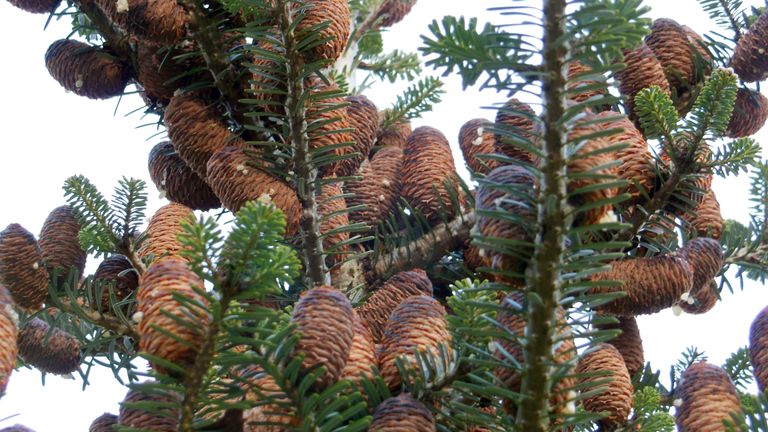

When walking along the park alleys in the summer, there is so much visual information that you often miss objects worthy of attention. Such an object is the Korean fir, which in the summer has cones of a characteristic blue-violet color.
Spacerując w okresie letnim parkowymi alejkami jest tak duży natłok informacji wzrokowej, że często omija się obiekty warte uwagi. Taki też obiektem jest Jodła koreańska, która w lecie posiada szyszki o charakterystycznym niebiesko-fioletowym kolorze.

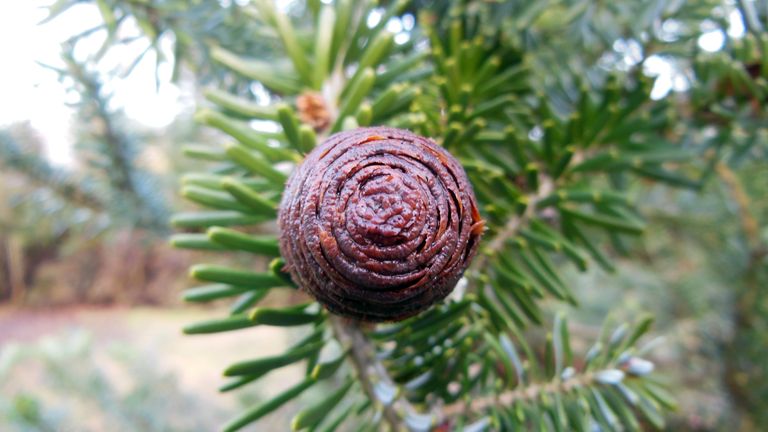
This is one of the curiosities about this tree. Another is the fact that the needles, although they look dangerous, are not prickly, soft to the touch. The tree is evergreen and, unlike pines, European spruces do not shed their needles during the winter.
To jedna z ciekawostek dotyczących tego drzewa. Inną jest natomiast fakt, że igły choć wyglądają groźnie nie są kłujące, miękkie w dotyku. Drzewo to jest wiecznie zielone i w przeciwieństwie do sosen, świerków europejskich nie pozbywa się igieł w okresie zimowym.


Another interesting fact is the way the cones grow. Most conifers have green or near-green cones and they grow downward.
Kolejną ciekawostka jest sposób wyrastania szyszek. Większość drzew iglastych posiada szyszki w kolorze zielonym, lub zbliżonym do zielonego, i rosną one w dół.


Korean fir, on the other hand, has cones in blue, purple and they grow upwards.
Jodła koreańska natomiast posiada szyszki w kolorze niebieskim, fioletowym i wyrastają one w górę.


Another interesting fact is how Korean fir gets rid of seeds. Cones rarely fall to the ground, and the way in which they try to reproduce is very interesting. The pine cone sheds its seeds in layers, but remains on the tree all the time.
Kolejną ciekawostką jest sposób w jaki jodła koreańska pozbywa się nasion. Szyszki rzadko spadają na ziemie, a sposób w jaki następuje próba rozmnożenia jest wielce interesujący. Szyszka bowiem pozbywa się nasion warstwami, będąc jednak cały czas na drzewie.


At the end of the dissemination process, only the stump with the seed cone remains on the branch.
Pod koniec procesu rozsiewania, na gałęzi pozostaje jedynie kikut na którym znajdowała się szyszka z nasionami.


This tree is highly valued in home gardens. After 10 years, it can reach a height of about 5 m. It reaches a maximum height of 15 meters and feels great in a temperate European climate.
Drzewko to jest bardzo cenione w przydomowych ogrodach. Po 10 latach może osiągnąć wysokość około 5 m. Maksymalnie dorasta do 15 metrów wysokości i świetnie się czuje w umiarkowanym klimacie europejskim.


© copyright marianomariano (mtravel)






