

Common yew (Taxus baccata), although it is a highly poisonous tree, has numerous healing properties. Taxin is one of the poisonous substances that has been found to be high in the yews. In addition, ephedrine, flavonols, phenolic acids, taxoids are isolated in the yew. The substances that are used to produce the anti-cancer drug docetaxel are isolated from yew. It leads to the inhibition of the growth dynamics of neoplastic cells, and is largely used during chemotherapy. Yew preparations are used in the prevention of ovarian cancer, breast cancer, lung cancer, prostate cancer, stomach cancer, and head and neck cancers.


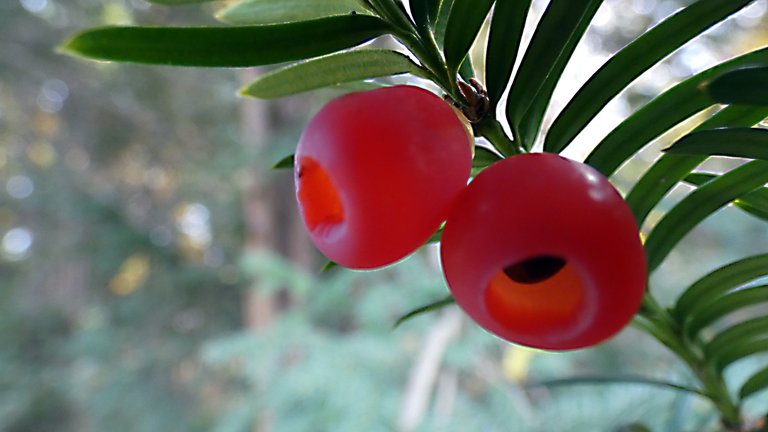 Common yew produces unusual fruit-seeds surrounded by a cup-shaped, fleshy, red casing. It is an exception among conifers, the vast majority of which give birth to cones. Yew fruits are very sweet, but have no distinct flavor. The consistency is very sticky and gel-like, and resembles jelly. This is the only part of the yew tree that is not poisonous. I've tried it, and it's not great, but it makes an excellent diet for animals, mostly birds.

Please note that every part of the yew tree, including the black stone in the yew fruit, is very poisonous, it should not be chewed or swallowed. It mainly causes heart disorders, gastrointestinal disturbances and paralysis of the respiratory center, which may even lead to death.


Yew needles are slightly flattened, can be about 3-4 cm long and, like most conifers, are resistant to low temperatures. They are also used in ailments related to low blood pressure, making them infusions. They contain L-ephedrine, which constricts the blood vessels, causes the bronchial muscles to relax and raises blood pressure.


 In addition to its medicinal properties, Common yew (Taxus baccata) is a popular coniferous tree species used in industry, mainly in wood and carpentry, highly valued for its high hardness and durability. The wood is very resilient and hard-to-break and does not contain resin. Yew also decorates our parks, and in gardens it often acts as a hedge, preferably growing in shady places.


===========
Photo: Panasonic Lumix FZ82, 25 October 2020, Silesia, Poland
© Copyright marianomariano
own study
all photos and video were taken by me and are my property






