Honey Buzzard
Trzmielojad
It would seem that a bird with a body length of up to 60 cm, and the silhouette, beak and claws resembling fierce flying predators capable of snatching sheep, has in its diet at least rodents of different sizes or small mammals. And here is a natural surprise. This species of scary-looking bird loves the larvae of bumblebees, wasps, wild bees and other insects.
Wydawałoby się, że ptak, którego długość ciała dochodzi do 60 cm, a sylwetka, dziób i szpony przypominają groźne, latające drapieżniki potrafiące porwać owcę, posiada w swej diecie co najmniej różnej wielkości gryzonie, czy małe ssaki. A tu przyrodnicza niespodzianka. Ten gatunek groźnie wyglądającego ptaka uwielbia larwy trzmieli, os, dzikich pszczół, czy innych owadów.


The honey buzzard is the size of a buzzard, but is more slender in silhouette. It has a fairly long tail and a relatively small head. It is quite interestingly colored, especially characteristic is the color of the underside of the wings with numerous stripes, the widest of which is at the end of the ailerons. The underside of the body is white, but can go almost black.
Trzmielojad jest wielkości myszołowa, ale jego sylwetka jest bardziej smukła. Ma dość długi ogon i stosunkowo małą głowę. Jest dość ciekawie ubarwiony, szczególnie charakterystyczne jest ubarwienie spodu skrzydeł z licznymi pręgami, z których najszersza jest na końcu lotek. Spód ciała jest biały, ale potrafi przejść do prawie czarnego koloru.

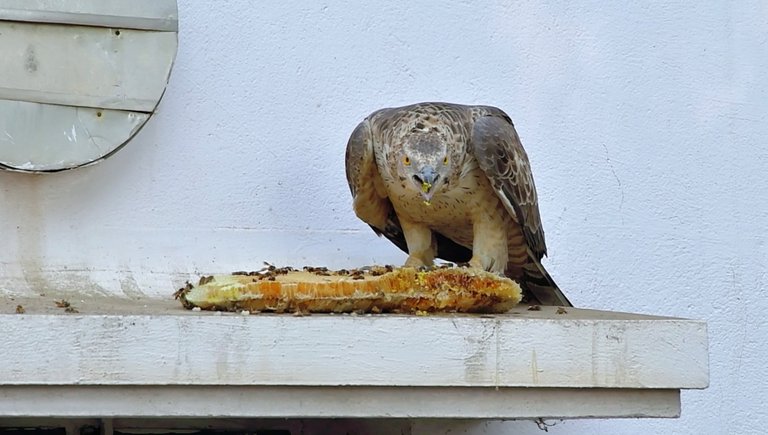
The iris of the eye is yellow and the beak is black. Dense, stiff feathers protect against insect stings. The legs are also yellow, the toes are thick and short, ending in short claws. The spike is covered with thick horny shields to protect against stings.
Tęczówka oka ma kolor żółty natomiast dziób jest czarny. Gęste, sztywne pióra tworzą ochronę przed żądłami owadów. Nogi są również żółte, palce grube i krótkie, zakończone krótkimi szponami. Skok jest pokryty grubymi tarczkami rogowymi, które chronią przed użądleniami.


This bird occurs in almost all of Europe, Asia and Siberia, it likes places with deciduous and mixed forests, in the vicinity of large clearings and open areas. It is a rare breeding bird, and in Poland it is under strict protection. It is the only clawed representative in Poland that feeds mainly on insects and larvae.
Ptak ten występuje na terenie prawie całej Europy, Azji i Syberii, lubi miejsca z lasami liściastymi i mieszanymi, w sąsiedztwie dużych polan, otwartych terenów. Jest nielicznym ptakiem lęgowym, a w Polsce jest pod ścisłą ochroną. To jedyny szponiasty przedstawiciel na obszarze Polski, który żywi się głównie owadami i larwami.


The nest of the honey buzzard
Gniazdo trzmielojada
It builds its nest in the branches of deciduous trees. It is small in size and consists mainly of fresh and dead twigs, and sparse bedding. There, it usually lays 2 white eggs, which are densely stained, rusty in color. They are incubated by both parents for about 35 days, and 10 days after hatching, the young become volatile. The oldest recorded (ringed) honey buzzard lived to the age of 29.
Gniazdo buduje w konarach drzew liściastych. Jest niewielkich rozmiarów i składa się głównie z gałązek, świeżych i obumarłych, oraz skąpej wyściółki. Składa tam zazwyczaj 2 białe jaja, które są gęsto plamkowane, w kolorze rdzawym. Wysiadywane są przez obojga rodziców przez około 35 dni, a 10 dni po wykluciu młode uzyskują lotność. Najstarszy odnotowany (zaobrączkowany) trzmielojad dożył wieku 29 lat.


Food of a Honey Buzzard
Pożywienie Trzmielojada
The food of the Honey Buzzard is a surprise to many bird lovers. It feeds mainly on wasps, hornets, wild bees, bumblebees, larvae and chrysalises. He can break a honeycomb of a bumblebee and make a nice feast. He will also not disdain frogs, lizards or small rodents.
Pokarm Trzmielojada to zaskoczenie dla wielu miłośników ptaków. Żywi się on bowiem głównie osami, szerszeniami, dzikimi pszczołami, trzmielami, larwami, poczwarkami. Potrafi zerwać plaster trzmiela i urządzić sobie niezłą ucztę. Nie pogardzi również żabami, jaszczurkami czy małymi gryzoniami.

The bird observes the movements of wasps and bumblebees, thanks to which it can effectively locate their nests. Then it buries them, feeding for up to several days. He can also search for food by walking on the ground. It eats mainly larvae and pupae, and in adults it gets rid of the abdomen containing the sting.
Ptak obserwuje ruchy os, trzmieli, dzięki czemu potrafi skutecznie zlokalizować ich gniazda. Następnie rozgrzebuje je, żerując nawet przez kilka dni. Potrafi również poszukiwać pokarmu chodząc po ziemi. Wyjada przede wszystkim larwy i poczwarki, a u dorosłych osobników pozbywa się odwłoku zawierającego żądło.


Enjoy 😉