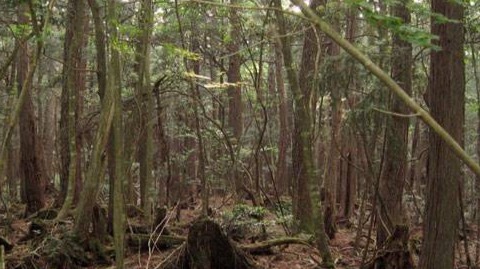
The forest is located at the foot of Fuji, the sacred mountain of the Japanese, in an impressive area of about 35 square kilometers. The last eruption of Fuji took place in 1708, and the forest owes its survival to the fact that the parts at the foot of the mountain were not flooded by lava. Due to the volcanic activity of the mountain, the soil of the surrounding areas consists of hard rock, the iron content of which strongly interferes with the compass, but there are reports that also mention the unusability of GPS, dissuading hikers from wandering in the forest. Despite the incredibly dense vegetation and difficult access, Aokigahara is full of caves that would be popular tourist destinations in other parts of the world.
here, however, in most cases it is not the beauty of nature that attracts visitors, but death.

The origin of the black myth regarding Aokigahara is quite obscure. It is certain that in Japanese folklore, the forest is one of the main locations for ubasute.
According to legend, during famines and epidemics, those elderly people who could no longer do anything for the community were left to die in the forest.
Of course, the story was supplemented by the fact that the wandering ghosts of old people, the Yurei, abandoned to their fate and condemned to death, haunt the trees to this day, finding no reassurance.
The ubaszute is not a historically proven legend, but it is enough to endow the forest with the mystique that corresponds to its reputation today.

It is certain that, after the Golden Gate Bridge, Aokigahara is the second most visited site by suicide candidates in the world.
Since the fifties of the last century, an average of 30 people have chosen this forest as the place of their death every year, in the 2000s it has been increasing, and the sad record occurred in 2003, when around a hundred people took their own lives here. The number of suicide attempts is naturally higher than this:
In 2010, out of 247 attempts, there were 54 deaths.
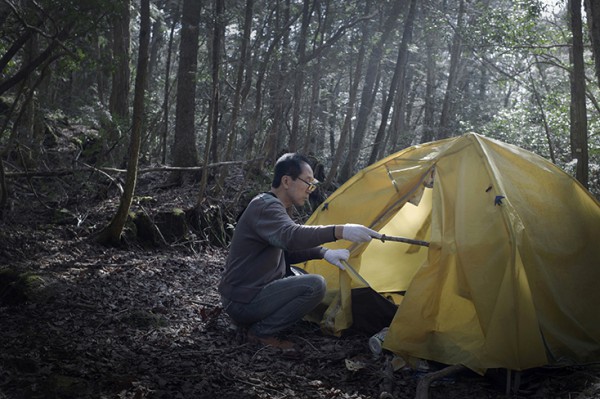
The two most common methods are self-hanging and drug overdose: while in the first case people mostly just walk into the forest and kill themselves relatively quickly, in the second case they usually come with a tent and even spend days without taking the lethal dose of pills.
In many cases, explanatory and farewell letters are found next to the corpses,
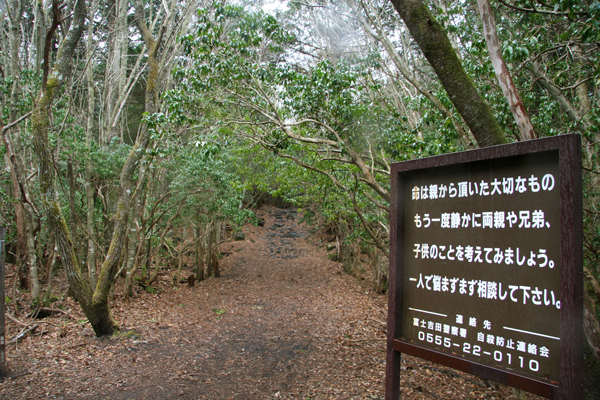
To try to reduce the number of cases, the authorities have placed signs everywhere with inscriptions that try to dissuade those who try to go to the forest from suicide.
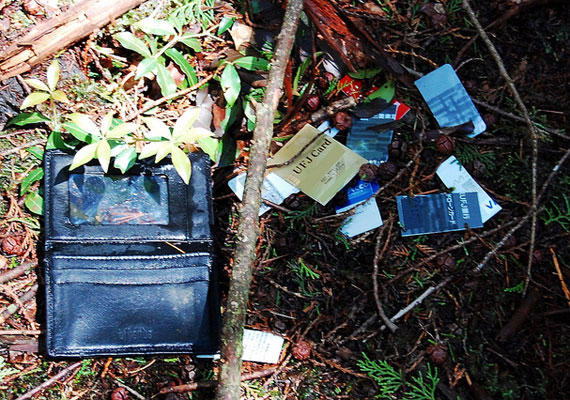
Of course, the current Japanese government and the residents of the area are not at all enthusiastic about the phenomenon, the negative publicity and the flood of disaster tourists. The latter give a particularly morbid color to the already not bright perception of the forest, as they not only look for the dead, but in many cases they hunt for the suicides' valuables and money left in their belongings, so the already tragic events are often aggravated by the robbery of corpses.
There are parts that they try to close, by stretching a chain across a path, and stretching colorful ropes between the trees, so that those who change their mind can find their way back through the dense thicket. They have organized a security service and installed cameras at various points, and even employ psychologists who roam the forest to try to dissuade lone wanderers from what they are up to. Even if they are encountered, in such a large area, this method usually has little success.
The other security measures did not live up to expectations.
The sad reality is that authorities are most successful when they go on a body search once a year to collect, transport and bury the remains.
It's a hell of a job, during the combing of Aokigahara, they find a lot of dead bodies hanging from branches or lying on the ground, some of which have been missing for months or even years.