
We are in a period where we hear news of major transformations every day. Incredible advances are being made in many different areas, from artificial intelligence and humanoid robots to robotic and autonomous driving technologies, space transportation, and the energy needs solutions needed to develop all these technologies. This rapid change holds great opportunities for each of us, individually. In light of ARK Invest's Big Ideas 2025 Report, which I follow with great pleasure every year, I wanted to take a look at these disruptive technologies that will shape the future. I will also briefly discuss the investment opportunities these technologies offer and share with you which areas might be prudent to focus on in the coming years.
Technology companies are rapidly disrupting traditional habits by creating entirely new markets almost daily. According to ARK Invest, disruptive technologies such as artificial intelligence, robotics, energy storage, blockchain, and biotechnology have the potential to fundamentally transform the global economy.
• Companies shifting to greater automation,
• Increasing energy efficiency,
• The rapid integration of artificial intelligence into business processes,
all of these could significantly accelerate economic growth.
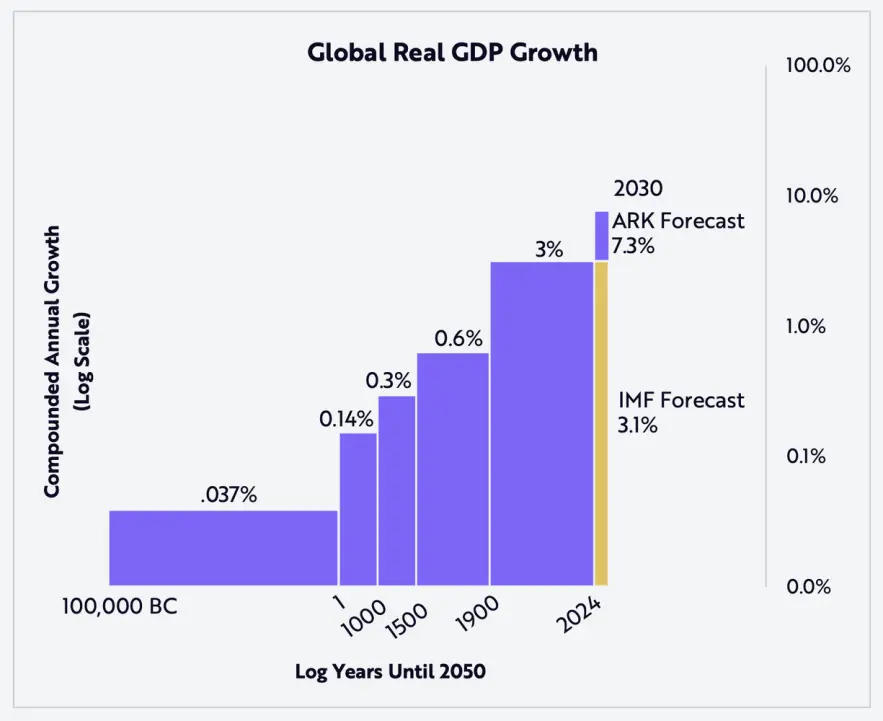
According to an ARK Invest report, disruptive technologies could boost global GDP growth to 7.3% by 2030.
Technologies such as artificial intelligence, autonomous driving, and humanoid robots, in particular, will boost productivity and usher in a new wave of growth over the next 5 to 10 years.
So, which technologies at the center of this transformation will we be talking about more frequently in 2025?
1. Artificial Intelligence-Powered Digital Assistants (AI Agents)
AI-powered digital assistants are intelligent software that can make and implement decisions without human intervention. What was it like before? What we call artificial intelligence was more of a technology that operated according to predetermined rules, "giving a command and getting a result." What is it like today? For example, models like ChatGPT have become capable of reasoning on their own, thanks to their natural language processing and learning capabilities. The next step is to achieve artificial general intelligence (AGI).
In fact, AI enables faster adoption and integration of hardware and software. Therefore, starting in 2025, we will see more AI-integrated devices being introduced to the market. This means we will be talking about more AI agents. AI-powered digital assistants are systems that can make decisions, perform tasks, and execute workflows without requiring human interaction.
Previously, AI consisted of simple systems that operated solely on commands.
Today, AI-powered software can operate independently with natural language processing, learning, and decision-making capabilities.
AI agents will transform customer searches and impact product access, for example. This will transform numerous areas, from customer relations to marketing.
According to the report, AI-powered systems could capture 54% of the global digital advertising market by 2030. In my observation, this transformation has accelerated, particularly with the support of giants like Google, Microsoft, and Amazon. Microsoft's OpenAI investment and the ChatGPT model have already made AI a household name. Google's "Gemini" project is similarly eagerly anticipated. This isn't just limited to tech giants; companies are making their business processes much more efficient with the incredible data processing power offered by AI.
2. Robotaxis: The Driverless Vehicle Revolution
Electric and autonomous vehicles are fundamentally changing the transportation industry, forcing traditional automakers to make radical innovations.
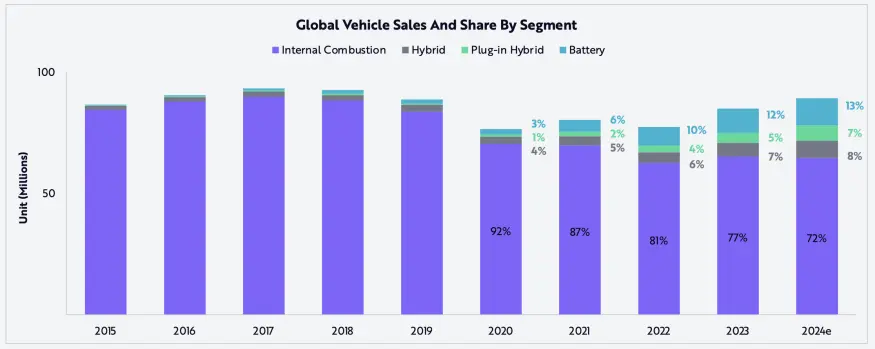
• Tesla aims to achieve fully autonomous driving with Full Autonomous Driving (FSD) by 2025. Recent videos have shown vehicles leaving the factory arriving at the logistics center autonomously.
• Waymo (under the Google/Alphabet umbrella) offers fully autonomous taxi services in some cities.
Waymo vehicles are currently in use in a limited number of regions. Furthermore, Tesla will be able to offer this service to a wider area, and users will be able to operate their FSD-enabled vehicles in their robotaxi fleets. While Tesla appears to be a step ahead in this regard, it also states that FSD developments in Europe are being blocked by regulations.
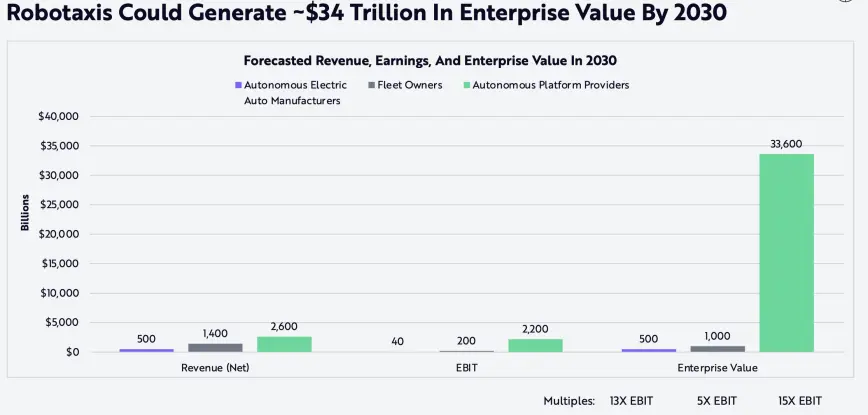
According to the report, the global autonomous taxi services market could reach $34 trillion by 2030. Autonomous vehicle technology will directly impact not only transportation but also insurance, energy, and smart city solutions. With the adoption of appropriate regulations, individual vehicle ownership could decrease, transportation costs could decrease, and traffic safety could increase.
Companies leading this transformation, including Tesla, Google, and General Motors, expect full regulatory adoption of driverless vehicles. If city governments and public policies accelerate this process, autonomous transportation systems market growth will accelerate even more rapidly.
3. The Autonomous Logistics and Robotics Revolution
Drones, autonomous delivery solutions, and AI-based inventory management signal a major transformation in the logistics sector.
• Amazon is increasing efficiency with in-warehouse robotic systems while partially reducing labor requirements.
• Tesla's electric semi-trailer trucks offer a cost advantage in long-distance transportation.
• FedEx, Amazon, and UPS are testing autonomous cargo deliveries with drones.
According to the report, autonomous logistics solutions could reduce global logistics costs by up to 30% by 2030. There are technical hurdles, regulatory challenges, and customer/manufacturer collaboration in this area; however, these technologies are critical, especially for e-commerce giants and large manufacturing companies (like the automotive industry). Making supply chains and production faster, more cost-effective, and more efficient will transform the entire industry.
Among the leading companies in drones are Amazon (AMZN), Kratos (KTOS), AeroVironment (AVAV), and Joby Aviation (JOBY). In humanoid robotics, Tesla's Optimus is also a company. I'm also closely following FigureAI, which, while not yet publicly traded, has been invested in by companies like OpenAI and Nvidia.
4. Energy Storage and Renewable Energy
Now, let's move on to one of my most important topics: energy. We've lived our lives dependent on fossil fuels for many years. Now, we're turning to renewable sources like solar, wind, and hydrogen, and developing energy storage technologies.
With Tesla's energy storage systems proving very popular in this area, many companies are also investing in renewable energy. My hope is that within a few years, not only electric vehicles but also entire cities will be powered by renewable energy.
The acceleration of artificial intelligence and related technological developments will encourage more sectors to work in this field. As the field of artificial intelligence develops, the demand for energy increases. This presents an opportunity, particularly in the field of renewable energy. The aim is to reduce dependence on fossil fuels and lower energy costs.
A few prominent examples:
Electric vehicle batteries are becoming increasingly efficient, making it easier to store energy.
Solar energy systems are becoming more affordable and widespread for industrial and residential use.
Hydrogen-based energy solutions offer a great alternative for reducing carbon emissions, especially in large industrial facilities and heavy vehicles.
Interest in nuclear energy is growing as companies seek affordable energy sources to sustain their AI initiatives and a clean, reliable power source to achieve ambitious net-zero carbon targets.
Here, I want to focus a little more on nuclear energy.
Nuclear Fission projects can provide superior economics compared to other renewable energy projects because they have a significant advantage in commissioning times at small scales.
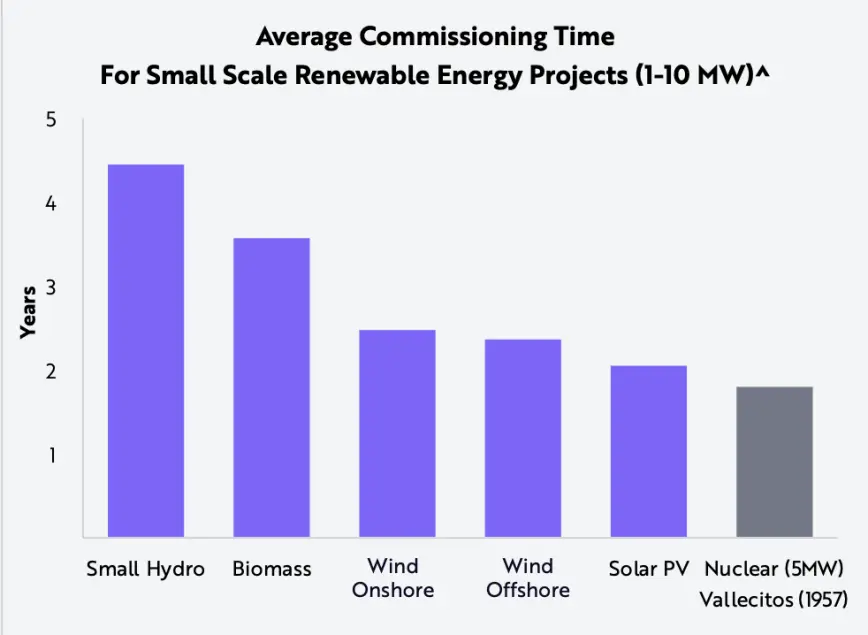
Nuclear fusion projects, however, must overcome significant obstacles to generate commercial value. Despite nearly 75 years of research, nuclear fusion has failed to produce significant net energy. Meanwhile, while fusion companies promise breakthroughs as early as 2027, considering developments in fission, it may take another 15 years for this business to become profitable. According to the report, the US needs to build large reactors, SMRs, and micro reactors to triple nuclear capacity by 2050. Shorter construction times, modular design, and scalability could enable smaller reactors to meet near-term demand. While most Small Modular Reactor (SMR) companies haven't been successful, I believe there's an opportunity in this area. Of course, SMRs are still in their early stages and are subject to numerous controls and risks.
Companies I'm following in this transformation:
In the nuclear energy field: NuScale (SMR), Constellation Energy (CEG);
In the energy storage systems field: Tesla and
NextEra Energy's uranium and solar energy investments.
5. Multiomics Technologies
Now, let's turn to the latest revolution in medicine and biotechnology: multiomics technologies. Multiomics, by examining all aspects of human biology (such as DNA, RNA, proteins, and metabolites), represents a groundbreaking approach in personalized medicine, agriculture, and even materials science.
Previously, disease diagnosis was largely limited to genetic analyses (such as DNA tests).
Today, thanks to multiomics data analysis, it's possible to diagnose many conditions, from cancer to chronic diseases, early.
What Exactly Is Multiomics?
Simply put, it involves the simultaneous analysis of different biological layers, such as genomics (DNA), transcriptomics (RNA), proteomics (proteins), and metabolomics (metabolites). This allows for a more holistic understanding of the source of a disease or the biological effects of a substance.
Impact on the Healthcare Sector
1. Early Diagnosis and Personalized Treatments:
- Cancer blood tests make it possible to detect many types of cancer early.
- Designing drugs based on genetic profiles increases treatment success.
2. Drug Development Processes:
- Artificial intelligence-powered laboratories can shorten new drug discovery processes by up to 50%.
- Personalized treatments are tailored to individual genetic makeups, rather than administering the same drug to everyone.
3. Applications in Agriculture and Materials Science:
- Methods for increasing plant productivity without genetically modifying plants are being developed.
- Biological materials can replace environmentally harmful materials such as plastics and metals.
According to the report, the share of personalized medicine in global healthcare spending could reach 20% by 2030. I believe multiomics technologies are critical because they will both improve our health and reduce the cost of drug development. Early disease detection, prevention, and personalized treatment are issues that are of great interest to us all.
Here are some examples of companies that stand out in this field:
• Illumina (ILMN): A leader in genetic sequencing and bioinformatics.
• Regeneron Pharmaceuticals (REGN): Working on personalized treatment methods.
• CRISPR Therapeutics (CRSP): Located at the heart of gene editing technologies.
Opportunities and Risks for the Future
All these developments mean increased productivity and economic growth for countries, improved quality of life and healthcare for individuals, and new opportunities and profits for investors. The artificial intelligence, autonomous transportation, logistics, and renewable energy revolutions, in particular, appear poised to offer trillions of dollars in investment opportunities within the next 10 years.
Of course, this rapid change creates a highly competitive environment, and regulatory frameworks must keep pace. However, there is real potential for those who adapt to change rather than resist it.
Additional Information:
The report also addresses other important topics such as Bitcoin, stablecoins, blockchain technologies, FinTech, and reusable rockets. For details, please see ARK Invest's Big Ideas 2025 Report.






