
The Web2 world revolves around centralized networks such as Twitter, Instagram, Facebook, LinkedIn, and WhatsApp, utilizes to a great extent centralized services such as Google Drive, Photos, iCloud, and AWS, and relies heavily on incompatible softwares and ecosystems such as iOS and Android. These applications feature “walled gardens” that often stall productivity and innovation. Internet Computer (IC), through its breakthrough technology and blockchain ecosystem, seeks to transform these bottlenecks into an open-sourced “world computer” solution.
It’s well-known that the crypto and Web3 space has been trying to replicate these services and applications on the blockchain, but progress has been slow, with most of the successful development being in the financial, cryptocurrency, gaming, and NFT spaces. However, Web3 and blockchain technologies have many more uses outside of finance, such as social media, communications, commerce, gaming, health, metaverse, data, internet, artificial intelligence, supply chain, and governance.
Unfortunately, development in these sectors has been laggard, the reason being the limitations around certain blockchain networks. For example, the Bitcoin blockchain is unable to do much outside of the currency space, and even has limitations as a payment solution, Ethereum, because of the network’s size, scalability issues, and gas fees, often render itself unusable for many decentralized applications, and Solana, which experienced multiple recent network outages, which caused it to lose half its value from December 2021 to Q1 2022, has shown there are still areas to improve in the smart contract platform segment. Hence, the Internet Computer (IC) value proposition.

What Is The Internet Computer (IC)?
The Internet Computer (IC) is a decentralized blockchain network running on dedicated hardware in independent data centers around the world – and is the world’s most powerful general-purpose blockchain and Web3 platform based on transaction speed and on-chain data storage. In simplest terms, the IC blockchain acts as a complete alternative technology stack, which is designed to replace the centralized IT stack that is mostly controlled by Big Tech.
The Internet Computer (IC) Solution
At the moment, if people want to build a website or some internet service they need to use a proprietary legacy stack, which includes cloud services through AWS, databases, analytics, web servers, and more. Going through these different layers is costly, inefficient, and most importantly, centrally controlled i.e. the systems and services are currently on private infrastructure. This is an ongoing problem, especially in a world of expensive internet services, cyberattacks, and privacy dangers.
The Internet Computer wants to disrupt this by providing a decentralized internet platform that people can build on at any time without having to use the Web2 internet’s traditional infrastructures.
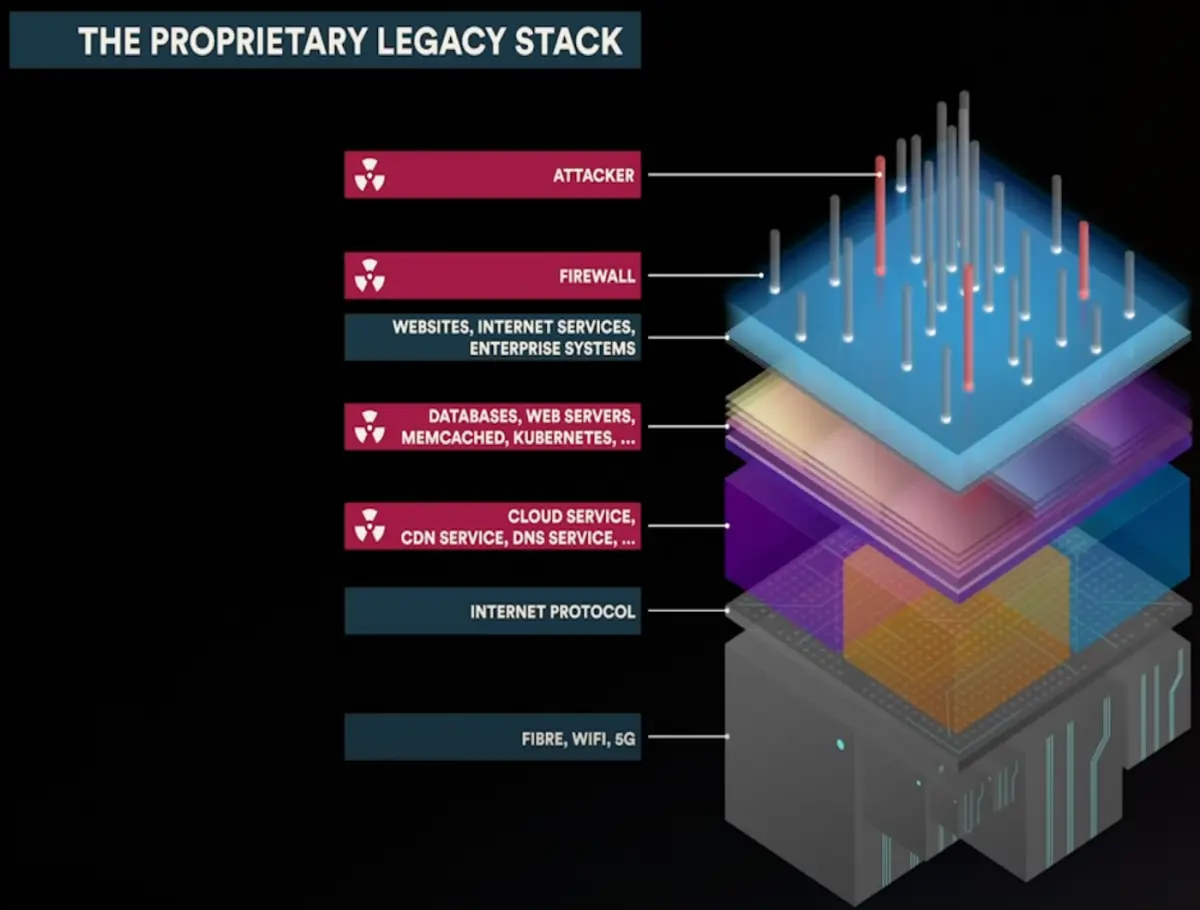
So what the IC blockchain does, on the contrary, is it enables the public internet to host smart contracts that run at web speed without any limitations on capacity so it can host a broad range of systems and services. This is done through the Internet Computer Protocol (ICP), which is the world’s first web-speed and web-serving public blockchain network.
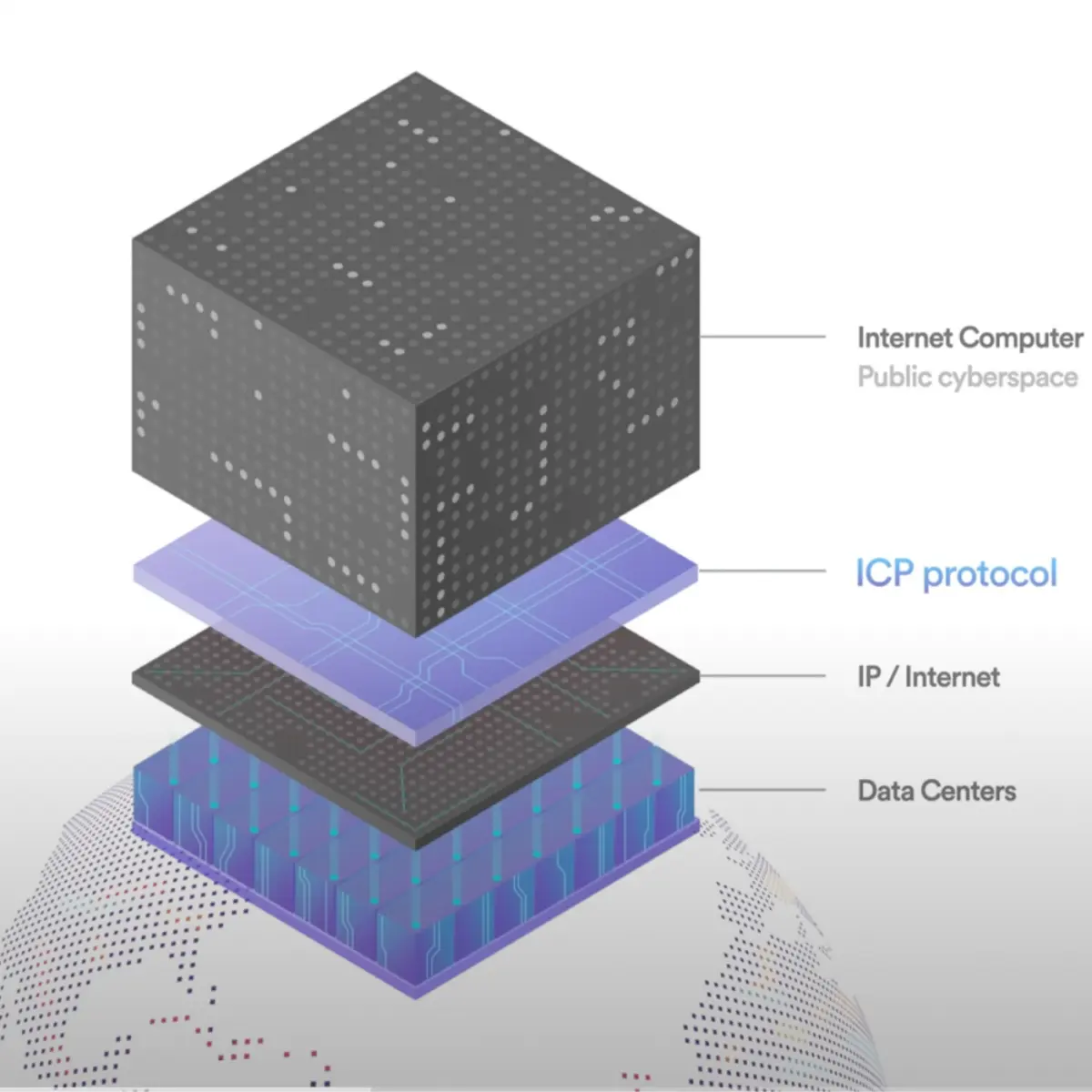
In essence, users can build directly on the internet itself, which is why the IC defines itself as “being the replacement to the legacy stack,” which is done by having the network run on independent data centers around the world. All in all, IC elevates blockchain to become a complete alternative to the traditional IT stack, thus eliminating Big Tech cloud services, server machines, database systems, Memcached, filesystems, firewalls, web servers, DNS services, anti-virus, CDNs, and VPNs. Removing these Web2 roadblocks is just one domino that needs to be knocked down to complete the full Web3 transition, and it’s what puts IC in a leading and favorable position.
The Future Internet: Smart Contracts & Subnets
The DFINITY Foundation (the research organization behind IC) believes smart contracts that run on public blockchains are a superior new form of software, and in the future, all internet systems and services can be built using smart contracts, especially by utilizing the Internet Computer’s underlying infrastructure (mainly, the IC’s network of data centers).
What’s great about IC is that unlike other blockchains, which execute certain actions off-chain, everything on IC is run fully on-chain, and all applications can be done on its subnets. This makes it so that users and developers can run any kind of software application completely on the blockchain, and it’s this feature that makes IC stand out, and it’s what gives it the ability to take the internet to the next level.
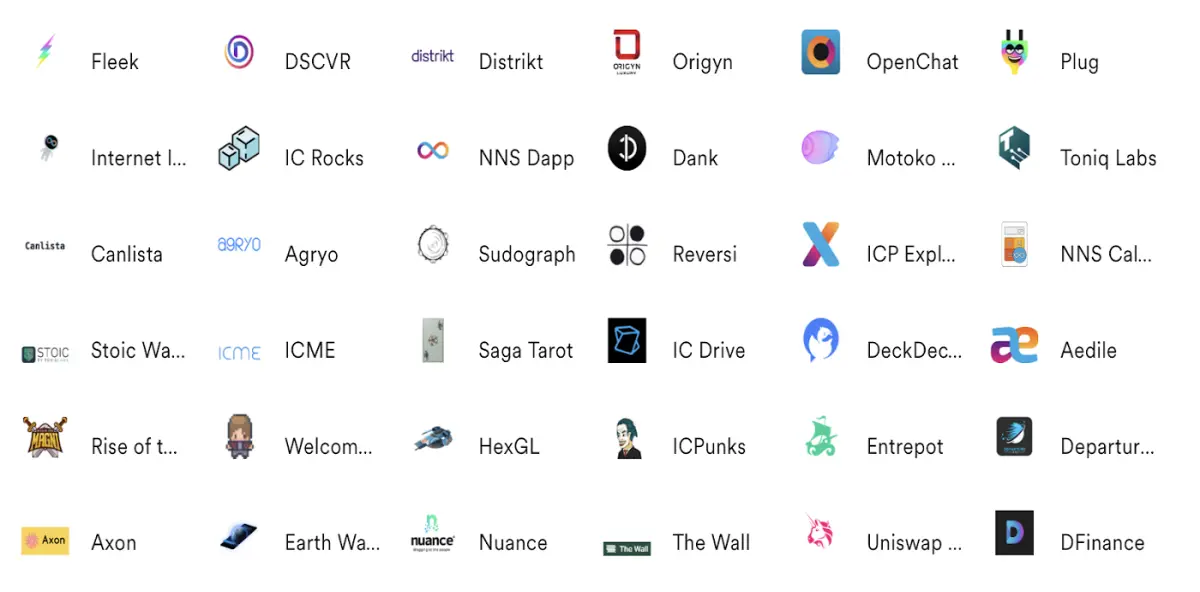
But it’s still early days for IC, and despite the market being a competitive one, there are still plenty of developers and yet-to-be-built applications that will join the IC ecosystem, which will strengthen its position.
Conclusion
The future of the internet is a hot keyword in the industry, and because of its popularity, there are many innovative creators working on revolutionizing the tech stack to make it more democratic, user-friendly, equitable, valuable, and decentralized, so that it can truly bring out the best features of Web3, such as being not only able to read-write, but to read-write-own. The Internet Computer provides a solid foundation and infrastructure for developers to do these three things.






