I've been spending a lot of time exploring digital art, on-chain culture, and the projects shaping the next chapter of Web3. What keeps pulling me back is how quickly this space evolves.
The technology changes, the narratives shift, and creators continue finding new ways to push boundaries in a landscape that refuses to stand still. When The Saudis announced their comeback I was pumped!
The project treats the collection as a living ecosystem where the community becomes part of the creative process itself. Community theories exist around the collection, remember the maxbidding?
Welcome to the Oil Rig Era! The next step was getting involved with The Saudis Oil Rigs, and this is where things get considerably more ridiculous. The Saudis collection was a real hit back in the days!
The spin-off project has 5,555 oil rigs, with each rig functioning as its own onchain wallet and participating in the project's oil-field mechanism once activated. NFTs making money for us!
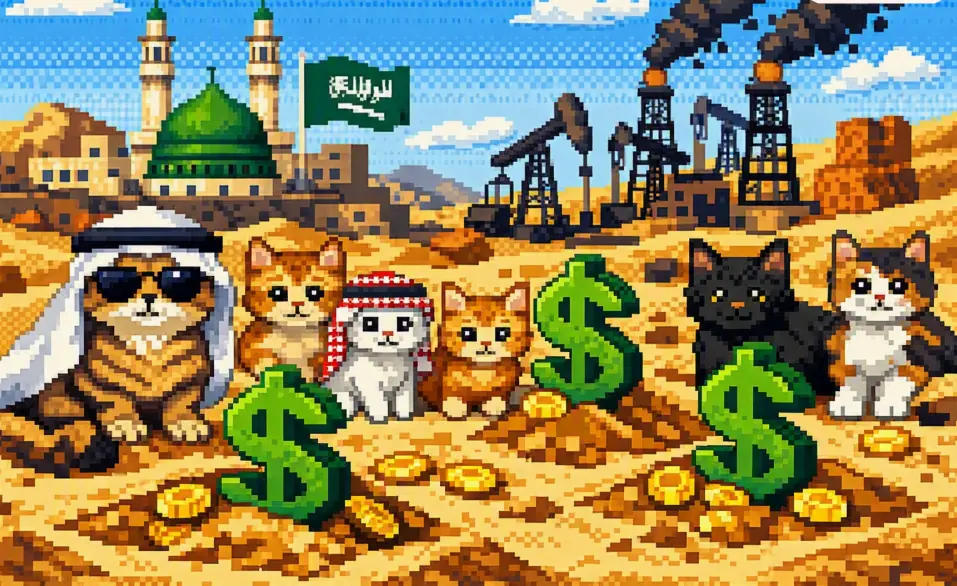
NFTs have spent years being treated as digital collectibles. You buy one, put it in your wallet and hope someone is willing to pay more for it later.
The Saudi Oil Rig model takes a very different approach. The NFT can become part of an onchain economy where the asset isn't simply sitting in your wallet.
It can be connected to an Oil Rig that participates in the project's Oil Fields and earns rewards in the form of $OIL and $USO.
The easiest way to understand the system is to think of the Rig as the productive asset and the Saudi as the worker that can boost its output.
Once you have an active Rig, it can participate in the Oil Field system and receive distributions generated through the project's protocol activity and royalties.
Those distributions are paid out in $OIL alongside USO, creating a recurring reward mechanism for participating rigs. The NFT becomes part of the production system.
The basic economic loop is pretty simple. The Rig participates in the Oil Fields, and the resulting protocol and royalty activity feeds rewards back to the Rig in $OIL and USO.
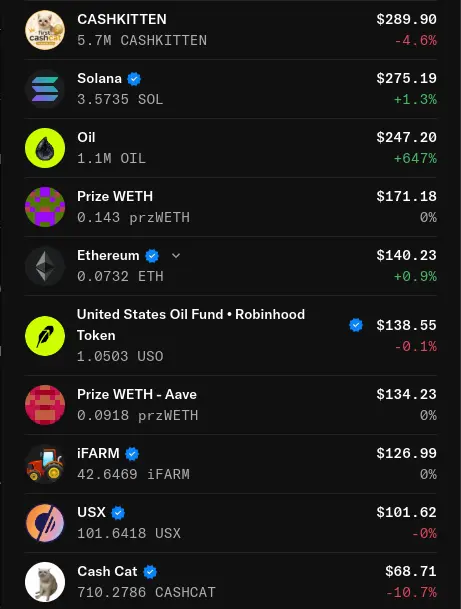
The smart approach is to watch the mechanism rather than blindly trust the process. After the weekend, I claimed around $247 in OIL tokens and another $138 worth of RWA oil.
Seeing numbers like that makes it very tempting to look at the current rewards and immediately start calculating how many rigs you could stack.
But that means looking at someone's screenshot and assuming the same result will continue indefinitely is probably the fastest way to turn a fun experiment into an expensive lesson.
How much is actually being generated? How much is being burned? How much activity is entering the system? How many rigs are active? What happens to $OIL and USO prices?
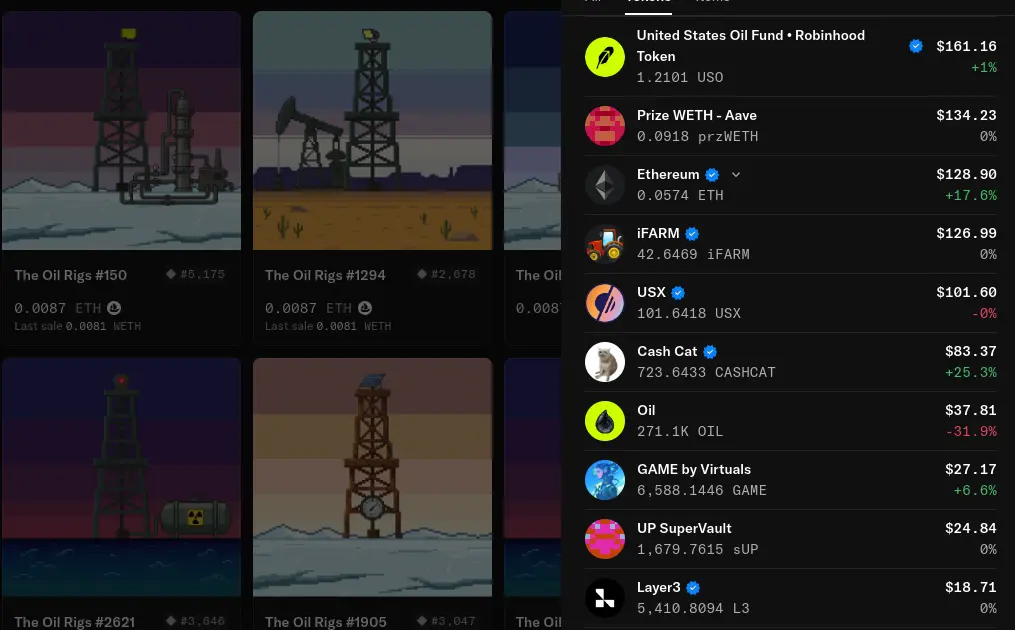
Most importantly, how do those variables change as more people discover the system? Those questions are what made me dive deeper, even while the floor was dumping.
Was it worth it? That's still an open question. Crypto has always been full of experiments that combine financial mechanics, NFTs, tokens and communities.
Sometimes those experiments evolve into something genuinely interesting. Sometimes they collapse spectacularly. Occasionally they manage to do both!
Which brings me to the question I've been asking myself! How long will it last? I went deeper and bought more rigs, then activated 6 out of for rewards!
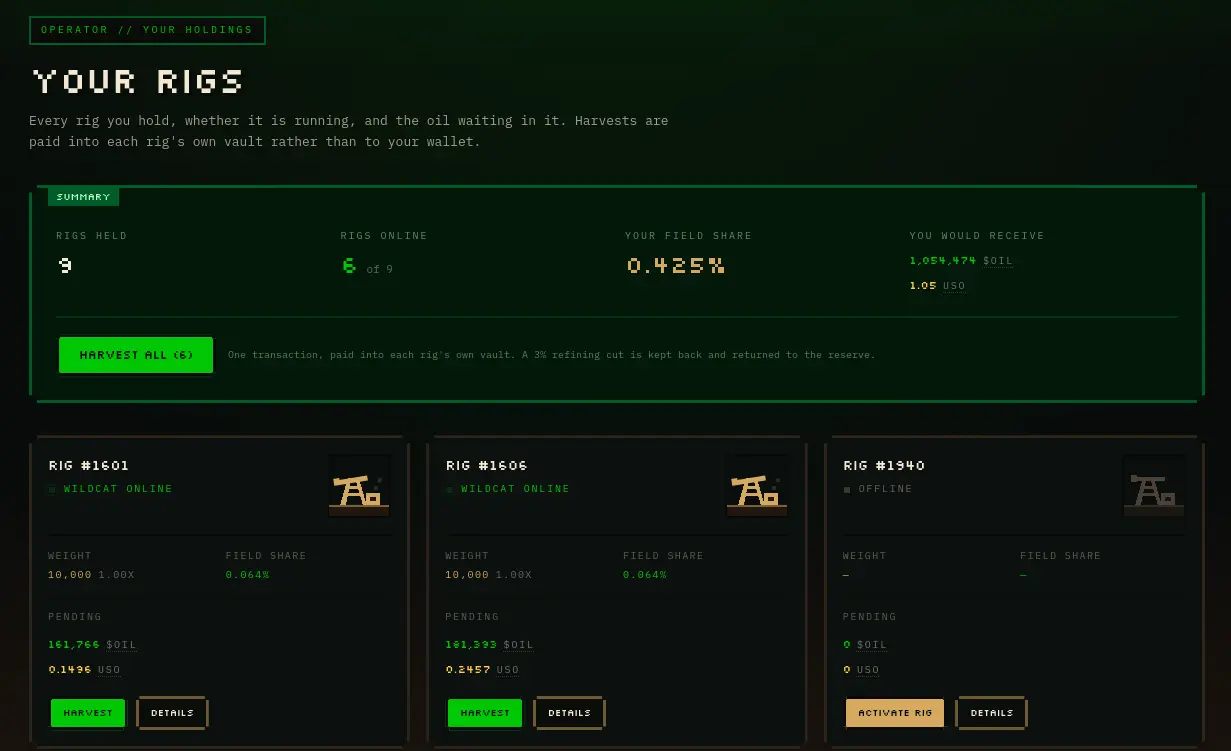
Maybe token prices fall and the economics change completely. Maybe emissions decrease as the system matures and I end up holding the bag?
Maybe the NFT market eventually catches up with the underlying mechanics and starts valuing productive NFTs differently. Or maybe this becomes another glorious chapter!
That's the beauty and the danger of this market. The fact that something is working today doesn't mean it will work tomorrow. That leaves me with another problem!
Should I keep upgrading the Oil Rigs to maximize the NFTs' productive power, or should I constantly sell the rewards to recover my initial investment?
There isn't an obvious answer. Upgrading potentially increases future production, but selling rewards reduces exposure and helps recover capital.
The optimal strategy depends on the cost of upgrades, emissions, token prices, activity and how long the underlying economics remain sustainable.
Too many questions and yet somehow I'm still staring at the next Rig. My investment thesis has evolved into study the tokenomics and then max bid anyway.
Alpha stuff:
Claim your Zerion XP!
Play2Earn: Splinterlands & Holozing
PVM The Author - My Amazon Books