
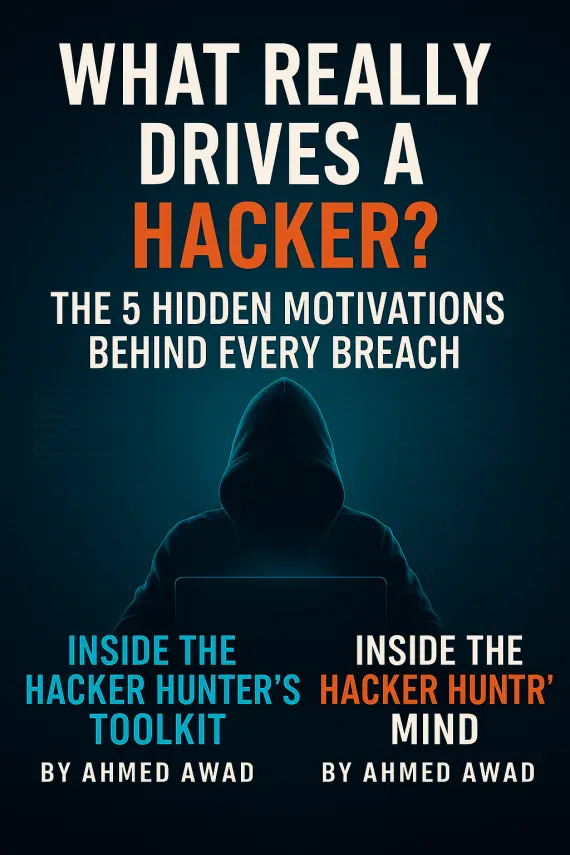
Forget what you’ve seen in the movies.
Hackers aren’t always hoodie-wearing rebels typing away in a basement just for fun.
Their motives run far deeper — and far more dangerous.
After 20 years on the cyber frontlines, I’ve led threat intel investigations, dissected ransomware groups, and even tracked adversaries across the dark web. Through it all, one thing became clear:
🎯 Understanding a hacker’s why is the most powerful tool in your defense arsenal.
In this article, I’m unpacking the top 5 real-world motivations behind today’s most devastating cyber attacks — and how each motive shapes tactics, tools, and even timing.
1. 💰 Money: The Ransomware Business Model
Let’s be real — this one’s no secret. But you’d be shocked at the sophistication behind financially motivated attacks today.
- RaaS (Ransomware-as-a-Service) makes launching attacks as easy as clicking “deploy”
- Negotiators are trained. Ransom notes are copywritten.
- Some threat actors even offer “customer service” to help you pay faster.
🛡️ Defender Tip: Monitor for unusual file access patterns and lateral movement weeks before the encryption event. Ransomware rarely begins with the ransom.
2. 🎯 Ego: Because They Can
Some hackers just want to prove they’re better than you.
- Bypassing MFA? That’s a flex.
- Getting domain admin unnoticed? That’s art.
- Dropping a zero-day in a security conference? Instant street cred.
🧠 From Inside the Hacker Hunter’s Mind:
“Hackers often don’t need a reason to breach you. You just happen to be the next puzzle to solve.”
🛡️ Defender Tip: Build purple team exercises that simulate ego-driven attackers — ones who aren’t after data but your dignity.
3. 🕵️♂️ Espionage: The State-Level Agenda
Nation-state groups don’t care about your revenue — they want secrets, control, leverage.
Their motives include:
- Political disruption
- Intellectual property theft
- Strategic advantage in global affairs
Think: APT29, APT41, Sandworm.
🧠 From Inside the Toolkit:
“We hunted adversaries who didn’t want to be noticed — not for days, but for years. Their success came from patience, not noise.”
🛡️ Defender Tip: Use threat intelligence feeds that track state-aligned IOCs. Train your SOC in low-and-slow detection techniques.
4. 📣 Ideology: Hacktivism & Cyber Protest
Whether it’s Anonymous, pro-democracy collectives, or underground groups opposing war — some hackers are driven by belief, not profit.
They target:
- Government agencies
- Media outlets
- Critical infrastructure
- Anyone seen as “oppressors”
🛡️ Defender Tip: Stay alert during geopolitical escalations. Ideological attacks spike around national holidays, elections, or global protests.
5. 🧪 Curiosity Turned Weapon
This is the one that gets overlooked the most — and the one that starts early.
From high schoolers poking ports to bug bounty hunters gone rogue, curiosity is a spark. But when that spark meets access, it becomes a threat.
“They weren’t trying to destroy anything — they just didn’t want to be told ‘you can’t go there.’”
🛡️ Defender Tip: Encourage ethical hacking inside your organization. Build a controlled lab, launch internal CTFs, and redirect curiosity into resilience.
The Takeaway
Cyber defense isn’t just about firewalls and logs. It’s about psychology, strategy, and empathy for the adversary’s mindset.
📚 Want more? These two books break it all down:
🔹 Inside the Hacker Hunter’s Mind — Learn to think like a hacker: https://a.co/d/dDcFKTT
🔹 Inside the Hacker Hunter’s Toolkit — Build your own toolkit to fight back: https://a.co/d/8jt61Fq
Hackers think in motivation.
Defenders must think in anticipation.
Welcome to the next level of cybersecurity.
#CyberSecurity #HackerMindset #ThreatIntel #SOC #InfoSec #MalwareAnalysis #RedTeam #BlueTeam #DigitalDefense #AhmedAwad #Nullc0d3 #CyberPsychology #CTI #Hacktivism




