
DeFi has always been about pushing boundaries, but the way it's evolving now is something else entirely. The space is no longer just about swapping tokens and yield farming; it’s turning into a high-stakes game where liquidity moves with precision, incentives are structured like financial engineering masterpieces, and protocols are battling for control over fragmented capital. At the center of this? DefAi—where DeFi meets AI, not just as a gimmick but as a structural shift in how decentralized finance operates.
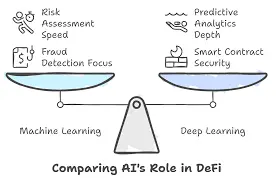
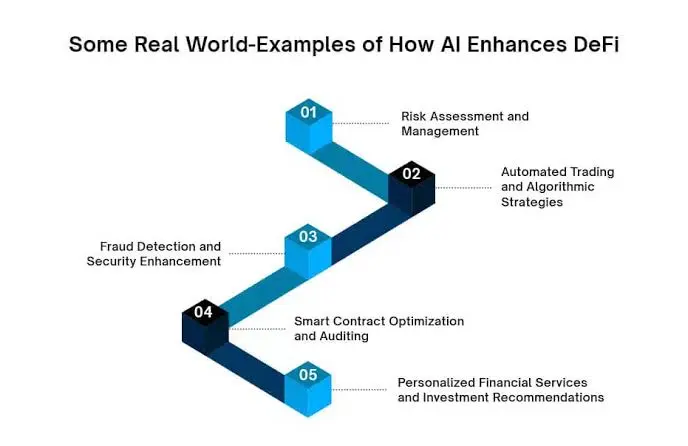
Everything in DeFi revolves around incentives. The protocols that control liquidity flows control the market, and that control is increasingly becoming an intelligence game. We’ve seen the rise of bribe markets, ve-tokenomics wars, and dynamic liquidity incentives, but all of that still operates within human-defined parameters. What happens when these incentive structures optimize themselves, adapt in real-time, and become smarter than their creators? That’s where AI comes in.
The first instinct might be to think of AI in DeFi as just another way to automate trading strategies, but that’s the surface level. What’s actually happening is deeper. AI models are being trained on liquidity movements, governance proposals, yield trends, and even trader behaviors. They aren’t just reacting to markets—they are predicting them, shaping them, and in some cases, controlling them. The idea of 'autonomous liquidity' is no longer theoretical. We’re already seeing AI-driven market-making strategies that dynamically adjust based on real-time data, optimizing for yield and slippage like a high-frequency trading desk, but without the centralized control.
Then there's governance. DeFi governance has always been messy - low voter turnout, whales dominating proposals, and coordination problems everywhere. AI doesn’t fix governance, but it does change the game. Imagine governance models that analyze past voting patterns, simulate future proposals, and adjust incentives accordingly to maximize participation and alignment. Not AI voting for humans, but AI optimizing the entire decision-making framework to remove inefficiencies. The most successful DAOs in the next cycle won’t just have good tokenomics—they’ll have governance systems that learn, adapt, and prevent the usual stagnation.
Of course, this isn’t all upside. If liquidity incentives become fully automated, where does that leave human traders? If AI optimizes governance, do DAOs become automated bureaucracies? And if protocols themselves become self-learning, does DeFi become a closed system where the biggest AI-driven protocols outcompete everyone else? These are open questions, but one thing is clear - DeFi isn’t just getting more efficient; it’s getting smarter. The ones who understand this shift early will position themselves ahead of the game. The rest? They’ll be rotating in and out of tokens while the real power structures are being built underneath them.






