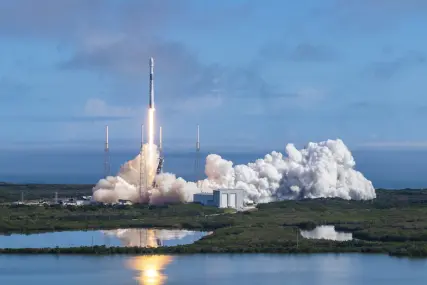
Photo Credit: SpaceX
After launching their first batch of telecommunication satellites on 22 February 2018, a whopping 302 starlink satellites currently orbit the earth and there is a lot more in queue...
The total cost was estimated at about $ 10 billion USD in 2018 and if successful, the return on investment for a global broadband internet coverage provider becomes more apparent if we look at it from a technical perspective.
The cost of launch per 60 satellites amount to about $ 6 million USD according to the company CEO. Submarine fiber optic cable can cost hundreds of millions to connect countries or even continents. In the long term, Starlink might be more reliable than submarine cables due to the following reasons:
- Cable installation is slow, tedious and expensive
- Internet is just as vulnerable underwater as it is underground
- Spy agencies can tap underwater cables
- Instead of waging cyber-warfare, cables can be compromised
- Submarine cables require a lot more resources (copper, rubber, aluminium etc.)
- It might not last as long as we expect
Promising Returns
The project's full year of service will be 2021 and covering a small chunk of the world's population with a user base around 14.4 million people by 2025. According to sources, the annual revenue might increase to $ 10 billion USD by 2025.
According to Elon Musk, the market potential for internet connectivity is $ 1 trillion USD if Starlink manages to provide fast and reliable internet connectivity to compete with cable and fiber providers. This is a wild stab in the dark but worth consideration for potential investors looking for a high potential increase in stock value, however it is not open to private investors.
The only way to invest in SpaceX stock is through Alphabet stocks. Owning a piece of Alphabet will also mean owning a piece of SpaceX stock. With the net income of $12.7 billion, and valued at $735.8 billion (according to sources), Alphabet may be an indirect proxy investment to SpaceX.
The author accepts no responsibility for actions taken based on the content.
This article is for educational purposes and does not constitute financial advice.
The author encourages readers to take a look around other sources.
The author's rights remain reserved.






