Traders on Wall Street pay attention to coffee prices more often than you think. Investors could choose between specific brands produced in different countries or trade coffee bags as a general commodity on certain exchanges.
According to Bloomberg, a Brazil grower supports the rise in market in the near future. Let's compare the price history of different markets:
Robusta Coffee
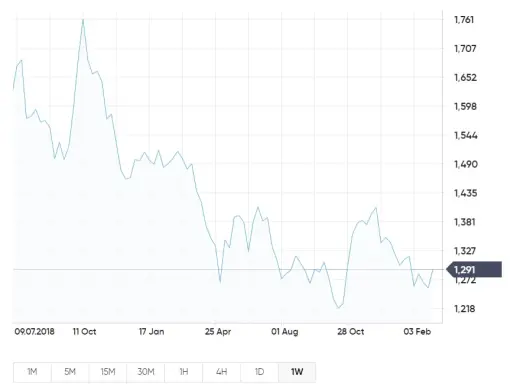
The market has seen a decline in late 2019 with small rallies just above the 1.380 mark during the year, followed by a decline in 2020 which is not likely to last very long.
Coffee Arabica
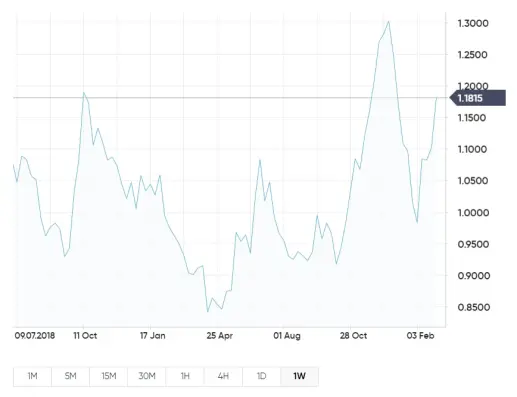
Markets have seen a rise in late October 2019 with a quick recovery in 2020. Comparing the two markets, it is clear that not all producers duplicate the same cycle.
Starbucks Coffee Co
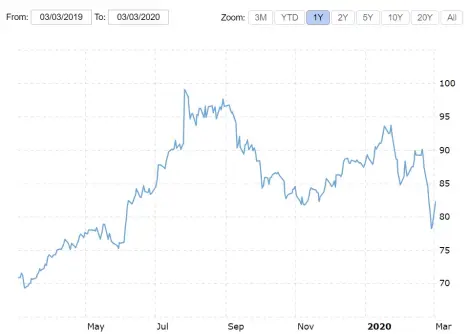
We can observe a rise in prices during the winter of the southern hemisphere with a decline moving towards summer. An increase is seen in recent days. The company's market cap is currently sitting around the $78 billion mark. That valuation dwarfs most companies listed on South Africa's JSE.
The South-African Investment
According to Dylan Cumming, MD of coffee company Beaver Creek, there is a growing demand for high-end specialty coffee in South Africa. BusinessTech looked at how the price of coffee compares across seven of South Africa’s most popular coffee shops:
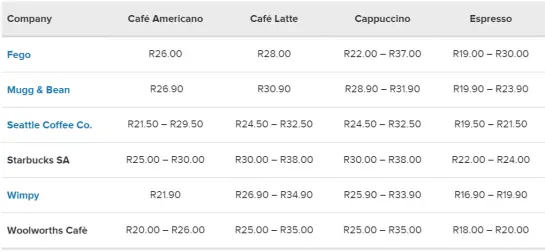
Seattle Coffee Co is indeed a competitor to Starbucks. However, according to South African Market Insights, Starbucks is sitting on a net profit margin of 13.82%. So essentially for every $100 they receive they make $13.82 in profits after paying all expenses and taxes. That is pretty strong net profit margins for someone operating in the retail food industry. No doubt a bit of a premium is charged thanks to their brand name which has been built up over many many years. To see interactive pie charts on how the market revenue could increase for Starbucks in Africa: click here.
Despite market prices moving in different directions between different brands, it is still possible to determine the next price stop for certain brands if we look at seasonal patterns, particularly when winter hits the southern hemisphere.
"Winter is coming"