
With something like 130 million pieces sold since its debut in 1989, the Nintendo Gameboy is without doubts one of the best selling handheld consoles ever, and one of the pillars of videogame history.
The tiny (for the times) 8-bit console teached us that it only takes four shades of green in a non-backlit display, a d-pad and two action buttons to bring the fun everywhere we go, and software developers quickly learned that even with small efforts (let's be honest, some games were really trash) it was possible to milk some sweet money from Mama Nintendo's breasts.
Enter Watara, a small electronic firm from Taiwan which thought they can jump on the "Gameboy craze" bandwagon and came out with its similar console.
Well, "similar" is not the right word, maybe "ripoff" is more accurate.
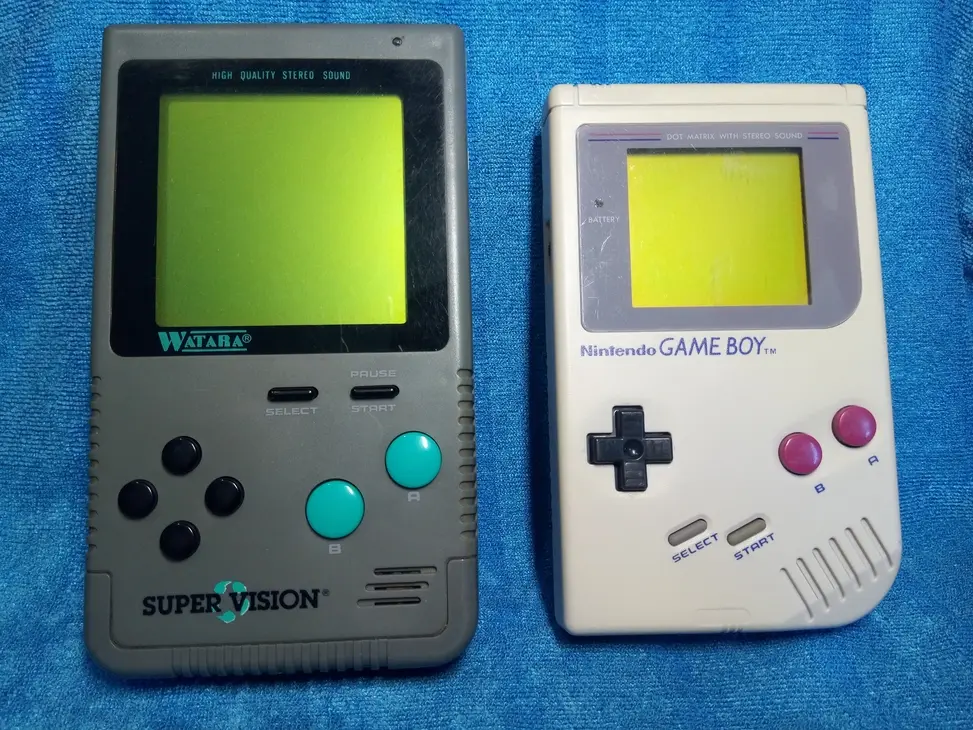
It was the birth of the "SuperVision", the handheld with many shapes and many names. Let me explain: since Watara didn't have the necessary marketing skills and background to go through a worldwide launch, they decided to sign with a number of regional partners, so each one of them gave the console a different name and some "touches" to differentiate from each others.
That's why we had the Tiger-Boy, the Travell Mate, the QuickShot, the Hartung SV-100...
We in Italy were lucky enough to have it with its more known name, the Watara Supervision.

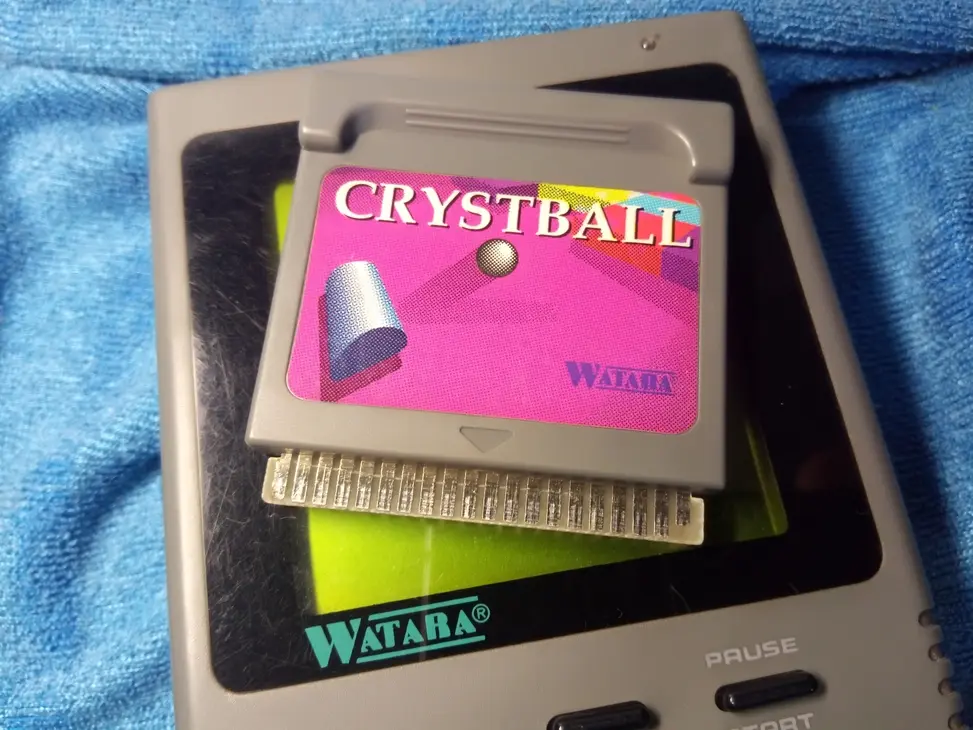
To be completely honest, the marketing strategy in Italy was promising: at its release in 1992, in the middle of the "Gameboy Mania", the Supervision was selling at a very competitive price (less than half the price of a Gameboy) and 20 launch titles; to this, add the fact that to the eyes of a "prophane", the first SuperVision model was indistinguishable from the Gameboy, it even had a bigger screen (160x160 vs. 160x144 pixels) and it came boxed with batteries, headphones and a game ("CrystBall", a Breakout clone).
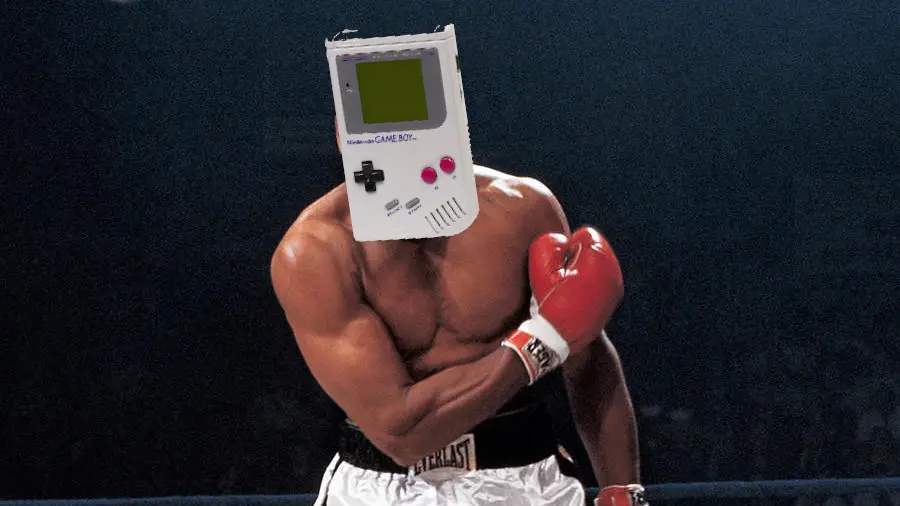
As you can imagine, despite the efforts that didn't go well for Watara. Trying to compete with a giant like Nintendo, especially in the 90s, is like wanting to throw hands with Muhammad Ali.
Yeah, you might be able to land a couple of hits, and people will remember you as "that fool who wanted to beat Ali", but you already know you'll eventually end your career. Or your life, in the worst case.
Luckily for us, today is still possible for everyone to play all of those games, thanks to emulation: the entire library (69 games) can be enjoyed through MESS (a multi console emulator), or one of the specific ones like Wataroo (tailchao.com/Wataroo).
In conclusion, even if it was a blatant ripoff of the Gameboy, its games were blatant ripoffs too, it was badly manufactured and badly advertised, it still remains a precious piece in every videogame collection, and thanks to the efforts made by the community it will never be forgotten.
All the pictures featured in this article are from my personal collection, except from the screenshot of the commercial, which is from YouTube (LudiVision.it channel), and the crappy Muhammad Ali photoshopped image, of course.
I am new on the platform, any advice or comment is highly appreciated!
If you found this article interesting, consider giving me a thumbs up, a follow, or if you feel generous even a tip!






