
June 1, 2025 —
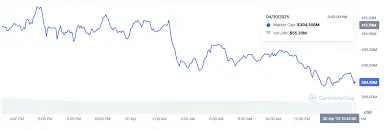
Berachain, a much-anticipated Layer-1 blockchain platform designed around a novel Proof-of-Liquidity (PoL) consensus mechanism, is facing turbulence as its native token, BERA, continues a steep decline. Trading at just $2.31, the token has dropped over 80% from its all-time high of $14.46, raising critical concerns about the sustainability of Berachain’s so-called "liquidity flywheel."
A Bold Economic Design Under Pressure
Berachain distinguishes itself with a tri-token system:
BERA, used for gas fees and staking;
BGT, a non-transferable governance token earned via staking and liquidity provision;
HONEY, an overcollateralized stablecoin.
This structure was crafted to create a positive feedback loop: more liquidity leads to greater rewards, which should in turn attract more users and liquidity. However, current market dynamics suggest the flywheel may be stalling.
The underlying problem appears to be one of trust and incentives. As BERA's price plummets, so too does the attractiveness of providing liquidity or staking tokens for BGT—raising doubts about whether PoL alone can sustain validator participation and ecosystem activity in a bearish environment.
Community Discontent and Governance Questions
Adding to the network's woes is backlash from early supporters regarding Berachain's token airdrop. Some community members allege that the distribution unfairly favored insiders or select partners. These grievances have been aired across platforms like Reddit, where users have criticized both the transparency of the process and its impact on token price.
As liquidity providers rethink their positions, Berachain’s on-chain activity and user growth are reportedly slowing—an ironic twist for a network designed to amplify participation through its incentive architecture.
Looking Ahead
Despite current struggles, Berachain still holds promise. Its integration of DeFi principles into Layer-1 architecture is technically ambitious and could pioneer new models for incentivized blockchain security and governance.
Yet, the recent price drop is a reality check. It underscores how complex—and fragile—tokenomics-driven systems can be when market sentiment turns negative. Without adaptive mechanisms or fresh demand drivers, the "liquidity flywheel" risks losing the very momentum it was designed to generate.
Conclusion:
Berachain’s experiment is far from over, but its recent stumble makes one thing clear—economic design alone doesn’t guarantee resilience. Market trust, fair token distribution, and clear utility remain indispensable pillars for any blockchain aspiring to scale.





