Polygon's Underlining Issues and Artificial Hype
Recent outcry and drama regarding #Polgyon congestion made me decide to do a bit of an informational video & article about Polygon and its core design problems. If you are unfamiliar with what has conspired in the last 72h - there is a new game that was launched known Sunflower Farmers, which is a game that has caused a massive spike in the amount of transactions and general GWEI cost in Polygon's transactions (see below)
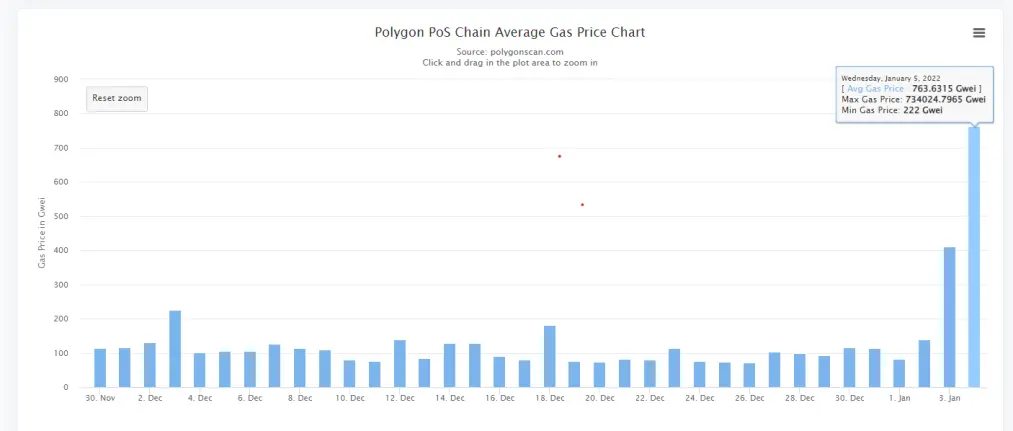
Now, this trend is likely to continue as more people clone the original game and start to do their own forks of it. Obviously, we are going to see other games getting launched on Polygon. It's only a matter of time as the userbase is going to grow or at least transactions as more gamers are hopping into try make some money via Polygon.

Developers don't really have an interest on fixing the issue as of right
now. Not to say they really can either. It's up to really SFF team to deploy a new smart contract that is not as gas-intensive on the chain, but that's just a bandage to an already sinking boat.
Polygon allocates 12% of its total supply of 10 billion tokens to fund the staking rewards. This is to ensure that the network is seeded well enough until transaction fees gain traction. These rewards are primarily meant to jump-start the network. While the protocol in the long run is intended to sustain itself on the basis of transaction fees.
Validator Rewards = Staking Rewards + Transaction Fees
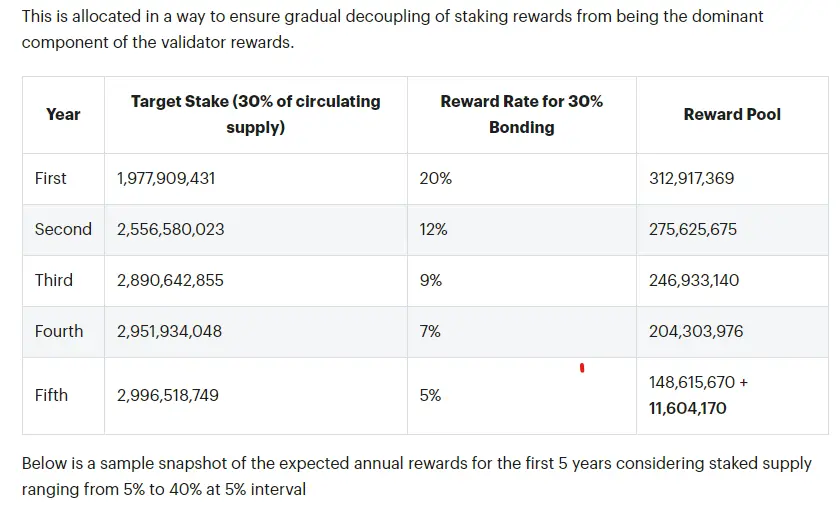
This is allocated in a way to ensure gradual decoupling of staking rewards from being the dominant component of the validator rewards.
The way Polygon is designed to function for the long term is to ramp up more in fees as more time goes on, the artificial supply handout is going to end in a 5-year cycle as seen below.
Polygon team has started to acquire L2 Solutions already since they are not able to scale the network themselves. Hermez was the first one and more recently they bought MIR in December.
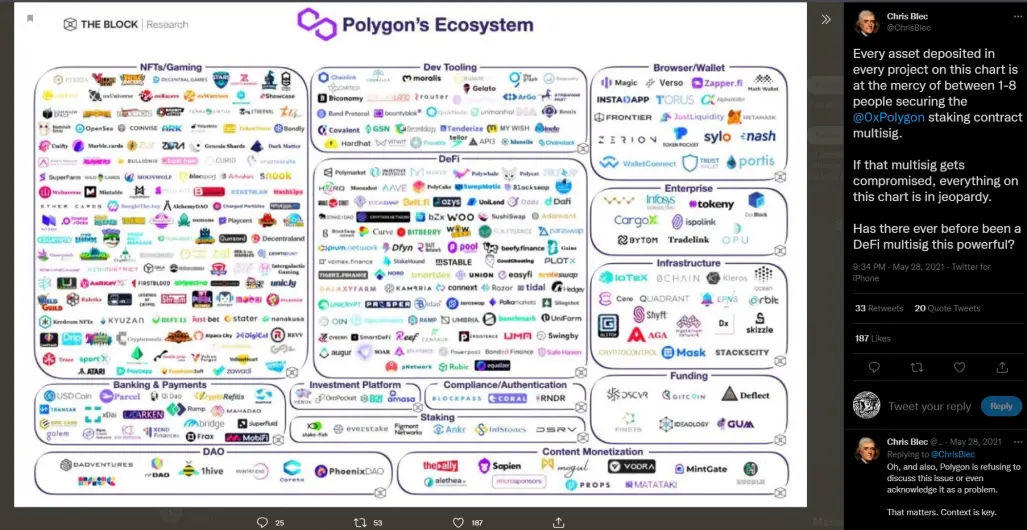
Centralization Issue
Another issue that Polygon is facing is the fact that they are very centralized in some core designs. 1-8 people securing the staking contract with multisig, what will happen if half of those people die in car accident or lose their keys? It's donezo for the whole network at that point.
It was only a month ago when the network has hacked, which speaks about the very low security of the network. I see a lot of people in Reddit and here in Publish0x praise Polygon way too much - even though it has these very fundamental flaws in its design.
I would be careful about investing too much into the Polygon DeFi ecosystem and considering more secure alternatives out there. To get a full breakdown watch the video, I'm too tired to post images and sources at this point.






