
I have been spending a lot of time looking at the numbers lately, trying to figure out the smartest way to own my own place. My plan starts with buying a piece of land, but once that ground is secured, the real question is what to build on it. Like most people, I initially assumed I would build a standard, conventional block house.
But the skyrocketing cost of building materials has forced me to look at alternative solutions, which is how I got deeply interested in foldable container homes.
When I look at my budget for a traditional building, the costs are incredibly fluid and unpredictable.
Buying sand, cement, gravel, and rods is just the beginning. I have to factor in weeks or months of labor costs, security for the building materials on-site so they don't grow legs, and the inevitable price increases that happen mid-project due to inflation.
A standard two-bedroom block house can easily swallow millions of naira before it even gets to the lintel level, let alone roofing, plastering, wiring, and finishing. It is a slow, draining process, and my money would be tied up for a very long time before the house is actually livable.
This is why the financial model of a foldable container home looks so attractive to my current budget. With a foldable home, the pricing is upfront and fixed. I can buy a fully structured, prefabricated container unit that literally unfolds on-site.
The factory handles the walls, the roof, and the basic insulation before it even arrives. Instead of buying individual bags of cement at fluctuating market prices and waiting months for a structure to rise, I can pay a set amount and have a structural shell ready to go almost instantly.
The cost comparison becomes even clearer when I look at speed and labor. For a normal house, I have to manage a whole team of laborers, masons, and carpenters over a long period. With a foldable container home, the installation takes days, not months. I only need to prepare a solid concrete base or pillar foundation on my land, crane the unit in, and expand it. This massive reduction in construction time means I save heavily on labor costs, which is a massive win for my budget.
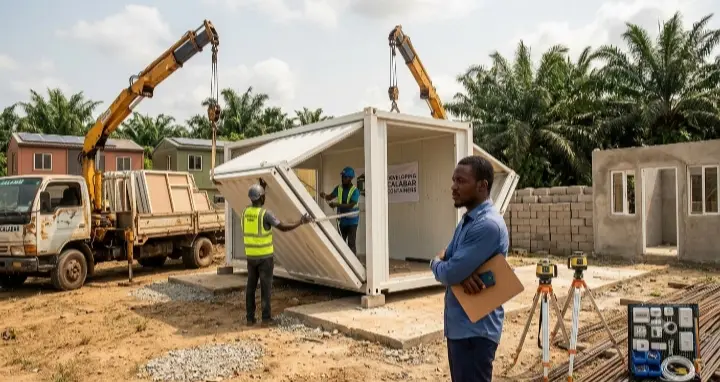
Of course, I am realistic about the extra expenses too. The container itself is cheap compared to a brick-and-mortar build, but I still have to budget for transporting it to my plot of land and hiring a crane or heavy equipment to unfold it. I also have to budget for a proper roof overlay and high-quality interior insulation to handle the intense local heat, because a metal box will bake in the sun if it isn't treated correctly.
Even after adding the costs of plumbing, wiring, and proper interior cooling, my budget still shows that a foldable container home can get me safely into my own space at a fraction of the cost of a traditional build. It allows me to secure my land, get a roof over my head quickly, and avoid the endless financial headache of a long-term construction site. For where I am financially right now, it feels like the smartest shortcut to property ownership. What do you think friends?






