
I'm passionate about DePIN (Decentralized Physical Infrastructure Network) projects and have been exploring this rapidly growing sector for quite some time. I'm currently testing several promising networks, always looking for projects that combine real-world utility, low operating costs, and the possibility of generating passive crypto rewards.
Over the coming months, I'll be sharing my experiences with the projects I'm personally using, explaining how they work, how I set them up, and whether I believe they're worth the time.
One of the projects that has impressed me the most so far is Acurast. https://hub.acurast.com/rebellion?ref=fxhvnp
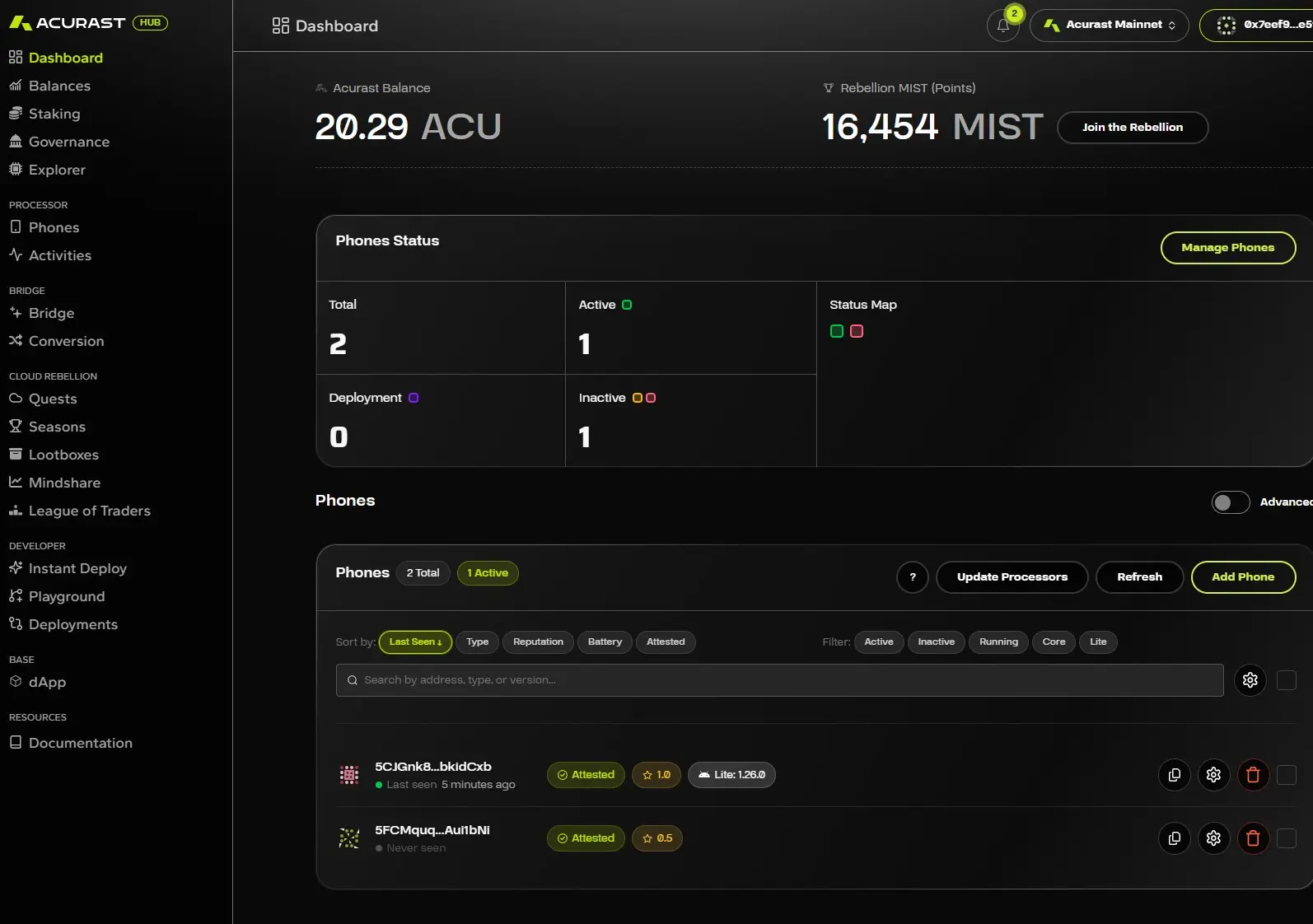
For the past month, I've been running Acurast on a spare Samsung Galaxy A52s that was simply sitting unused in a drawer. Instead of letting the phone slowly lose value, it's now working 24 hours a day as part of a decentralized computing network.
What Exactly Is Acurast?
At first glance, Acurast might look like another "phone mining" application.
Unlike traditional crypto mining, your smartphone is not solving cryptographic puzzles or consuming large amounts of electricity to validate blockchain transactions.
Instead, your device becomes part of a decentralized cloud computing network.
Whenever developers need computing power for their applications, Acurast distributes those workloads across thousands of independent smartphones connected to the network.
Your phone executes these jobs securely, returns the results, and receives rewards for the work performed.
Think of it as an alternative to centralized cloud providers such as Amazon Web Services or Google Cloud, except that instead of relying on huge data centers, Acurast distributes computation across ordinary smartphones owned by people all over the world.
Why Smartphones?
This is probably the first question most people ask.
Why use smartphones instead of computers or servers?
The answer is surprisingly simple.
Modern smartphones are incredibly powerful. Even devices that are three or four years old contain multi-core processors, efficient memory management, dedicated AI chips and, most importantly, secure hardware components known as Trusted Execution Environments (TEE).
These security modules allow applications to execute sensitive code in an isolated environment that cannot easily be manipulated, even by the phone's operating system.
This makes smartphones particularly attractive for decentralized computing because clients can trust that their workloads are executed securely and that results haven't been altered.
In many ways, billions of smartphones around the world represent one of the largest untapped computing resources available today.
Why I Decided to Join
Whenever I evaluate a DePIN project, I usually ask myself four questions.
Does it require expensive hardware?
Is the energy consumption reasonable?
Does it solve a real-world problem?
Can it run with minimal maintenance?
Acurast answered "yes" to everything I was looking for.
Since I already owned a Samsung Galaxy A52s that I no longer used, my initial investment was essentially zero.
Rather than buying dedicated mining hardware, I simply gave new life to a device I already had.
My Setup
My setup couldn't be simpler.
I use a Samsung Galaxy A52s connected permanently to its original charger and to a stable Wi-Fi connection. I purchase one broken screen device for small amout of Euro, the perfect machine for this project with quick ROI.
The phone is dedicated exclusively to Acurast, remains plugged in 24/7, and stays connected continuously to the network.
After more than a month of operation, the experience has been remarkably stable.
The application has required virtually no maintenance.
The phone has remained responsive, temperatures have stayed within normal levels, and I haven't experienced unexpected crashes or interruptions.
Once configured, I almost forget that the device is running.
What Makes Acurast Different?
What attracted me to Acurast isn't just the possibility of earning rewards.
It's the vision behind the project.
Today's internet depends heavily on a relatively small number of centralized cloud providers.
Although these services are extremely efficient, they also concentrate enormous amounts of computing power in a handful of companies.
Acurast takes a completely different approach.
Instead of building new data centers, it uses hardware that already exists.
Millions of smartphones spend most of their lives idle.
Acurast transforms these unused devices into productive computing resources without requiring additional manufacturing or significant increases in energy consumption.
From an environmental perspective, this is an interesting concept because it extends the useful life of existing hardware instead of encouraging constant upgrades.
Is It Profitable?
This is probably the question everyone asks first.
The honest answer is that nobody can guarantee future rewards.
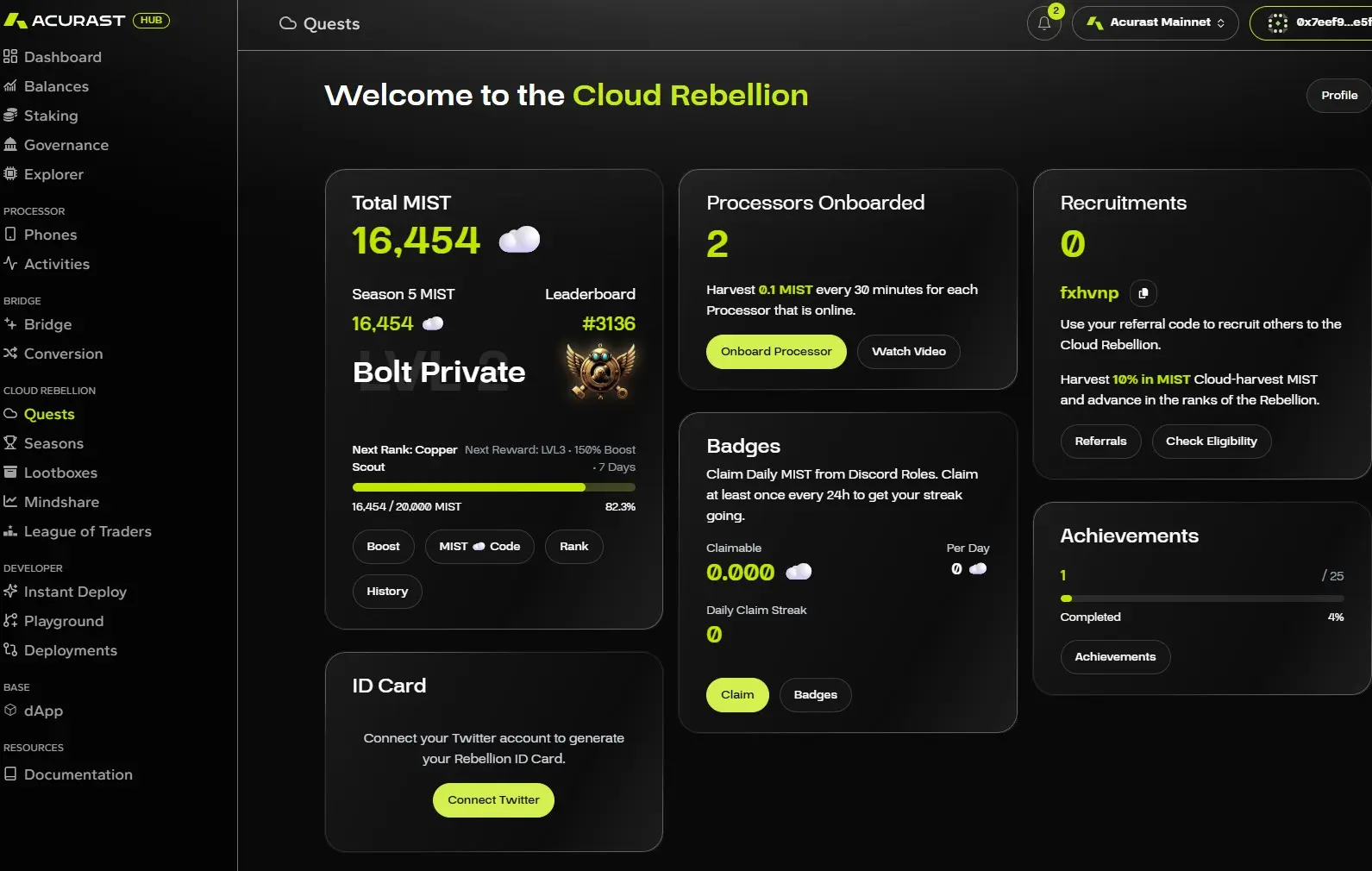
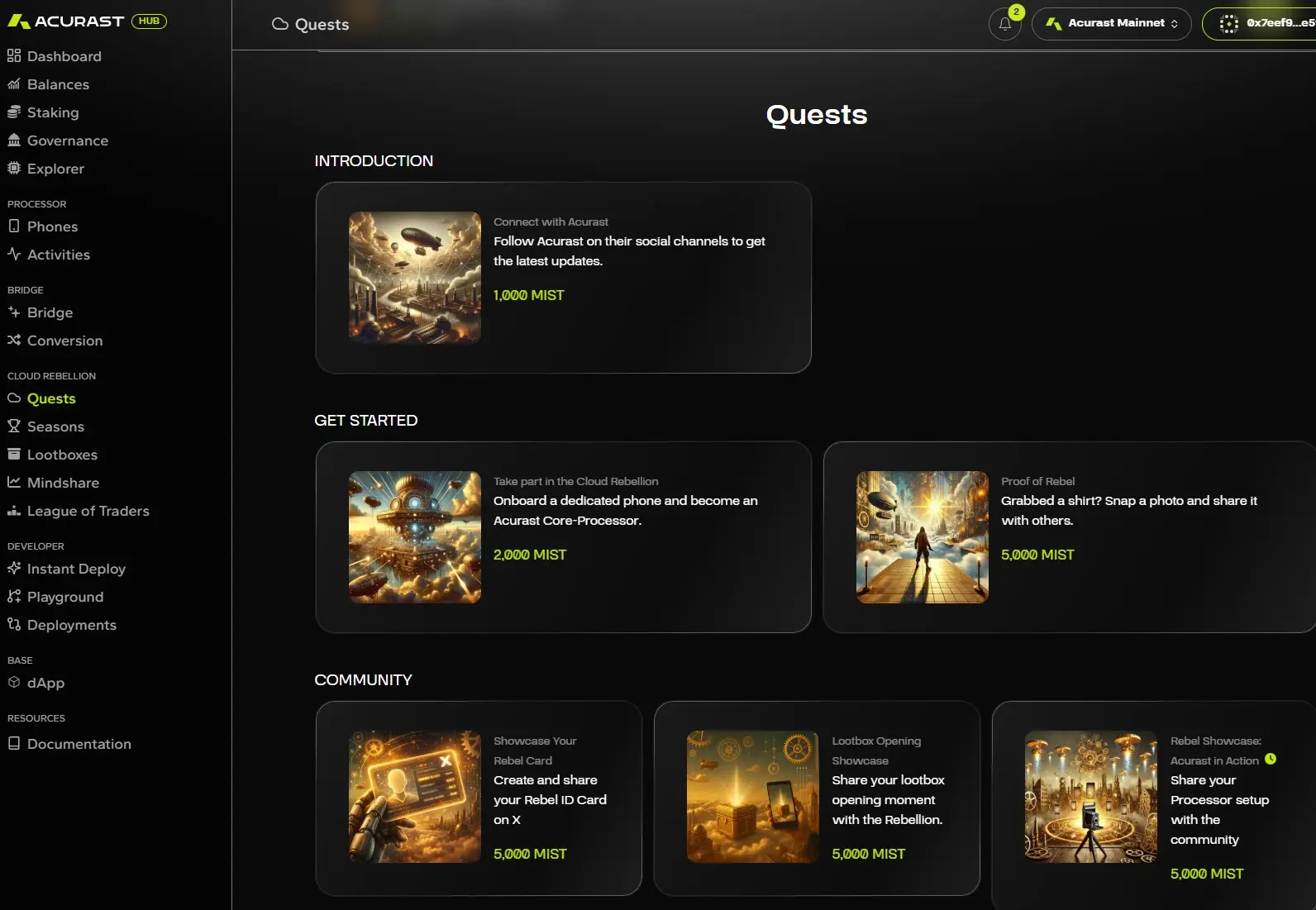
Like every DePIN project, earnings depend on several factors, including network adoption, demand for computing jobs, token economics, and the overall development of the ecosystem.
Personally, I don't see Acurast as a way to become rich overnight.
I see it as an opportunity to participate early in a project with real technological value while putting an otherwise unused smartphone to productive use.
If the ecosystem grows over the coming years, today's early participants could potentially benefit from that growth.
Final Thoughts
I'll continue running my Samsung Galaxy A52s around the clock and will closely follow the evolution of the project.
If Acurast continues developing at its current pace, I may eventually dedicate additional spare smartphones to the network.
Among all the DePIN projects I'm currently testing, Acurast has become one of the easiest to maintain and one of the most interesting to watch.
Sometimes the best investment isn't buying new hardware.
Sometimes it's simply finding a new purpose for the hardware you already own.
Interested in Trying Acurast?
If you have an old Android smartphone sitting in a drawer, Acurast is definitely worth taking a look at.
The setup takes only a few minutes, and once everything is configured, the phone can start contributing to the network with very little intervention.
If you'd like to join the project and support my work at the same time, you can register using my referral link below.
https://hub.acurast.com/rebellion?ref=fxhvnp
Thank you for reading. This is only the first article in my DePIN journey, and I'll continue sharing updates, results, and reviews of the other decentralized infrastructure projects I'm currently testing.
Join the revolution!






