
Cloud computing is taking the world by storm from Amazon web service (AWS), Google Cloud Provider(GCP), Microsoft Azure, Cisco, and many other cloud service providers.
The seamless and easy-to-scale nature of using cloud service is one of its most fantastic selling points, and not having to buy expensive servers and cutting costs is pushing businesses to move to the cloud.
Many organizations invest in moving their resources to the cloud; the fear of attacks on their data has become a growing concern.
This article will go through steps to protect your data/projects from attack.
Apply Least Privilege
The least privilege principle is the most fundamental and vital. It states that Admins should grant only minimum access necessary to operate. No one should be allowed more access than they need to perform their duties.
Cloud infrastructure works like a big corporation with different units, making sure no one has more access than they need to perform their duties while limiting what they can do and giving the administrator an easier time figuring out who is doing what and why.
Strong Password
Using a strong password is very critical to protect your projects/data. One of the easiest ways for hackers to access your files is when users use a weak password.
This chart shows how long it takes to brute force a password.

No matter how secure your infrastructure is, malicious actors can use such links to steal information and cause damage to projects.
Strong passwords should be utilized and adhered to; users should use password managers to generate a solid and reliable password.
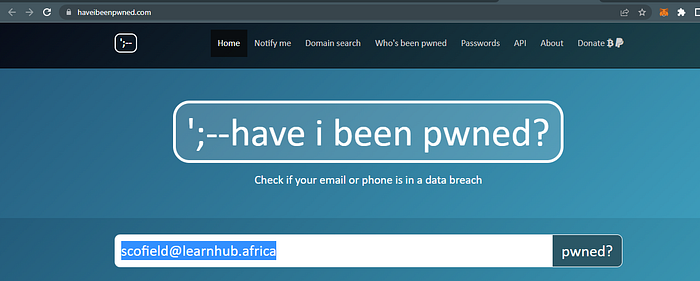
Password must undergo periodic checks using sites such as Have I been pwned to check.
Check out Opta, a new IaC framework that enables engineers to work with high-level constructs. Resources are defined in YAML files, and Opta generates the underlying Terraform modules. It is also open-source like Terraform, with a fast-growing community.
Two/Multiple-Step Verification
Two-step verifications are essential when using cloud providers; using mails, phone numbers, fingerprints, and eye verification are some of the policies that can aid the protection of your data.
Once able to access your password, Hackers might find it impossible to get the code sent to your phone as a verification policy.
Two-step verification will keep your projects safe from external attacks.
Keep Backups
Keep backups and use your cloud service backup plans to have fallback plans. It is crucial as a teammate might delete essential files, or a virus might corrupt your complete database, rendering months/years of hard work useless.
Use cloud storage backups; You should regularly update drives to avoid gaps.
Google drives, Dropbox, and other cloud storage have a database storing option; you can check them here.
Note that Cloud service providers and Cloud storage providers are not similar.
Implement Endpoint Security
Endpoint security means securing the end user’s access to the cloud; for projects spanning multiple users, proper security checks on BYOD (Bring Your Own Device) as they are hard to track, and malicious individuals can hack users without anyone being able to detect.
Admin must provide secure access, and a limited permit must be given to users with BYOD to limit cases of data theft.
Admin must implement antivirus and scanning mechanisms to scan for USB sticks or hard drives connected to a BYOD.

Admin should put a strict verification policy in place as users must have verified themselves through hard tokens to identify themselves.
List of some of the best hard tokens.
Admin must implement constant updates of cloud security policy to track how users log in, track their activities, and recommend best practices.
Train your employees on Cloud Security Practices
Security is not limited to just a unit as the IT unit as an employee can misuse the cloud environment due to negligence or lack of knowledge.
Unmanaged access can grant malicious users access to data and crumbling operations. Admin should allocate time to train the user on best security practices like most users.
With such moves, you can mitigate internal security threats, which are the most disastrous as it is most time undetected for a while.
Implement IDS/IPS Systems
According to a survey done by CloudPassage, IDS(Intrusion Detection and Prevention) systems are one of the most influential and widely used solutions for securing cloud projects; the survey explains how it detects and prevents unauthorized signIn.
Organizations can implement artificial intelligence, prevention, and detection systems to give them deep insight into project management, who access such projects, and how they interact with data.
Artificial intelligence learns the behaviors of users accessing an environment in the cloud.
If a user is used to using a particular cloud bucket and suddenly begins downloading data from the server, AI can pick such activities as malicious and block the user.
IDS/IPS also minimizes the false positive alerts as it learns the behaviors of each user and tailors its security structure to fit.
Did you know that Opta helps your startup fulfill cloud data security requirements like the SOC-2 compliance which a lot of companies need to adhere to.
Opta
Work with high-level constructs instead of getting lost in low-level cloud configuration Get Started Opta is a simpler…
www.opta.dev
Limit Access Control
Access control limitation is vital in keeping track of your projects and data. Do not give too many people administrator privileges to access data, as this might cause loops in your security.
As an administrator of a cloud project, create a second account and keep the main administrator account secure as this account breeched will mean total access and privileges.
It is advisable to use a second account that does not have full privilege’s as this gives you a guarantee in case your account gets compromised, you did not lose your main account.
Encrypt your Data
When uploading your data to the cloud, it is advisable to encrypt your files to limit MITM(Man In The Middle) attacks.
Here is a list of some encryption software you can use when uploading your files to the cloud; also, note that some cloud service providers encrypt your files before upload, but too much security is never enough in today’s world.
Pentest your Cloud Security
Carry out pen-testing activities or hire a reputable hacker to test your cloud security and measure.
If data to be stored are highly sensitive and need maximum security, periodic pen-testing will enable you to confirm the safety of the cloud server and its infrastructure.
Conclusion
Securing data is one of the hardest as malicious hackers daily try new and more sophisticated hacks to steal your data.
While you rely on more advanced security measures, always remember to keep backups, use a strong password, and make sure you update your patches.
Best of luck.






