
A little over 100 years ago, Leo Baekeland, an industrial chemist of Belgian origin, opened the way to modern industry through an ingenious invention: Bakelite or thermosetting plastic, a type of plastic that does not soften when heated, making it an economical, sterile and practical material.
Since then, mankind began to use this component in the manufacture of items for sale, transforming our lives, however, this technological marvel has gotten a little out of hand, as plastic has saturated nature and constantly seeks routes to enter our bodies.
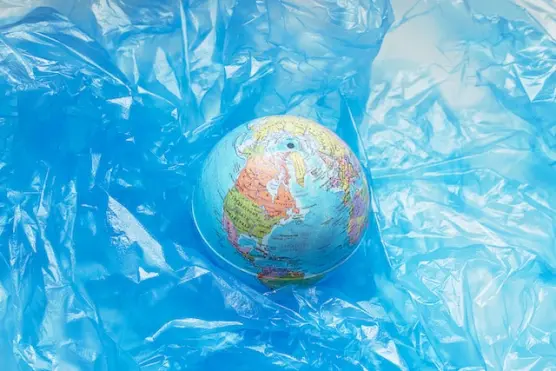
What is plastic?
It is the generic and common name given to the union of long chains of groups of molecules that are repeated to form large particles, known as macromolecules.
In nature, polymers exist everywhere, for example: in silk, starch, shells of some insects among others, for its elaboration in an artificial way it is enough to decompose the oil and reorganize its components, forming new synthetic polymers.
Synthetic polymers have magnificent qualities, because they do not require long or laborious manual work, they are light, durable, moldable, their mass production is easy, their raw material is inexpensive and abundant.
Presence of plastic in everyday life
After its invention, the golden age of plastic began, having a greater presence in everyday life, from the manufacture of bakelite for mechanical parts, pvc for pipes, gears, housings, acrylics as unbreakable substitutes for glass, nylon for socks, military equipment, among many others.
Nowadays, almost everything is made of plastic: clothing, telephones, computers, furniture, household appliances, houses, cars, etc. However, somehow it has gone from being a revolutionary material to also becoming garbage with the production of disposable cups and plates, bags, fruit and vegetable wrappings, among others.
Impact of plastic material on nature
Synthetic polymers are so durable that they can take 500 to 1000 years to decompose in nature and since their invention we have produced quantities in tons. According to statistics, they reveal that in 2016 more than 6.3 billion tons of plastic have become garbage around the planet, 9% has been recycled, 12% has been burned, but the remaining 79% usually ends up scattered in the oceans, causing damage to marine wildlife that get caught in the debris or ingest part of it, many animals die with a stomach full of indigestible garbage.
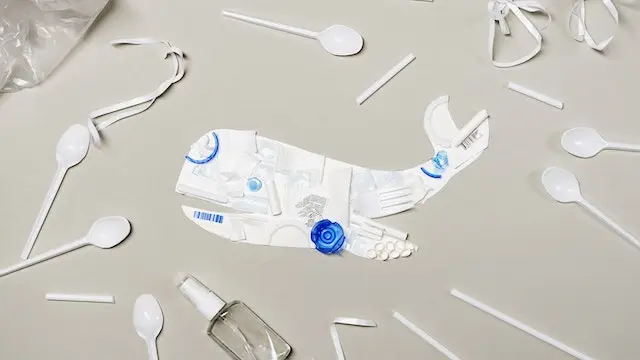
In 2015, approximately 90% of seabirds had ingested plastic waste. In 2018, the carcass of a sperm whale that had swallowed 32 kilos of plastic was found on a beach in Spain. This scenario is an alarm that can be said to be silent, that is, we are ignoring it by not understanding the seriousness of the situation.
An Invisible Threat: Microplastics and Their Impact on the Human Body
What is a Microplastic?
This is the name given to tiny synthetic particles of plastic material measuring a maximum of 5 millimeters.
Some microplastics are used in the manufacture of cosmetics and toothpaste, most become floating debris in the oceans, disintegrating into smaller and smaller pieces due to constant exposure to ultraviolet radiation.
In the oceans float approximately 51 trillion of these particles, which are easily consumed by marine wildlife, this is a bit worrying because of the risks that can lead to human health, by the derivatives of the chemicals that are added to plastic for example: Bisphenol-A makes the bottles are transparent but has been proven to interfere in the hormonal system, DEHP provides more flexibility to the bottles, but can cause cancer.
The potential toxicity of microplastics is alarming as they travel up the food chain. through the food chain, for example: Zooplankton consume microplastics in the ocean, small fish ingest zooplankton as well as oysters, crabs and other edible species and all of these end up on our table.
Conclusion
Phthalate, a common component of plastic, has been found in somewhat considerable quantities in the adult human body, as has Bisphenol A in 93% of urine. Currently there are very few studies on the subject and their conclusions are not very precise, so more research is needed.
It is scary to think that to some extent we have lost control over plastic material, as microplastics have also been found in honey, sea salt, tap water and household dust.
Some plastic substitutes have an equal or greater impact on nature, so it is not the only environmental challenge we face, everything has its impact in some way, the mission is to find the right balance.
Due to the vertiginous growth in plastic pollution, some waterway waste disposal infrastructures have been slowed down by the large amount of garbage encountered.
Plastic pollution is a complex problem, a magical material has been discovered, but we must be careful. With this article I do not intend to cause alarm, instill fear or save the planet, I just want to raise awareness.
To address this problem, developing countries should promote public awareness of recycling, sustainable and environmentally friendly policies, and invest in waste collection infrastructure, both inland and inland.
If we do not address plastic pollution from a global perspective it will not be solved, we will continue to generate more plastic waste that will continue to be spread in the environment and we may end up in a world we do not want.

Native language: Spanish
Translation: Deepl traslate
Illustration: Image credits Pexels






