

In the ever-evolving landscape of blockchain technology, interoperability has emerged as a key challenge. Different blockchain networks, each with its unique features and strengths, often operate in isolation, limiting the potential for collaboration and innovation. This is where Polkadot (DOT) comes into play, a revolutionary platform designed to enable seamless interaction between various blockchain networks. Today, we'll delve into the basics of Polkadot, its use cases, pros, cons, and what makes it a game-changer in the crypto space.
Basics of Polkadot
-
Launch Date: May 2020
-
Creator: Gavin Wood, co-founder of Ethereum and founder of Parity Technologies

From left to right : Robert Habermeier, Gavin Wood and Peter Czaban, Polkadot's co-foundator.
-
Total Supply: 1,103,303,471 DOT
-
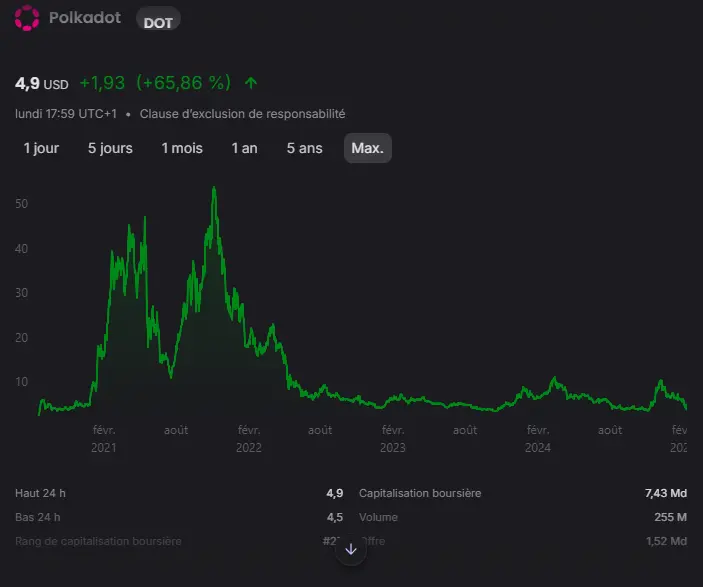
Current Price: $4.9
-
Consensus Mechanism: Nominated Proof of Stake (NPoS)
Use Cases
Polkadot is designed to support a wide range of use cases, including:
-
Interoperability: The primary goal of Polkadot is to enable different blockchain networks to interoperate, allowing them to share data and functionality.
-
Decentralized Applications (dApps): By enabling interoperability, Polkadot expands the potential for dApp development across multiple blockchain platforms.
-
Cross-Chain Transactions: Polkadot facilitates the transfer of assets between different blockchain networks, enhancing liquidity and user experience.
-
Custom Blockchains: Polkadot allows developers to build custom blockchains, tailored to specific use cases, while still benefiting from the interoperability and security of the Polkadot network.

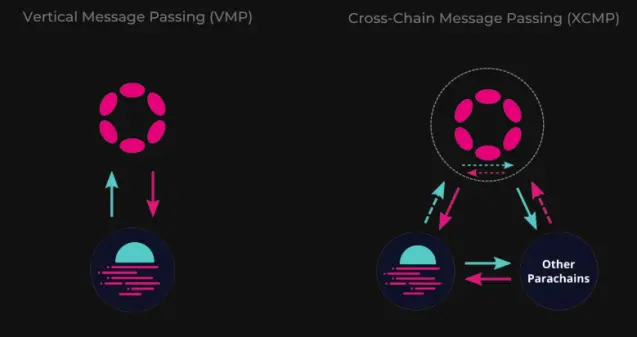
Polkadot's ecosystem representation.
Pros

-
Interoperability: Polkadot's ability to connect different blockchain networks is a significant breakthrough, offering unprecedented flexibility and collaboration opportunities.
-
Scalability: By enabling parallel processing of transactions across multiple blockchains, Polkadot enhances the overall scalability of the blockchain ecosystem.
-
Security: Polkadot's shared security model allows smaller blockchain networks to benefit from the collective security of the entire network.
-
Innovation: Polkadot's framework encourages innovation by allowing developers to experiment with new blockchain architectures and applications.
Cons
-
Complexity: The concept of interoperability and the technology behind Polkadot can be complex, potentially creating barriers to adoption for some users.
-
Competition: Polkadot faces competition from other interoperability solutions and blockchain platforms, which could impact its adoption rate.
-
Regulatory Uncertainty: Like all blockchain projects, Polkadot's success is subject to regulatory developments and uncertainties.
Specificity
Polkadot XCM Overview
Polkadot's Cross-Consensus Messaging (XCM) is a sophisticated inter-chain messaging format designed to facilitate communication between different consensus systems, not just chains, but also smart contracts, pallets, and bridges. XCM serves as a versatile language for conveying intentions and executing transactions across various blockchain components, ensuring compatibility and interoperability. It is particularly useful for wallets to create transactions with chains whose business logic can evolve over time, thanks to its well-versioned, abstract, and general nature. As the Polkadot network continues to develop, XCM is set to play a crucial role in enabling seamless cross-chain communication and transactions.
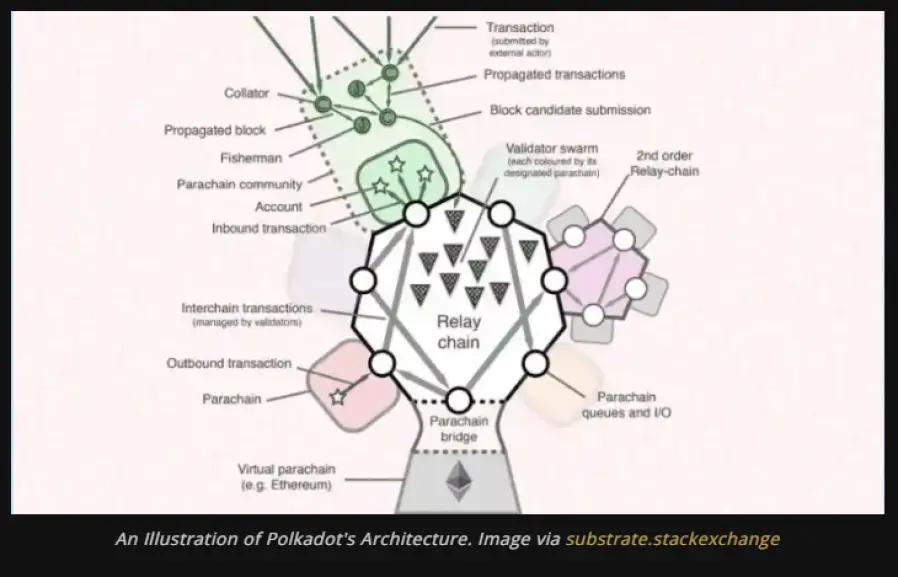
What sets Polkadot apart is its heterogeneous sharding approach, which allows different blockchain networks to interoperate while maintaining their unique characteristics. This is achieved through the Relay Chain, which acts as the main chain of the Polkadot network, and parachains, which are independent blockchain networks that can interoperate with the Relay Chain. Additionally, Polkadot's governance model is designed to be decentralized and community-driven, ensuring that the network evolves based on the collective decisions of its stakeholders.
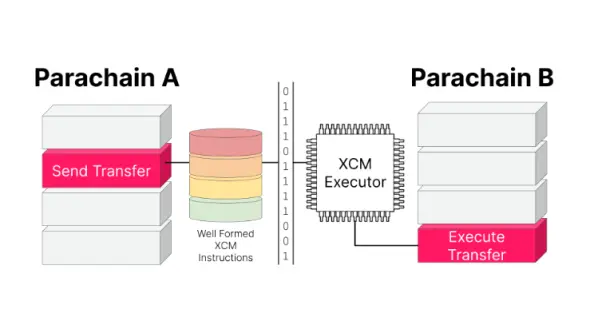
Notes: XCM abstracts away the actual on-chain operation that will be called, which lets the recipient redirect calls to always make them valid.






