
When you're making your crypto purchase on an exchange, it's important to factor in the different ways you can execute it. You can place a market order, limit order, and a stop-limit order on most exchanges. These different types of orders will allow you to purchase your assets at prices that you find rapidly or at prices that you desire.
In this article, we will be taking a look at those three exchange orders and giving some insight into each one. Hopefully, by the end of reading this article, you can make your next crypto purchases confidently and efficiently!
I am not sponsored by anyone or anything mentioned in this article.
This is not financial advice. I am not a financial advisor.
Please do your own research before making any decisions before investing.
This article is meant for educational purposes only.
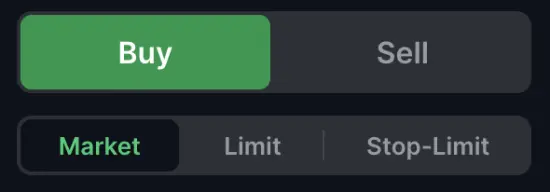
A market order is an order to quickly buy or sell at the best available current market price. Liquidity needs to be filled, meaning that is executed based on the limit orders that were previously places on the order book. When market orders are placed on the order book, they are executed instantly and will match the cheapest limit sell order available.
These are effective in situations where getting your order filled is more important than getting a specific price. Typically, market orders should only be used if you are willing to pay higher prices in a rush. If you're looking for a specific price for your crypto purchase, you're better off using a limit order.
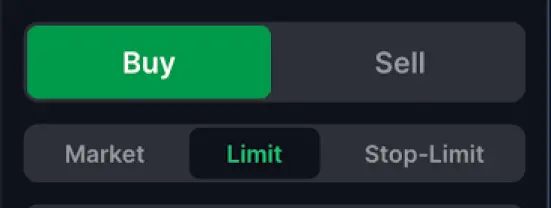
A limit order is an order that you place on the order book with a specific limit price. This gives you more freedom when trading, as the limit price is determined by you. Whenever you place a limit order, the trade will only be executed if the market price reaches your limit price or better. This makes it easier to buy at a lower price and sell at a higher price, rather than at whatever the market price currently is.
Since the order isn't executed immediately, you'll generally pay less fees for the transaction. If the market price doesn't reach the limit price you've set, the limit order will remain open. These are ideal when you are not in a rush to either buy or sell. Patience will be needed when conducting limit orders so sit back, relax, and watch those orders get filled over time.
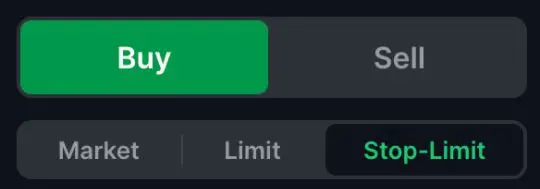
A stop-limit order is best understood when you break it down into both parts, stop and limit. The stop price is the price that triggers a limit order. The limit price is the specific price of the limit order that was triggered. This means that once your stop price is reached, your limit order will be immediately placed on the order book. It's generally safer to set the stop price a bit higher than the limit price for sell orders or a bit lower than the limit price for buy orders.
Stop-limit orders are a great tool to alleviating any losses for drops in value. If you believe your crypto asset is at a reliable support level, then a stop-limit order may be beneficial. If you're in a situation where the value of your asset is dropping too fast and your stop-order limit was passed over without being filled, then maybe the market order is more appealing to quickly get yourself out of the trade. When selling, they can be useful for placing orders to ensure that you take your profits when your trading targets are reached. They can be beneficial after a certain resistance level is breached during the start of an uptrend on the chart as well.

Navigating through the different crypto exchanges can be tricky and confusing to some but, as with anything else, knowledge comes with time and practice. The more you utilize these different types of orders will only make you a better trader in the long run... if you're making the right decisions and learning from any mistakes! I hope this article gave you a little more information regarding these three different types of trade orders. Now, we can take this knowledge and apply it to our own trading skillset as well... after doing your own research, of course!
Which trade order do you typically execute when trading your assets?
Let us know in the comments down below!
Thanks so much for reading!
Please feel free to follow my page for daily blog posts about crypto news, updates, and research!
Have a wonderful day!






