
Hello My Friends; BRC-20 tokens, which have experienced a recent explosion in demand, continue to occupy the cryptocurrency agenda. I also made an investigation because I saw an opportunity in this field. I want to share my research with you.
If you're ready, let's start …
First of all, what is BRC-20 ... ?
Created in 2023 by a developer called Domo, BRC-20 is an experimental fungible token standard designed specifically for the Bitcoin blockchain network. Thanks to the BRC-20 standard, users can write JSON (JavaScript Object Notation) data on Bitcoin. Since BRC-20 is in the experimental stage, it uses the Ordinals protocol. Thanks to the Ordinals protocol, it is possible to create Bitcoin Ordinals NFTs. Satoshis, the smallest unit of Bitcoin, are separated and turned into NFTs, and videos, text, images, etc. can be placed on these NFTs. data can be added.
BRC-20; In addition to taking advantage of Bitcoin's popularity and prestige, it uses the security and decentralized nature of the Bitcoin network. It can be sent between people like other NFTs.
Transactions that can be done with BRC-20 ...
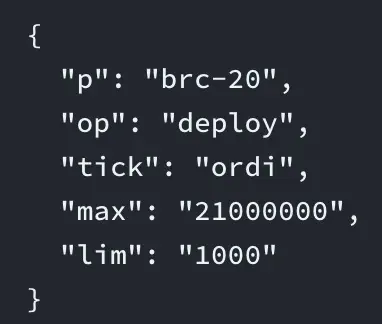
Distribution: Creating tokens by entering certain parameters
Mint: creation of a certain number of NFTs
Transfer: Ability to perform transfer transactions between wallets
To trade BRC-20 tokens, users need a Bitcoin wallet. Wallets generally used for BRC-20; UniSat Wallet is an open source Chrome extension for Bitcoin Ordinals and BRC-20.
BRC-20
How to Create BRC-20 Tokens … ?
BRC-20 tokens are created by writing JSON data called Ordinals onto satoshis. A total of 8,500 different tokens were issued using the BRC-20 standard. The majority of the printed BRC-20 tokens are meme coins. The first BRC-20 token created was Ordinals (ORDI). Some of the BRC-20 tokens are: PEPE, MEME, NALS, OSHI, SATS.
Usage Areas of BRC-20 Tokens
Tokenization; BRC-20 tokens can convert assets such as fiat money and precious metals into crypto assets.
Token Transfer; Like other cryptocurrencies, BRC-20 tokens can be used for transfers between wallets on the network. Since the BRC-20 blockchain is Bitcoin, transaction fees are paid in Bitcoin.
DeFi: Its fixed and simple design poses a disadvantage to the bitcoin network, limiting the development of decentralized protocols and applications. BRC-20 tokens could offer an innovative future to bring growth and liquidity to the Bitcoin blockchain. With additional developments, these tokens can be integrated with DeFi products, liquidity mining protocols, and GameFi, as well as creating decentralized applications (dApps). It therefore provides a means to extend the functionality of the Bitcoin network.
What are the Differences Between BRC-20 and ERC-20 Tokens...?
While BRC-20 tokens do not require the use of any smart contracts, additional layers or platforms, ERC-20 smart contracts are used. This is one of the most important differences that distinguishes these two standards from each other.
While BRC-20 operates on the Bitcoin network, ERC-20 operates on the Ethereum network.
BRC-20 PoW uses ERC-20 PoS algorithms.
BRC-20 tokens are parallel to Bitcoin. Any activity on the BRC-20 protocol does not affect Bitcoin. Even if an issue occurs with BRC-20 tokens or protocol functionality, the Bitcoin network remains unaffected.
My Last Words; The popularity of BRC-20 tokens has begun to grow significantly. The biggest advantage of BRC-20 tokens is that they operate on the Bitcoin blockchain. A lot of BRC-20 meme tokens have been created in this new space. I made some investments because I saw an opportunity in this field.
As I always say; Listen to everyone, decide for yourself... Good Luck
Luck does not help those who do not want to work. Sophocles






