
Have you ever asked yourself what Bitcoin is and why is it extremely valuable?
Main headlines that we are going to cover:
This paragraph:
- What is Bitcoin ?
- How much does a single BTC cost in 2010?
- How did Bitcoin reach this price in 2026 ?
- Why do we use it despite it being just a number on screens?
The Next Paragraph (Soon):
- How much time do we spend to make a single Bitcoin 🤔?
- How much effort, electricity and computing power do we spend to make BTC coins come to life?
- Finally, why can BTC change many people's lives to the worst or to the best?
What is Bitcoin ?
- who has made Bitcoin and when?
The answer is that we must go back to 2009 !
On January 3, 2009, the first BTC was created by the genius Satoshi
Nakamoto.
No one knows whether he is a person or a team and there are no signs
referring to the satoshi nationality.
However, in early online profiles, Satoshi claimed to be a Japanese
male born on April 5, 1975, but never publicly revealed his actual
location, real name or nationality.
Satoshi mined the genesis block and won 50 Bitcoin as a reward from
the system but unfortunately, these Bitcoins were not sellable and had
no value at that time.
They remain permanently at the founding address, and the block
embeds a headline from The Times, symbolizing a critique of the
traditional financial system and marking the beginning of the
cryptocurrency era.
A few people know that the terms like ( mining, hashfunction,
blockchain…….etc. ) were begun in a normal weekend in 2009
the world's first bitcoin was generated by 'Satoshi Nakamoto' through
'Mining'.
- What can we learn?
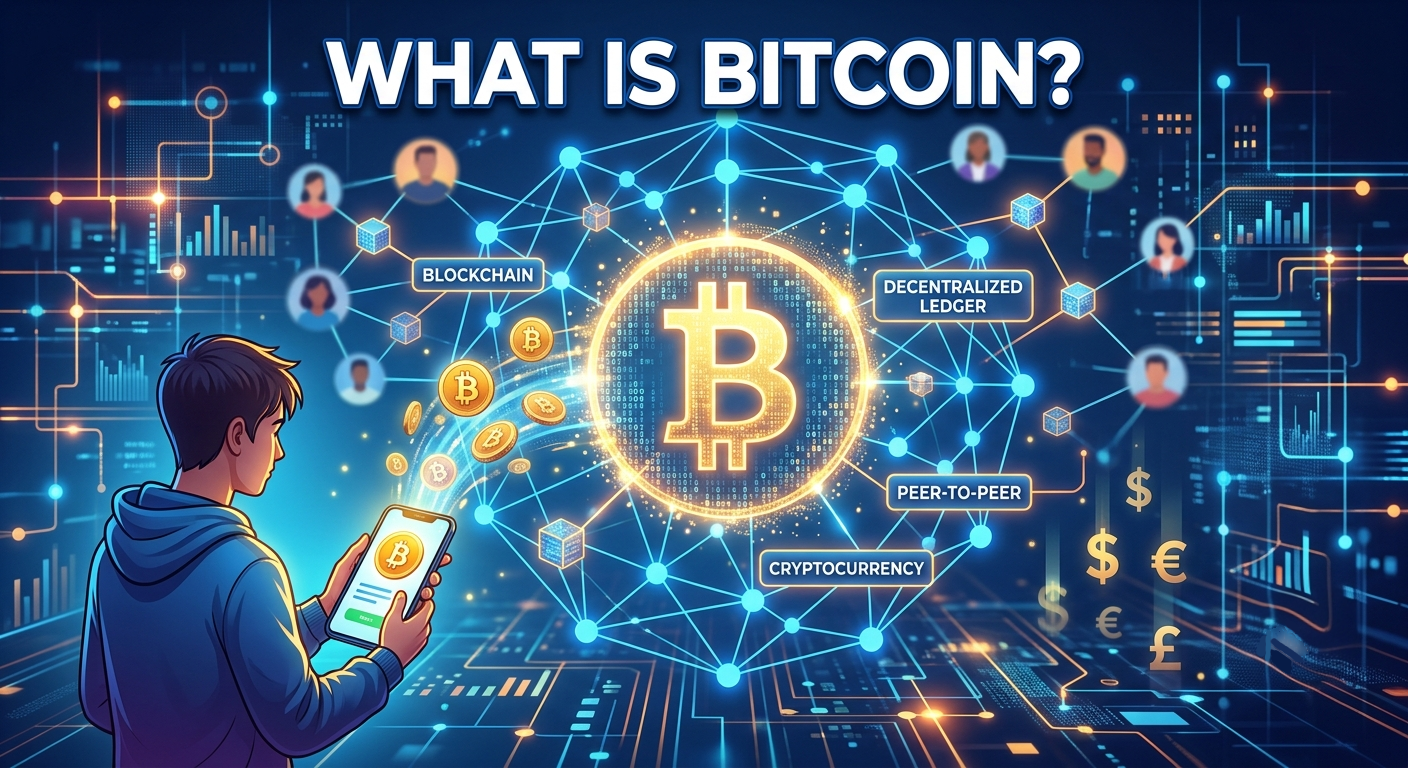
Bitcoin is a decentralized digital currency created by Satoshi
Nakamoto that functions without a central bank or single
administrator.
It allows users to send and receive money directly over the internet
without the need for traditional financial intermediaries.
How much does a single BTC cost in 2010?
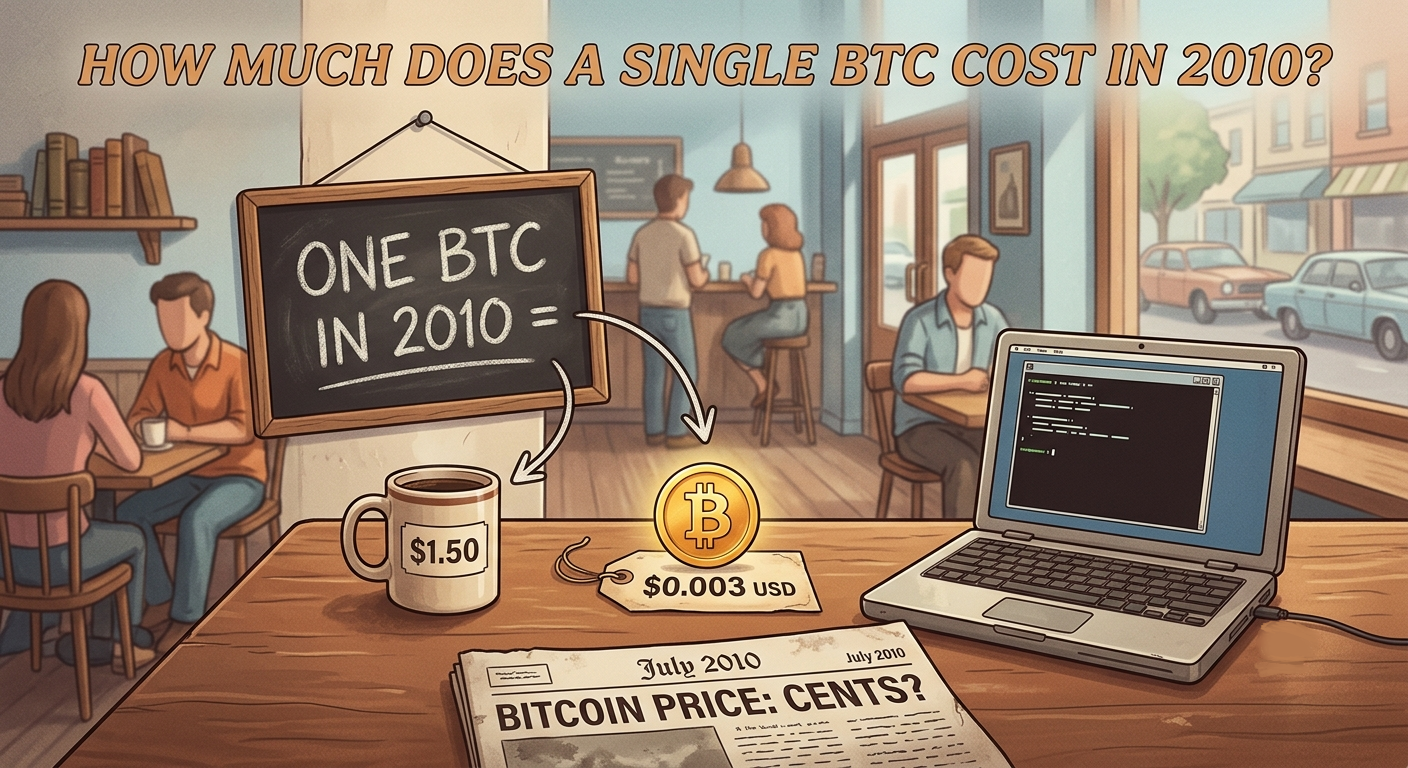
In 2010, the price of a single Bitcoin was worth fractions of a cent and
never rose above ($0.30). The earliest recorded exchange price in
March 2010 was roughly ($0.003) per coin.
Throughout the rest of the year 2010:
- May 2010: An early adopter bought two Papa John's pizzas for 10,000 BTC, which established a benchmark price of roughly ($0.0025) to ($0.004) per coin.
- July 2010: The first major exchange, Mt. Gox, opened, and Bitcoins were trading at about ($0.05) per coin.
- Late 2010: The price jumped to between ($0.10) and ($0.15) in October, and closed the year at approximately ($0.30)
How did Bitcoin reach this price in 2026 ?
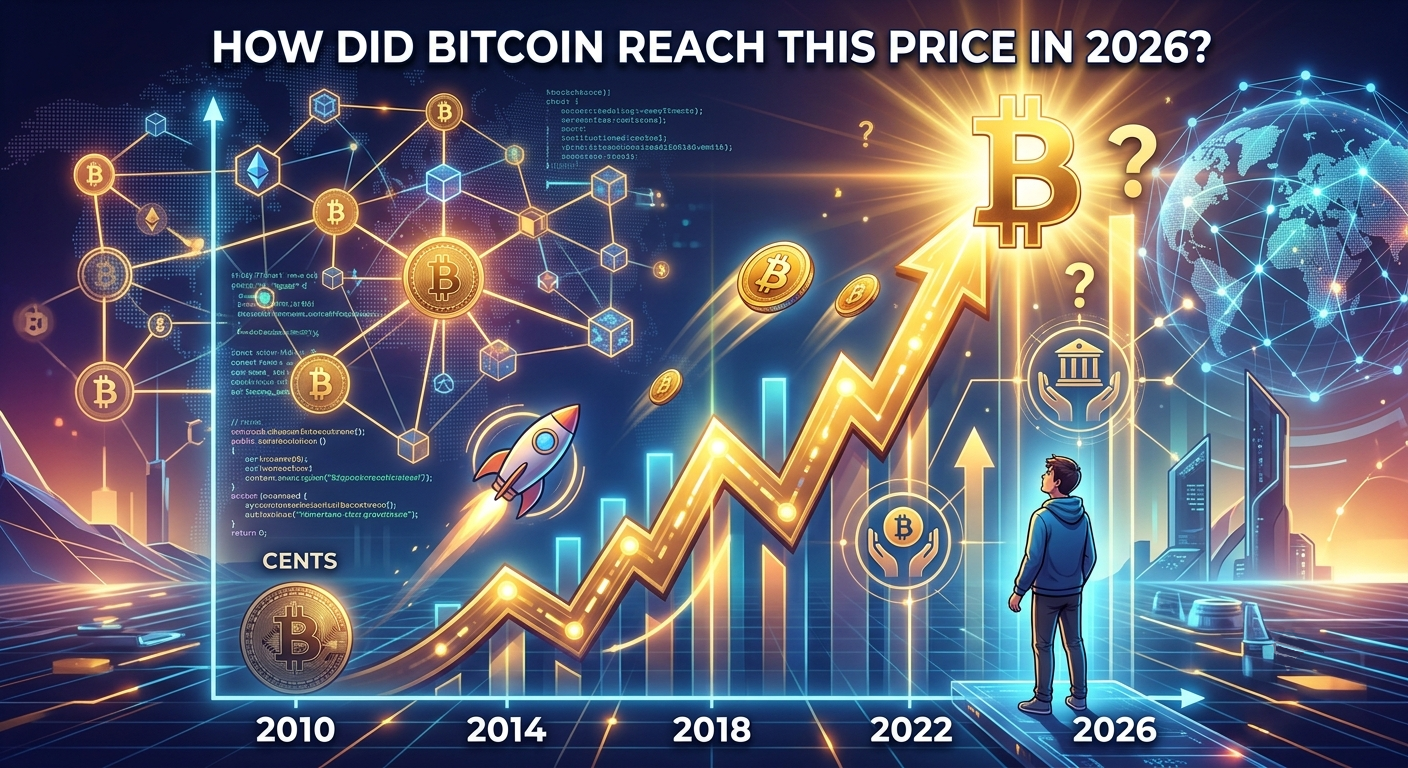
Bitcoin's valuation in 2026 is driven by massive institutional adoption, government reserves, and increasing scarcity. Key drivers include:
- Sovereign and State Reserves.
- Institutional and Corporate Hoarding.
- Macroeconomic Conditions.
- First: Sovereign and State Reserves:
Countries and US states have begun establishing strategic reserves of Bitcoin, withdrawing huge amounts from the circulating supply, so that affects bitcoin price and makes this mind-boggling rising price.
- Second: Institutional and Corporate Hoarding
Large corporations and investment funds continue to make aggressive and sustained purchases, generating buying pressure that far exceeds the amount of new coins mined, so the price rises.
- Third: Macroeconomic Conditions
Evolving central bank policies and the general weakening of fiat currencies globally are continually pushing investors toward fixed-supply assets.
Why do we use it despite it being just a number on screens?
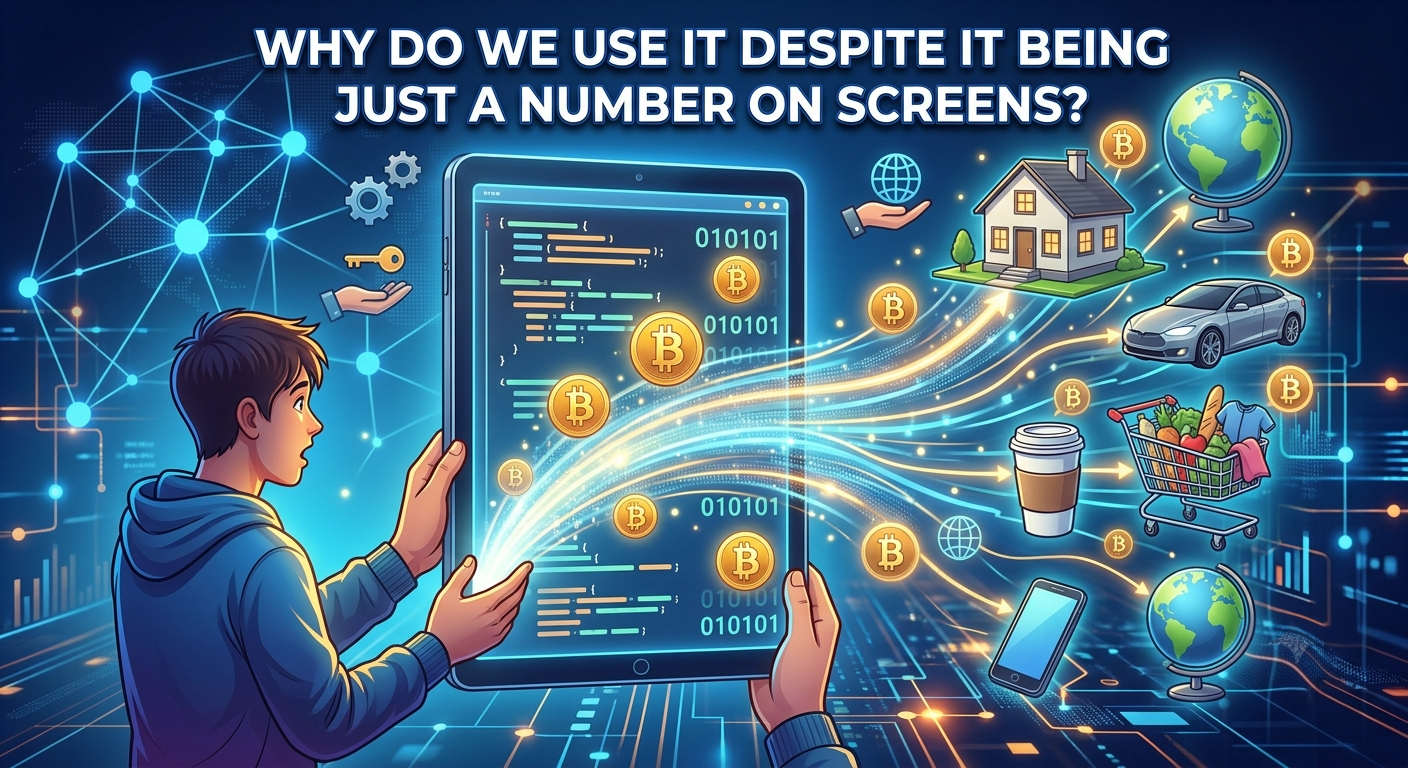
We use Bitcoin in this way, trusting it as a reliable currency because the community has agreed to trust its mathematical scarcity and decentralized security, making it an excellent digital store of value despite not having a physical form.
- Shared Trust:
All people in our world have made the normal currency as an eligible trading way to buy or sell something.
Like dollars, Euro and any other currency.
The same thing with Bitcoin. People have made it an eligible currency to trade with.
- Mathematical Scarcity:
There is a fixed maximum limit that permanently prevents it from exceeding 21 million Bitcoins, making it completely immune to inflation.
- Decentralized Control:
There is no way for a company or a state to restrict your coins.
In addition, no single government, central bank, or corporation can print more of it which goes to the strength side of this currency because you can't make fake Bitcoins.
- Global flexibility:
It enables the immediate, secure transfer of huge sums of money across borders without the need for a traditional banking intermediary.
conclusion:
Now we reached the end of our paragraph today….📚🥰
Let me know if you enjoyed….😇
Don't forget to support us with your like and please share our work with your friends,family and relatives that are interested in these topics.😉😁
Thanks so much for reading…
See you in the next articles…😁….have a nice day🥰😃
Goodbye…….👋🥰


