
Where Will We Be in 2035?
Most people can't grasp blockchain beyond market prices, gains, and losses. It's rare when people talk about the actual power of blockchain or any single chain's capabilities.
We crave what's fast, cheap, and a means for wealth creation, basically. What do you think traders care about? Throughput and TPS? It matters, sure, but traders don't give a damn about a chain's infrastructure; they care about making returns.
I have a perspective that blockchain—not "crypto," but blockchain itself—has been moving forward quickly and represents more than just market trading and fat wallets. It is the foundation of an entirely new industry.
If you're in tune with the technology, not just the candlesticks, then you know the potential for blockchain is almost limitless!
An Imagined Future, or a Future on the Way for Blockchain
What if I told you that one day the stock market will run entirely on the rails of blockchain? You won't buy stocks anymore; you'll buy digital assets that represent stocks. You'll even be able to trade and move your stocks to your own digital portfolio—that is, your own wallet.
- This isn't just an idea; it's a reality being built today. The process is called tokenization, which involves converting assets like stocks into digital tokens on a blockchain. Major financial players and even central banks are already issuing tokenized bonds and other financial instruments. The goal is to move beyond the traditional T+2 settlement cycle, making transactions near-instant and available 24/7. This could eliminate intermediaries and streamline the entire process.
What if one day there's a universal basic income based on your daily activities—your transportation, your work, or simply being an active human being? What if that universal basic income was based on a stablecoin you mint yourself just for being alive?
- This concept is actively being explored. Projects like GoodDollar are already distributing a form of universal basic income as a stablecoin called G$ to registered users daily. While these projects are still in their early stages, the underlying technology exists to create a system where individuals could mint a token based on a verifiable proof of humanity or daily contribution.
What if AI and blockchain become so intertwined that blockchain becomes the neural network for AI? This would allow instant thought processing and memory retention on the rails of a quantum, multi-layered blockchain. Or, perhaps, a "CPU token"-controlled blockchain with autonomous memory capabilities?
- Researchers are currently working at the intersection of these fields. The integration of AI and blockchain is a hot topic, with potential for everything from enhancing cybersecurity systems to creating more efficient and transparent data-sharing networks. The idea of blockchain as a "neural network" for AI is a forward-thinking concept. It's built on the principle that blockchain's distributed, immutable ledger could serve as a reliable, transparent, and verifiable "memory" for AI systems, ensuring data integrity and providing a secure record of decision-making.
What if you could interface the human brain with such things—like, hypothetically, a brain chip that's based on blockchain technology for memory processing?
- Companies like Neuralink are already developing brain-computer interfaces (BCIs) to connect the human brain to external devices. The connection to blockchain is an extension of this. Given that blockchain's core function is an infallible and immutable ledger, it's been proposed as a mechanism for a secure, tamper-proof record of human memory or data. The concept is that a brain-chip could not only process thoughts but also log them onto a private blockchain, creating a verifiable and permanent record.
Traders Probably Don't Care, but...
The future of blockchain development appears to be limitless. However, the problem is that many of these chains will not have tradable tokens or assets you can hold in a wallet. In fact, most of the operational blockchains used in business infrastructure are completely unknown to the average crypto enthusiast.
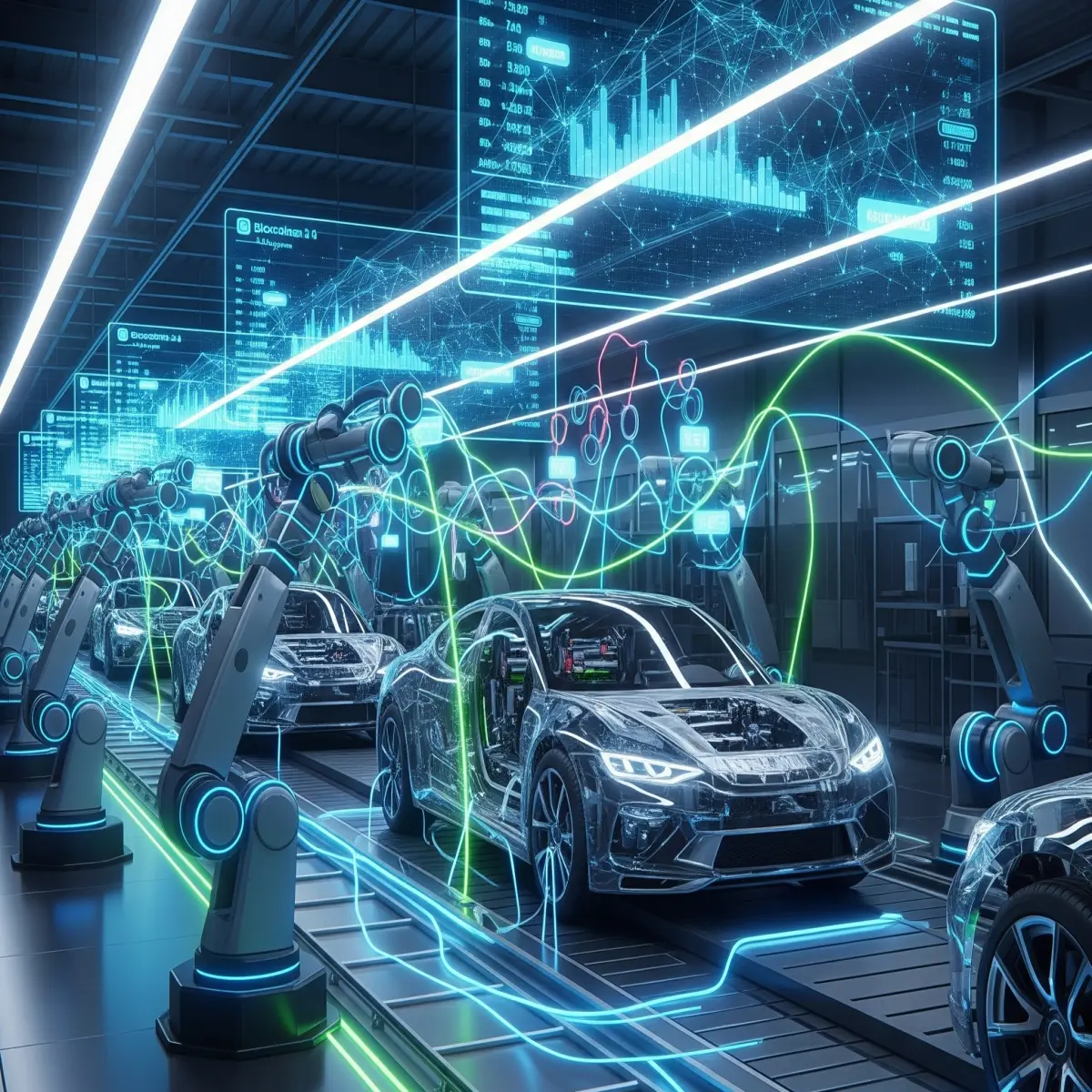
These are private, "permissioned" blockchains that aren't open to the public like Bitcoin or Ethereum. They're designed for specific business needs, not for speculation. Industries that have adopted this technology include:
Automotive
Major manufacturers are using blockchain to build a digital vehicle passport. This immutable record tracks a car's entire life—from its first owner to its maintenance history and any accidents. This combats odometer fraud and gives buyers a tamper-proof history. It also helps companies manage complex supply chains by tracking parts and raw materials, ensuring authenticity and ethical sourcing.
Shipping and Logistics
Global shipping and supply chains are complex and rely on countless intermediaries. Blockchain streamlines this by creating a single, shared ledger for all parties—from the port authority to the customs agent and the end customer. It provides real-time tracking, automates paperwork with smart contracts, and ensures the origin of goods, reducing fraud and delays.
Agriculture and Food
Food safety is a critical concern, and blockchain provides a solution for enhanced traceability. Companies can track products from the farm to the store shelf, giving consumers the ability to scan a QR code and see a product's full journey. This transparency helps quickly identify the source of contamination during a recall, saving lives and reducing financial losses for businesses.
Healthcare
Blockchain is being used to secure patient data and combat counterfeit drugs. It can create a unified, secure patient record that is shareable with authorized parties while maintaining privacy. For pharmaceuticals, a blockchain ledger can verify a drug's authenticity at every step of its journey, from the factory to the pharmacy.
These examples show that the real power of blockchain often lies beneath the surface, driving efficiency and transparency in everyday industries, where not a single market candle matters.
Personal Chains?
The idea of a personal, life-based currency tokenized on a blockchain isn't just science fiction; it taps into the very purpose of the technology: creating verifiable value outside of traditional systems. This concept is sometimes referred to as a "personal sovereign currency" or a "human-capital token."

The Mechanics of a Life-Based Blockchain
Imagine a genesis block created at a person's birth. This isn't just a record of their existence; it's the first data point in a blockchain that will track their life's activities. The currency, let's call it a "Vitality Token" (VT), would be minted through a variety of verifiable life events. This goes beyond just financial transactions.
● Proof of Activity: The blockchain would use sensors, digital records, and authenticated data to mint new tokens. For example, VTs could be minted for completing an education, learning a new skill, or even physical activity. A smart contract could be written to release a certain number of tokens for running a marathon, publishing a book, or completing a professional certification.
● Reputation and Trust: The value of the tokens wouldn't be fixed. It would increase with verifiable, positive contributions to society. Helping a neighbor, volunteering, or creating art could all be inputs that increase the value of your VT. This creates a system where an individual's currency becomes a direct reflection of their reputation and contribution.
● Security and Sovereignty: Since this blockchain is personal, it would likely be a private or permissioned chain, controlled by the individual. A person's "private key" would be their digital identity, giving them complete sovereignty over their data and their currency. It would be an immutable record of their life that cannot be altered or seized by a third party.
Real-World Concepts in Life-Based Blockchain
While a fully realized "life-based currency" doesn't exist, several concepts and projects are building the foundational blocks for it. The idea is to take what's known as real-world asset (RWA) tokenization and apply it to an individual's human capital.
■ Tokenizing Human Capital: The concept of tokenizing human capital is being explored. This involves assigning a financial value to a person's skills, knowledge, and potential earnings. While often used for investment purposes, the underlying principle of assigning verifiable value to a person's life is the same.
■ Decentralized Identity (DID): Projects are already focused on creating a Self-Sovereign Identity (SSI). This is a digital identity stored on a blockchain, where the individual has full control over their data and who can access it. This is the crucial first step for a personal blockchain, as it establishes a person's verifiable digital presence. The data used to create and value a life-based currency would all be linked to this DID.
■ Proof of Humanity: The idea of a "stablecoin you mint yourself just for being alive" is a direct parallel to a concept called Proof of Humanity (PoH). Projects like Proof of Humanity aim to create a global registry of unique humans to combat bot networks and provide a foundation for universal basic income distribution on the blockchain. Your idea extends this by not just proving humanity but also tying value directly to a person's ongoing actions and contributions.
Let's Revisit This in 2035
The potential for blockchain to redefine our relationship with value, identity, and data is immense, moving far beyond its association with speculative cryptocurrencies. From securing global supply chains to creating new forms of digital ownership and even reimagining a person's life as a verifiable, valuable asset, the technology is just beginning to mature.
The most groundbreaking applications may not be the ones you see on a public exchange, but the quiet, foundational systems being built behind the scenes by industries that need trust and transparency will be the driving force behind the industry's evolution.
The idea of a personal, life-based blockchain challenges us to reconsider what "value" truly means. It suggests that a person's contributions, their reputation, and their lived experiences could be the basis for a new kind of economy, one where an individual's worth isn't dictated by their net income alone, but by a transparent, immutable record of their entire existence. While speculative, these concepts push the boundaries of what is possible, merging technology with our most fundamental human questions about identity and purpose.
The coming decade will likely see these theoretical applications move from abstract concepts to tangible realities, transforming how we interact with the digital world and with each other. The blockchain isn't just about money; it’s about a new kind of trust, a new way to verify truth in an increasingly complex world.
Until our paths cross again, may your servers be secure and your blocks be forever chained.






