
Internet crime remains a pressing threat to society. A new report released by the FBI confirms that 2019 was another lucrative year for criminals. It also appears that most of the victims are over 60 years of age, indicating a somewhat surprising shift.
The FBI 2019 Internet Crime Report
Every year, thousands of consumers in the US fall victim to internet crime. Not everyone reports such incidents. This is either due to a feeling of shame, or simply not bothering with getting a small sum of money back. Even so, the FBI received the highest number of complaints in history throughout 2019.
During 2019, there have been 467,361 complaints registered by IC3. Of those complaints, most were made by victims aged over 60. This is slowly becoming the most lucrative demographic for internet crime. Criminals managed to obtain a reported loss of $835,164,766 from this demographic alone.
Other core demographics include the 30-39, 40-49, and 50-59 brackets. Those three combine for the majority of all complaints received by the FBI in 2019. A further confirmation as to how Millennials are not a prone target for internet crime. That is somewhat surprising, given this demographic's favoritism toward online and digital solutions.
The Targets Make Sense
Figures like these may seem confusing at first. At the same time, they also make perfect sense. Internet users aged 60 and older often have more money compared to other demographics. That makes them high-profile targets for people engaging in internet crime.
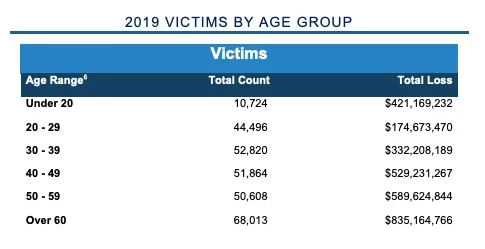
Additionally, this age group often lacks the know-how to deal with criminal activity. If they get hacked, or fall victim to ransomware, there is a higher chance of them paying a fee. Furthermore, they are less prone to common practices regarding modern day banking. As such, they may put trust in anyone claiming to represent a financial institution, rather than being wary.
Another core factor is the growing focus on businesses in the US. A lot of smaller businesses are run by people over the age of 30. That makes them a viable target for internet crime as well. It also helps explain why so many complaints are filed by people over 30 years of age in 2019.
Bucking the Trend is Difficult
With over $3.5 billion in reported losses last year, things are not looking great. Figures like these will only incentivize more internet crime. Many people want to make quick money online by whatever means necessary. Statistics like these can make online crime seem all the more appealing.
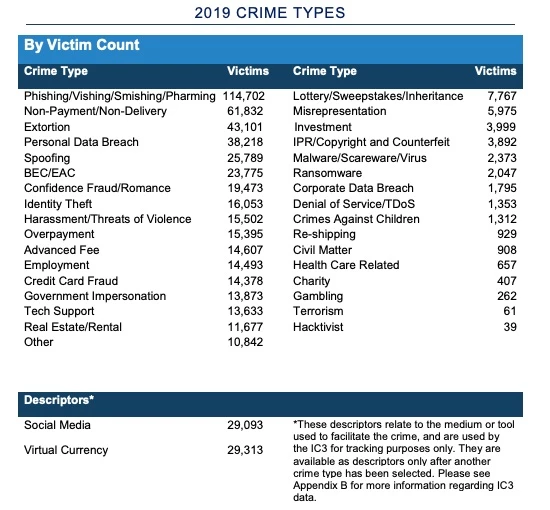
The list of crime types is also quite vast. Contrary to most people's expectations, terrorism is near the bottom. Phishing remains the most popular category at this time. Extortion, personal data breaches, and romance fraud are all in the top 10 as well. This is despite those types of scams being around for decades.
The Role of Cryptocurrency and Social Media
The report also indicates that virtual currencies are a small part of internet crime. A total of 29,313 reported incidents involve this form of money. That means Bitcoin and other crypto assets represent less than 10% of all internet crime reports of 2019. This figure is much lower than most people would expect.
The role of social media cannot be underestimated either. A total of 29,093 reports involve social platforms. This further confirms how the popularity of Facebook, Twitter, and Instagram has a dark side to it as well.






