I started this fossicking trip with a bigger plan than usual.
The idea was to leave earlier, test the new metal detector, scout around the approximate Never Mind area, check a location I had marked from my own Prospect heatmap research, and then finish the day with another go at Site 4.
That sounded reasonable when I was planning it.
By the end of the day, my mind had certainly changed.
Not because the day was useless. It was actually very useful.
But it taught me something important:
One proper fossicking site is probably enough for one day.
There is a big difference between visiting a place and properly working it. Once I start looking at creek features, checking material, classifying, panning, saving concentrates, watching for possible colour, isolating suspicious material, taking photos, and making notes, the time disappears very quickly.
So while this trip began as a multi-target day, it ended up becoming mostly about one place.
Site 4.
And that was probably for the best.
The Original Plan
For this trip, I had three main goals.
First, I wanted to scout around the approximate Never Mind area. Not to enter any old workings, and not to do anything silly, but to get a better feel for the area and see whether the new detector picked up anything interesting.
Second, I had another location marked on my personal fossicking map. This was chosen from my own research using a Prospect heatmap, so I wanted to have a look and possibly sample a few areas there.
Finally, I wanted to end the day at Site 4.
Site 4 has been sitting in the back of my mind since my last visit there. I would really like to find some decent colour there, and it feels like one of those places that deserves more time rather than quick visits. It is one of those peaceful locations where time doesn't matter. Nature just keeps progressing throughout the day.
I also had a new metal detector to test.
It is still a cheap one, but it felt sturdier than the earlier detector I had been using. That alone gave me some hope that it might be slightly less frustrating.
Possibly wishful thinking.
Why I Am Moving Toward One Site Per Day
The biggest lesson from the trip came before the gold, before the detector trouble, and before the concentrates waiting at home.
It came from the day itself.
Trying to fit multiple targets into one trip sounds efficient, but fossicking properly is not quick.
A single site can easily fill a day if I work it properly.
There is the walking around and looking. There is choosing a spot. There is checking the creek. There is classifying material. There is panning. There is watching how the heavies behave. There is looking for possible colour. There is putting aside interesting rocks. There is dealing with mica. There is saving concentrates. There is packing up. There is filling in anything that needs to be filled in and making sure the place is left tidy.
Then there are photos and notes if I want to turn the trip into a useful post later.
So from this trip onward, I think I need a simpler approach:
Pick one main site and work it properly.
That does not mean I will never scout around or check nearby areas, but the main effort should probably go into one location per fossicking day.
That should give me better samples, better notes, and less rushing.
Never Mind: A Scout, Not a Sample
The Never Mind part of the trip ended up being a scout only.
Once I realised the area I was looking at was outside the designated fossicking area, I did not take samples. That was the right decision.
I was interested in the area because of the historical connection and the way it appears on mapping, but interest does not override access rules. If an area is outside where I am allowed to fossick, then it becomes an observation point, not a sampling point.
I did still manage to make the visit memorable.
I stumbled into a hole, slightly injured myself, and broke one of my kit bags.
That was not exactly the kind of field result I was aiming for, but it was a useful reminder. Old goldfield areas, old workings, rough ground, hidden holes, and uneven terrain deserve caution. Even when I am not entering anything or digging anything, just walking around with gear can still create problems.
So Never Mind gave me no samples, no colour, and no detector treasure.
But it did give me a safety lesson and a broken bag.
Not ideal, but still educational.
The Heatmap Target
The second planned area was one I had marked on my personal fossicking map after looking through Prospect heatmap data.
Once I checked it in person, I realised it is actually quite close to where I have already taken my family fossicking.
That changes how I think about it.
Rather than treating it as a separate solo trip target, I think this area makes more sense as a place to work gradually during family fossicking outings.
That is still useful.
Not every marked location needs to become a full solo field day. Some can become smaller test areas over time.
So this target is not being abandoned. It is just being moved into a different category.
A future family-day testing area.
Site 4 Became the Main Event
Site 4 is where I spent most of the day.
That was not the original balance of the trip, but it quickly became the most useful part.
I sampled a couple of nearby areas, took notes for future attempts, and spent more time looking at how the creek behaves in that section.
One feature stood out to me.
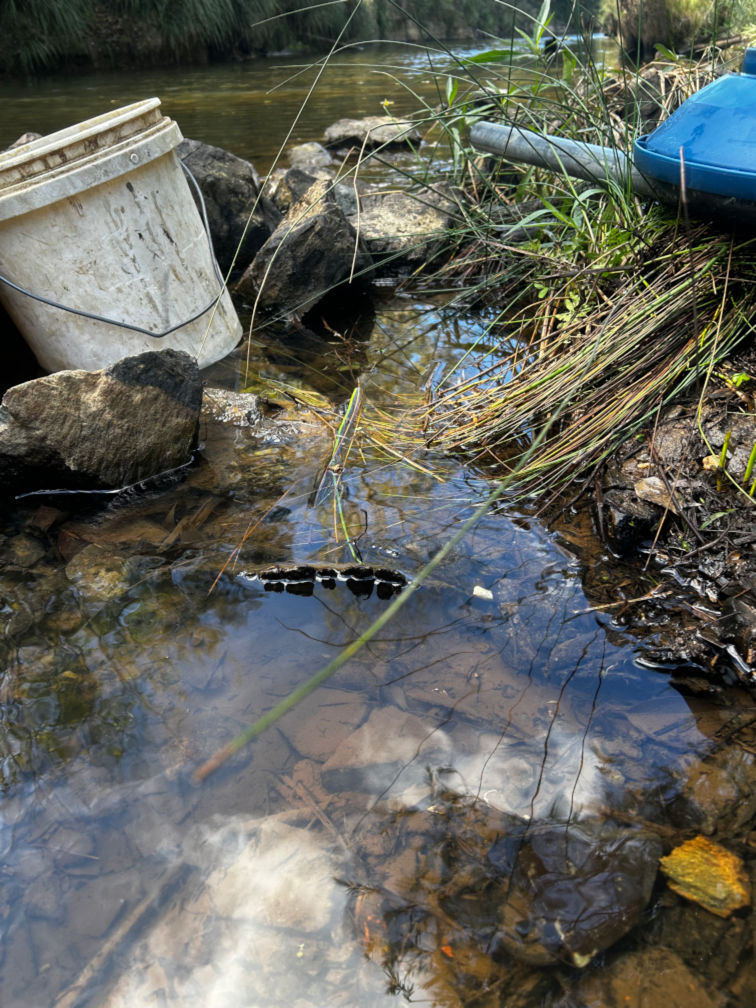
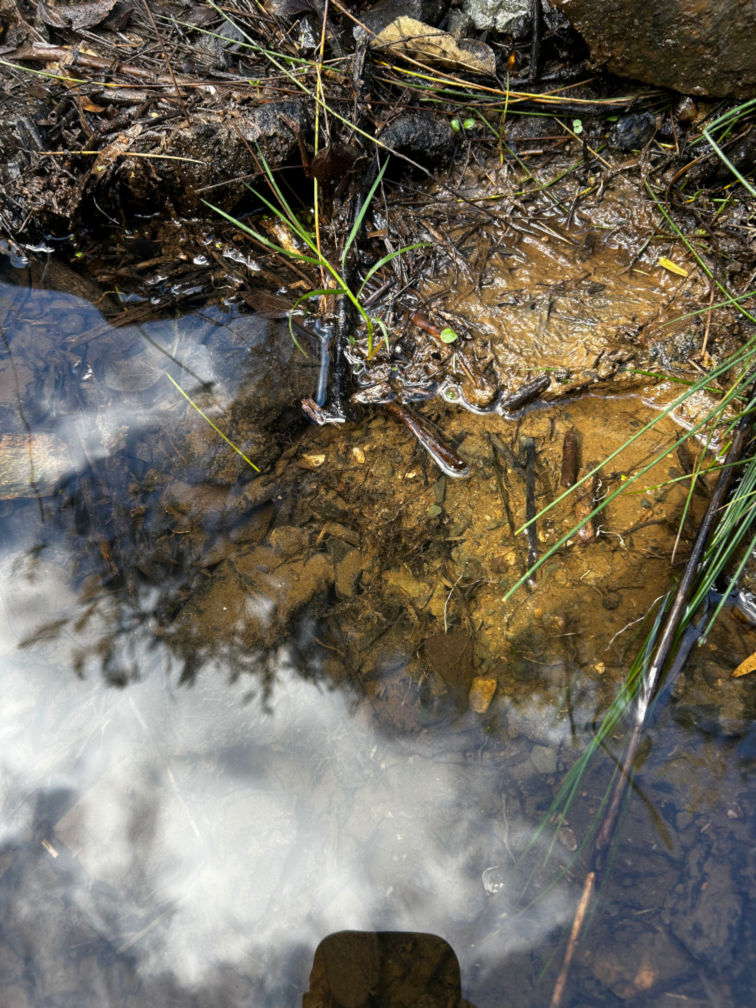
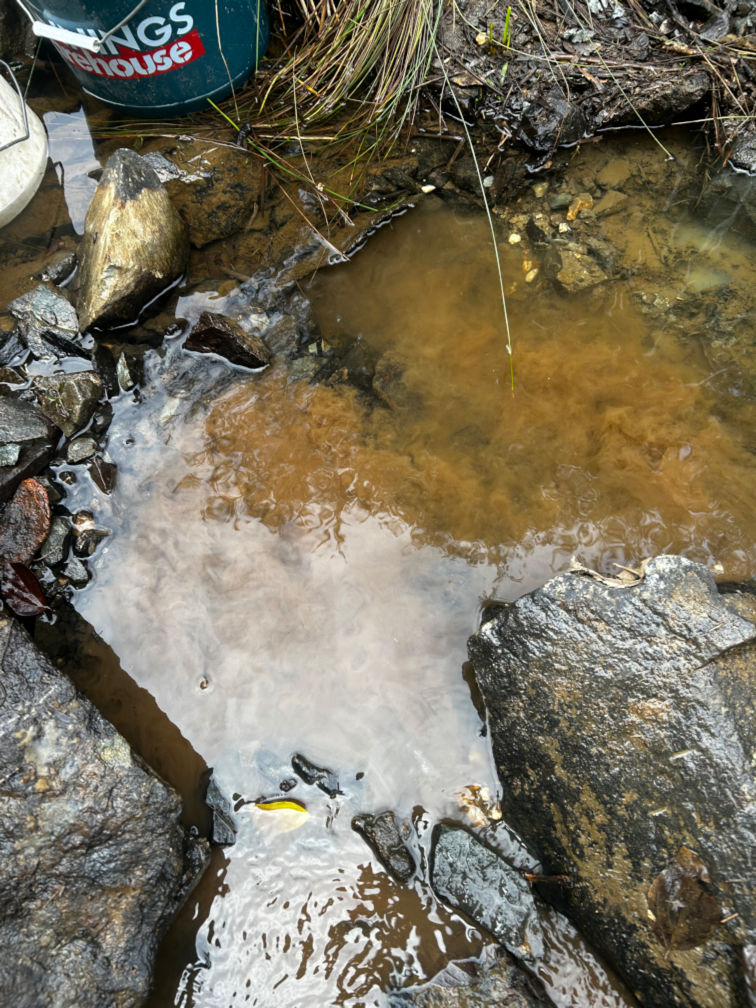
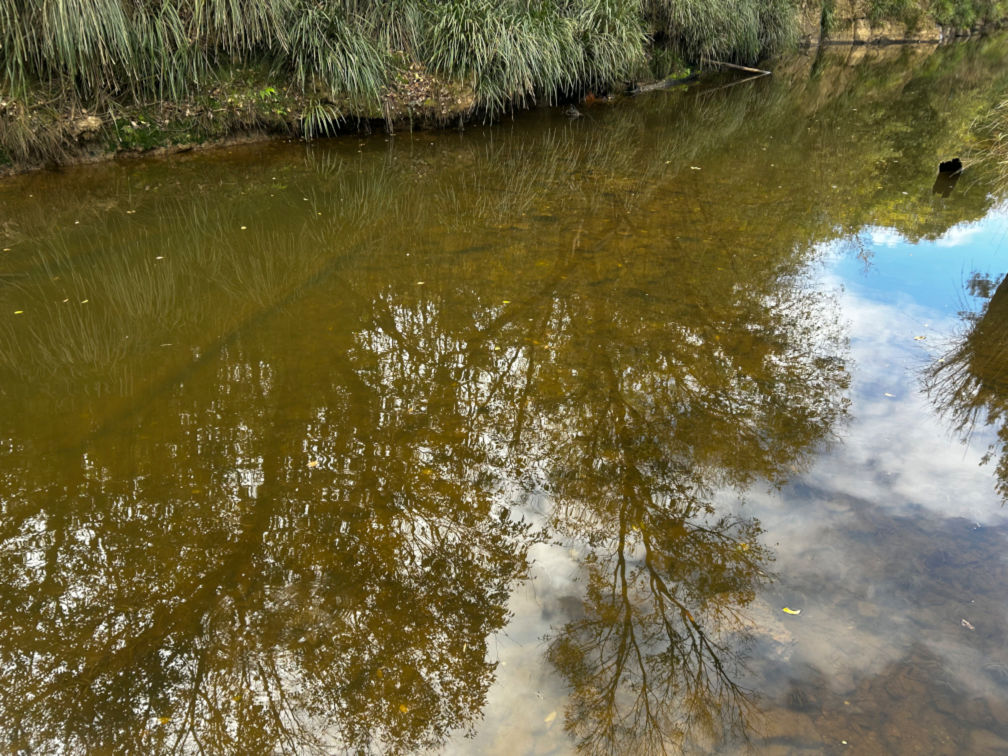
There is a section where the creek has deeper water, then crosses over a shallower gravel bar that runs across the width of the creek, before dropping off into deeper water again.
That caught my attention.
Changes in water depth and flow are exactly the kinds of things I need to start noticing more carefully. I am still learning how to read creek features, but this felt like a section worth remembering.
The shallow gravel bar and the deeper water either side may be worth testing more carefully on a future trip.
For now, it has gone into the mental notebook as a place to revisit.
Getting Stuck Into One Location
After taking some samples and looking around, I eventually set up my gear and got stuck into a single location.
That was probably the best decision I made all day.
Instead of constantly moving, I worked pan after pan from the same general area. That gave me a better feel for the material and allowed me to watch for patterns.
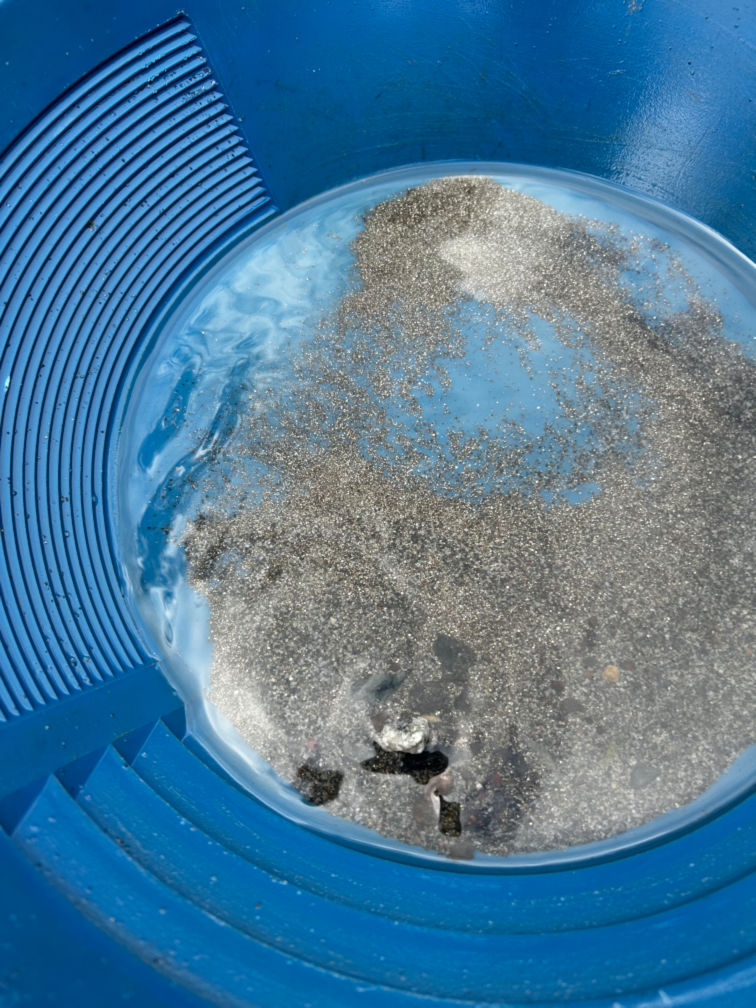
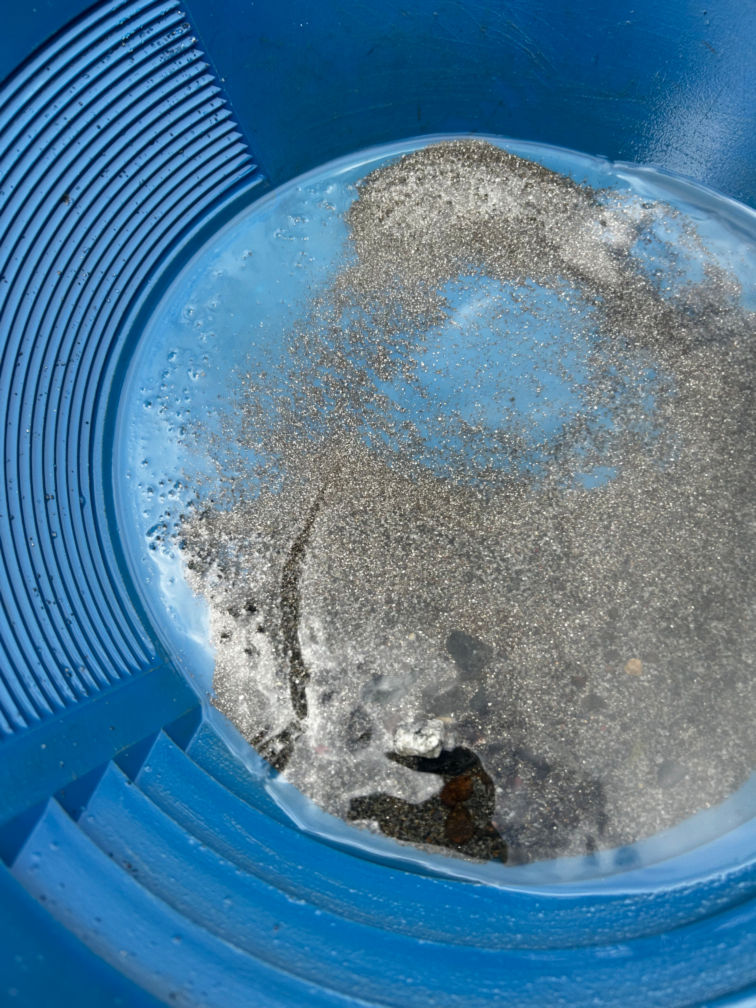
The pans were not spectacular.
There was no dream nugget.
There was no obvious chunky gold.
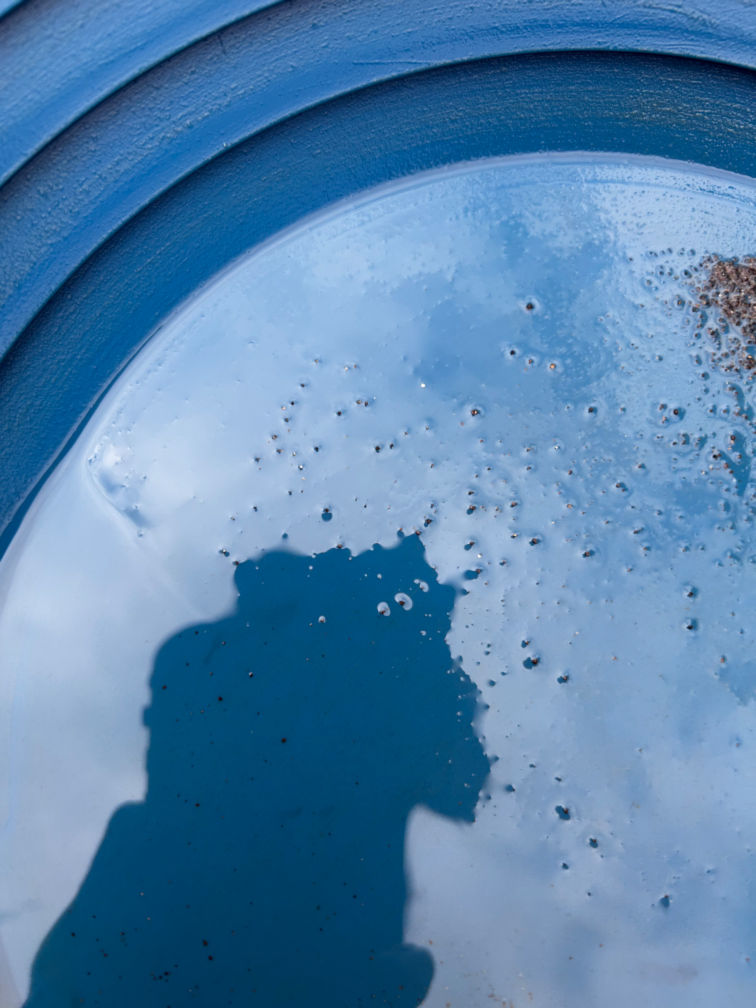
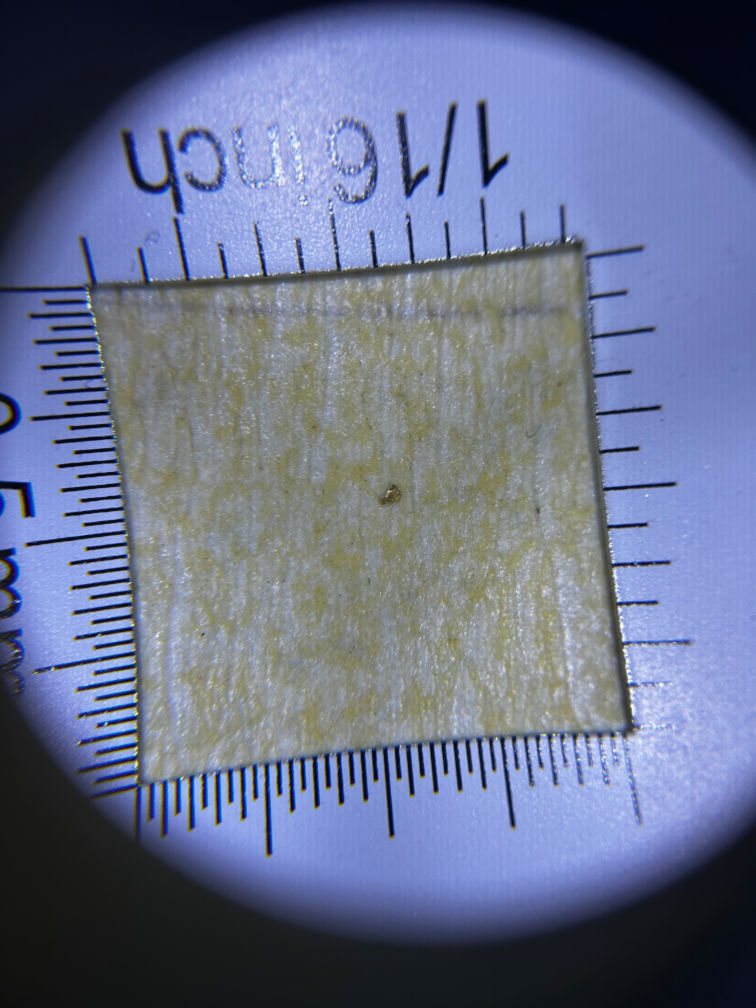
But I did manage to spot a couple of flecks of possible gold during quick glances in the pan.
I removed those and put them into a vial for storage.
I am still using careful wording here. They are possible gold flecks. They looked interesting enough to keep, and they behaved well enough in the pan for me to take them seriously, but I am not pretending they are confirmed until I can inspect them more carefully.
After checking each pan, I worked the material down a little further and then put the remaining concentrates into a bucket to finish properly at home.
I did not end up with a huge amount of concentrates, but that may actually be a good thing.
A smaller amount of better-context material is probably more useful than a large bucket of mixed mystery dirt.
Waiting for Better Light
The concentrates from Site 4 still need to be worked properly at home.
I am not rushing that part.
One thing I have learned recently is how much light matters when trying to spot tiny colour. Sunlight, cloud, glare, shade, and water angle can all change how easy or difficult the pan is to read.
At this stage, I am still training my eyes.
So I want to go through the remaining concentrates when I have good daylight and sunshine.
If there is anything small hiding in there, I want to give myself the best chance of seeing it.
Mica-Heavy Pans
During the day, I also hit a patch of mica-heavy pans.
This is becoming a familiar kind of frustration.
Mica is very good at pretending to be exciting. It flashes, shines, moves around, and catches the eye just enough to slow me down.
After my recent tailings experiment at home, I paid more attention to the mica than I probably would have earlier in this journey. I tried to remove what I could before putting the remaining concentrates into the collection bucket.
It is still annoying, but it is also useful practice.
The more mica I deal with, the better I should become at ignoring shiny distractions and focusing on material that behaves more like gold.
That is the theory, anyway.
Heavy Rocks and Quartz Veins
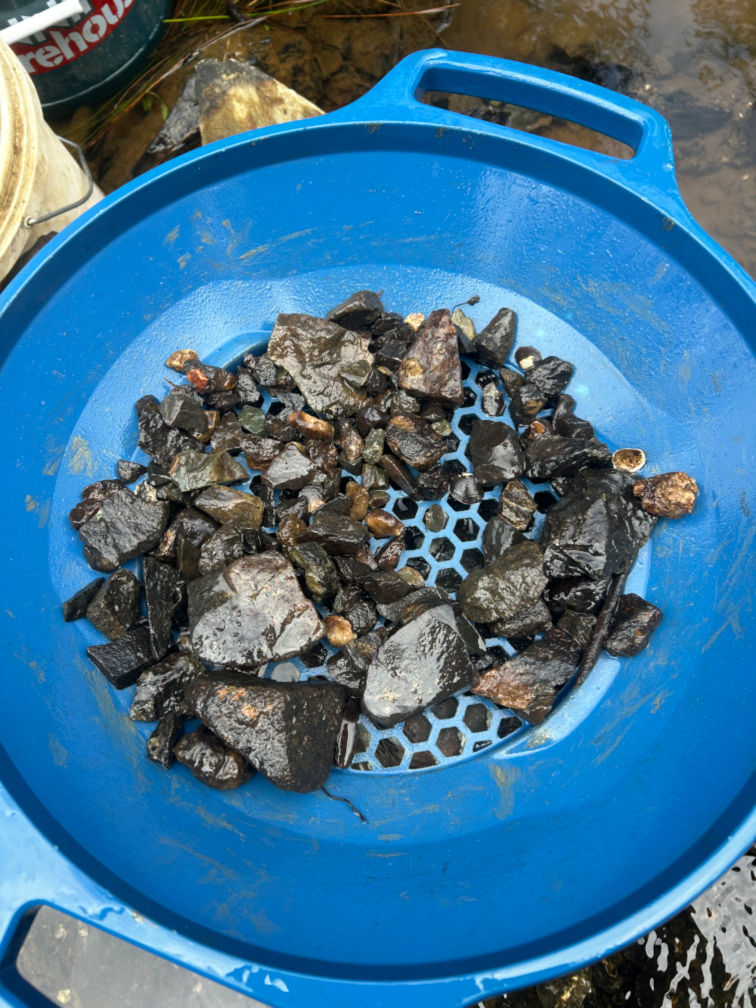
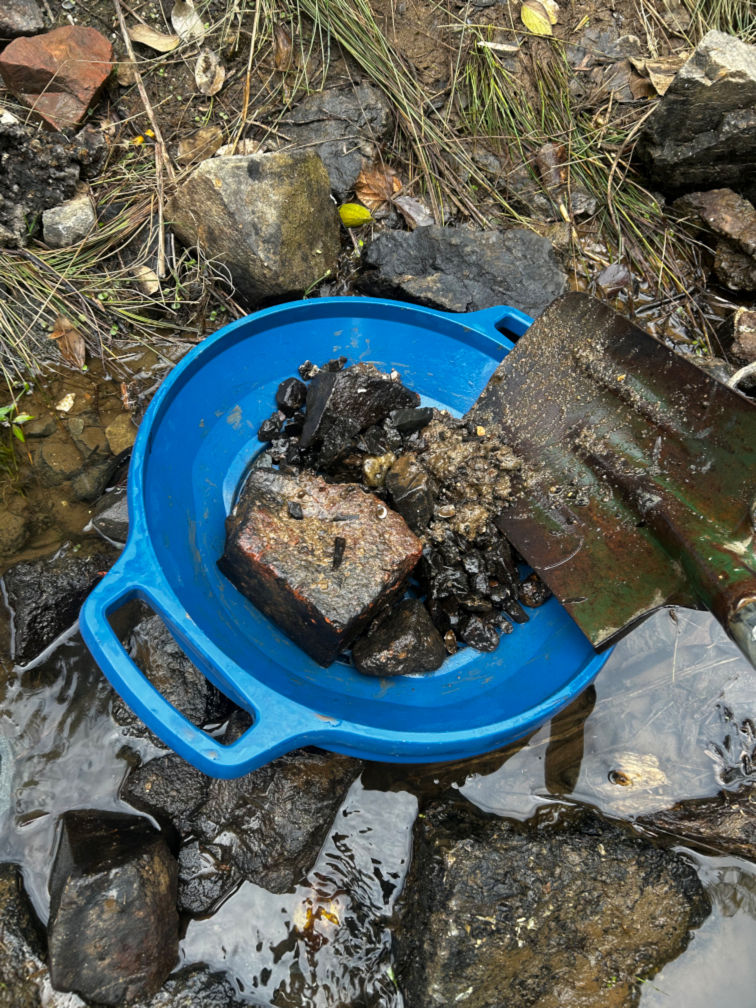
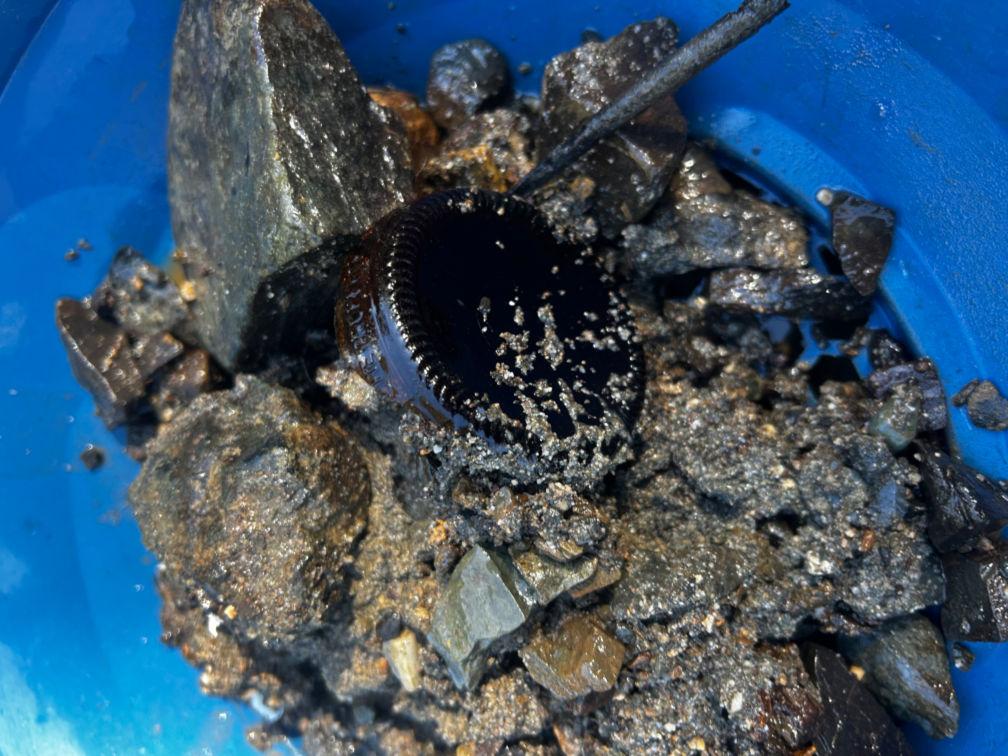
While classifying the material down, I started paying more attention to the rocks being left behind.
A few pieces stood out because they felt heavier than I expected for their size.
I am not sure yet whether that is simply due to the natural composition of the rocks, or whether they may be hiding something more interesting.
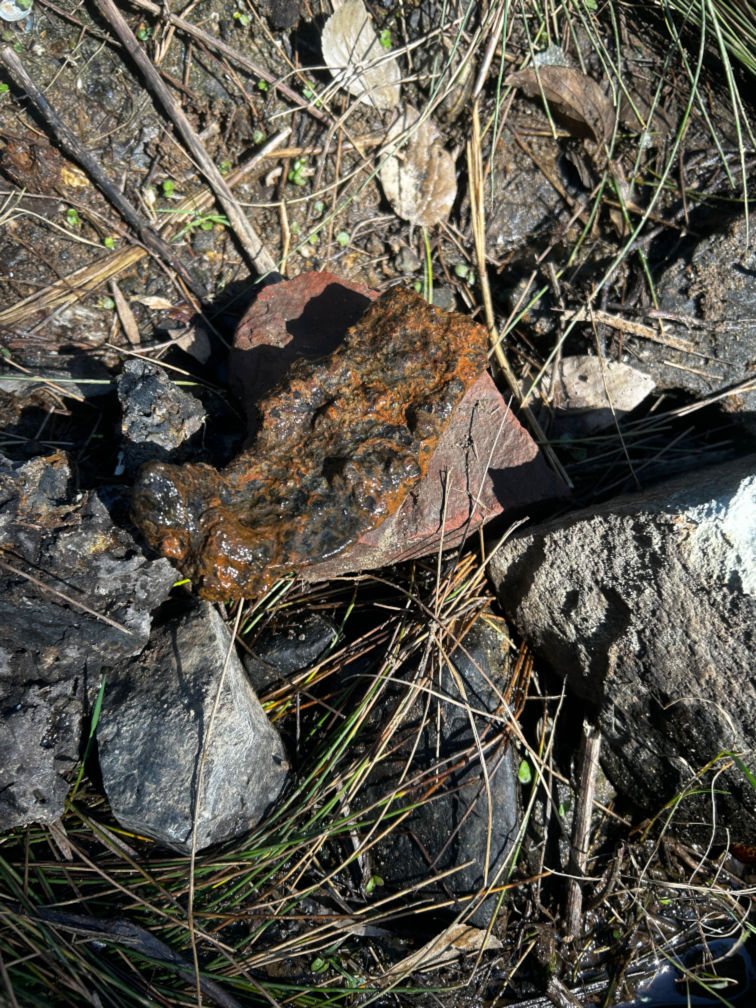
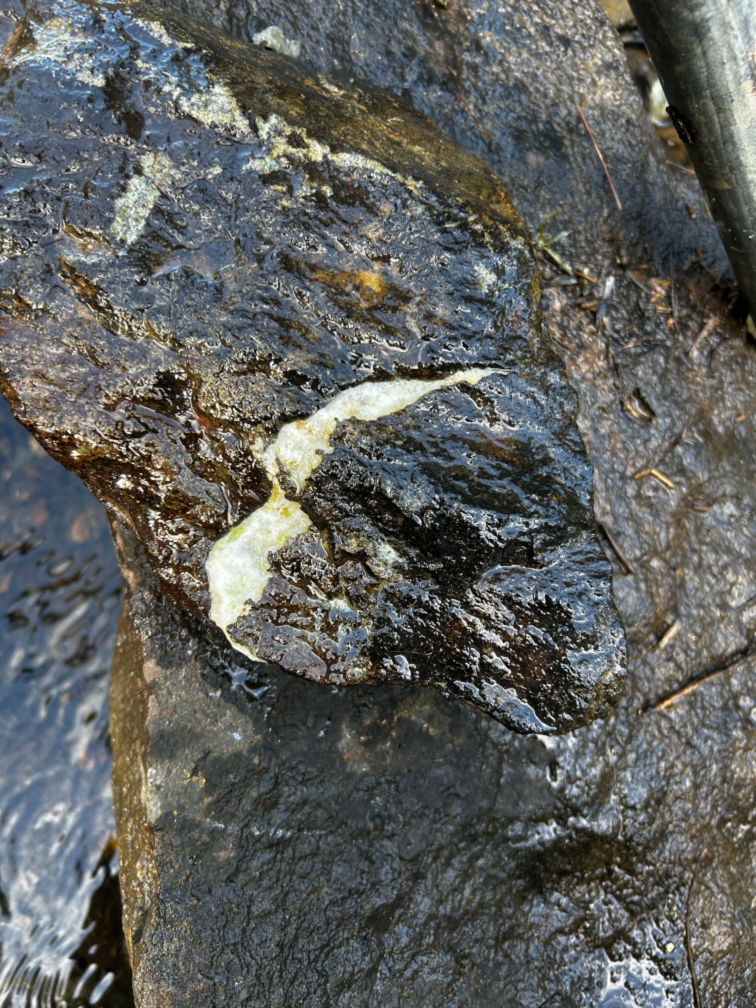
Most of the pieces I kept were quartz, or rocks with quartz veins running through them.
I am not treating them as proof of gold.
Quartz on its own does not mean gold is present, and I am trying not to get carried away just because a rock looks interesting. But these pieces were different enough from the usual material that I decided to bring them home for closer inspection.
At this stage, they are simply “interesting rocks”.
I may inspect them more carefully, compare their weight and appearance, and possibly crush a small amount later if they seem worth testing further.
If I do decide to crush any quartz or veined material, I will need to do it carefully. Quartz dust is not something I want to breathe in, and crushing rock is not something I want to treat casually.
For now, the rocks are being kept aside for later analysis.
They may turn out to be nothing.
But they were unusual enough to earn a place in the sample pile.
Possible Mercury Balls
As I worked through the pans, I was also quick to isolate any potential mercury balls.
These went into the dedicated storage bottle I now use only for that kind of suspicious material.
I am still treating these as suspected mercury or unknown silver material, not confirmed mercury. But I am also not going to play around with them.
The storage bottle is now separate from my normal fossicking gear. It will not be used for anything else.
I am not heating the material.
I am not crushing it.
I am not smelting it.
I am not acid-cleaning it.
I am not casually testing it.
Old gold areas can contain unexpected material, and the more I do this, the more careful I want to be with anything unknown.
It is very easy to get excited about shiny things when fossicking.
Sometimes the shiny thing is exactly what needs to be left alone and treated with caution.
The New Detector Started Well
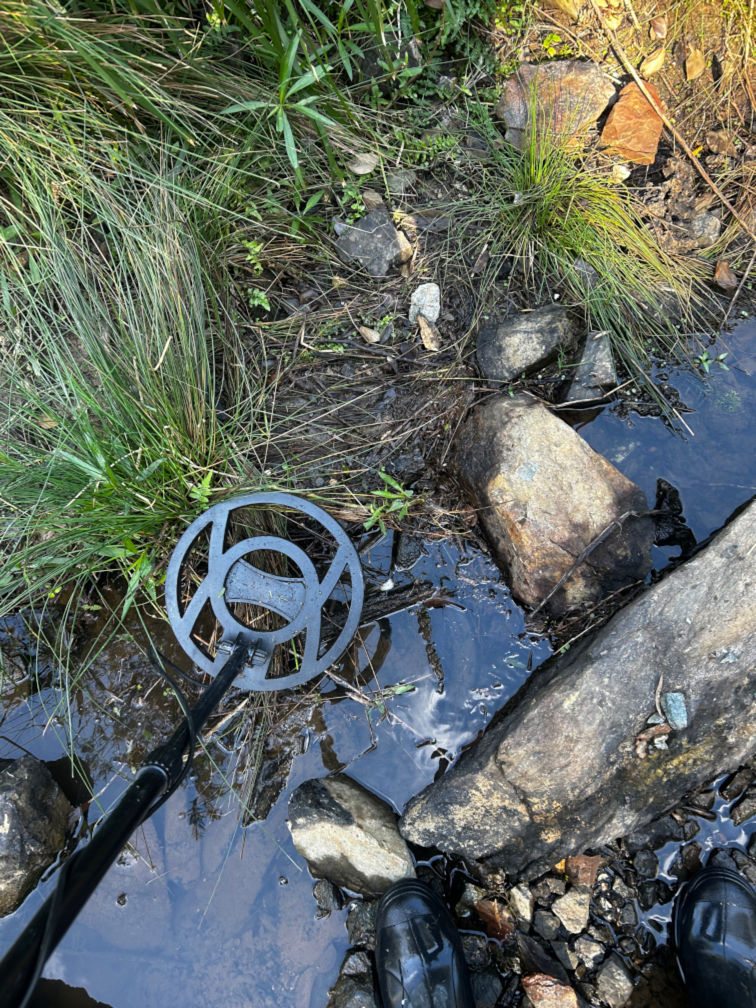
The new detector started out fairly well.
It felt better than my previous cheap one, and I quickly learned that it gives different tones for different potential metals.
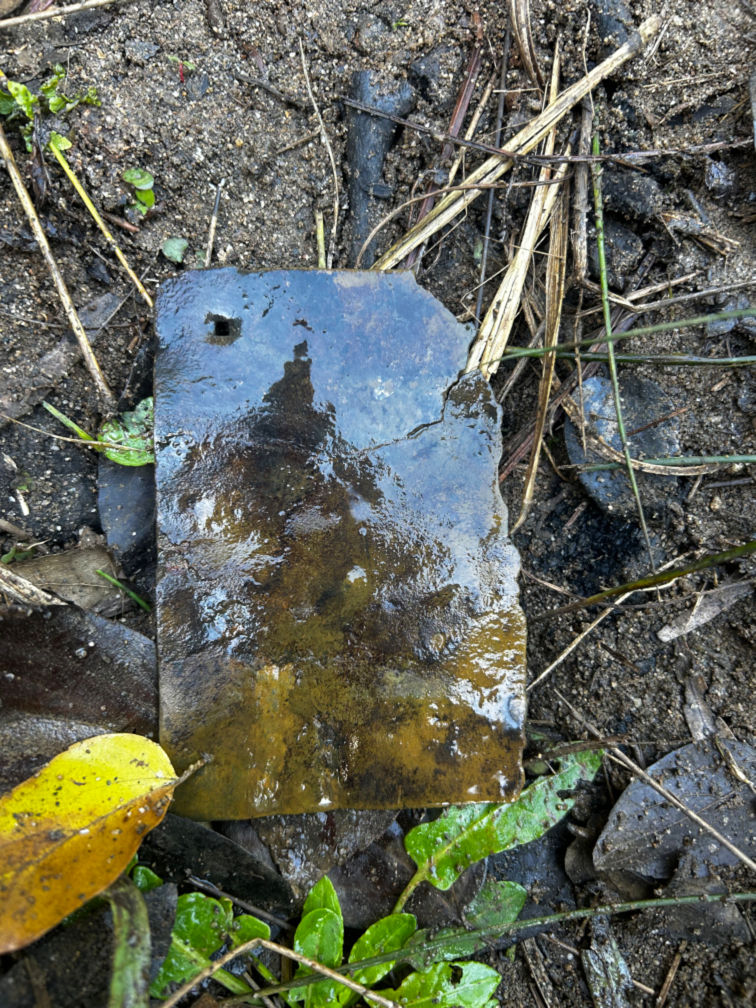
The low tone seemed to line up with scrap iron.
I found a couple of bits of scrap iron during the day, and those appeared to match that lower tone.
The high-pitched tones were more interesting.
Whenever I got a high tone, I naturally focused on that area more carefully. I still do not fully trust the detector, and I am still learning how to interpret what it is telling me, but the tone differences were useful.
At least, they were useful while the detector was behaving.
I Think I Killed the Detector
Unfortunately, I may have killed the new detector on its first proper outing.
I only had the coil section underwater, but after that it started giving false readings on a regular basis.
That makes me think the coil may not actually be waterproof, or at least not as waterproof as I assumed.
So the detector may have gone from promising new tool to unreliable noise machine in one day.
That is disappointing, but also very on-brand for a cheap detector.
It did find some scrap iron.
It did teach me a little bit about the tone system.
It did help me focus on a few spots.
But if it keeps giving false signals, it may become more of a distraction than a tool.
That seems to be a recurring theme with my metal detectors.
The Turbo Pan Arrived
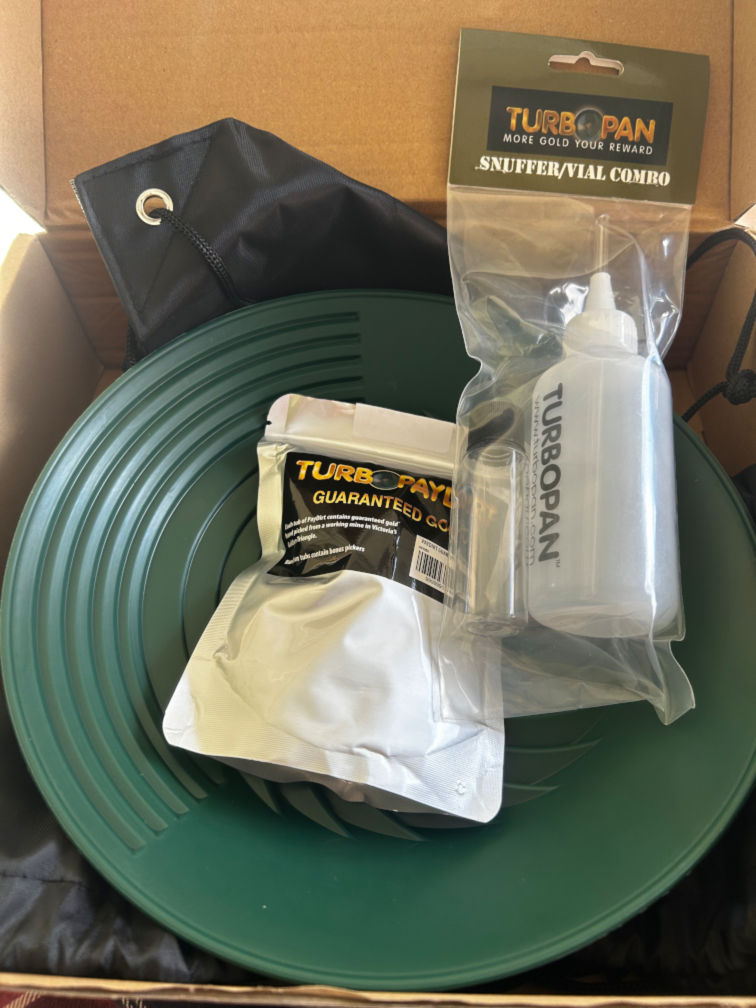
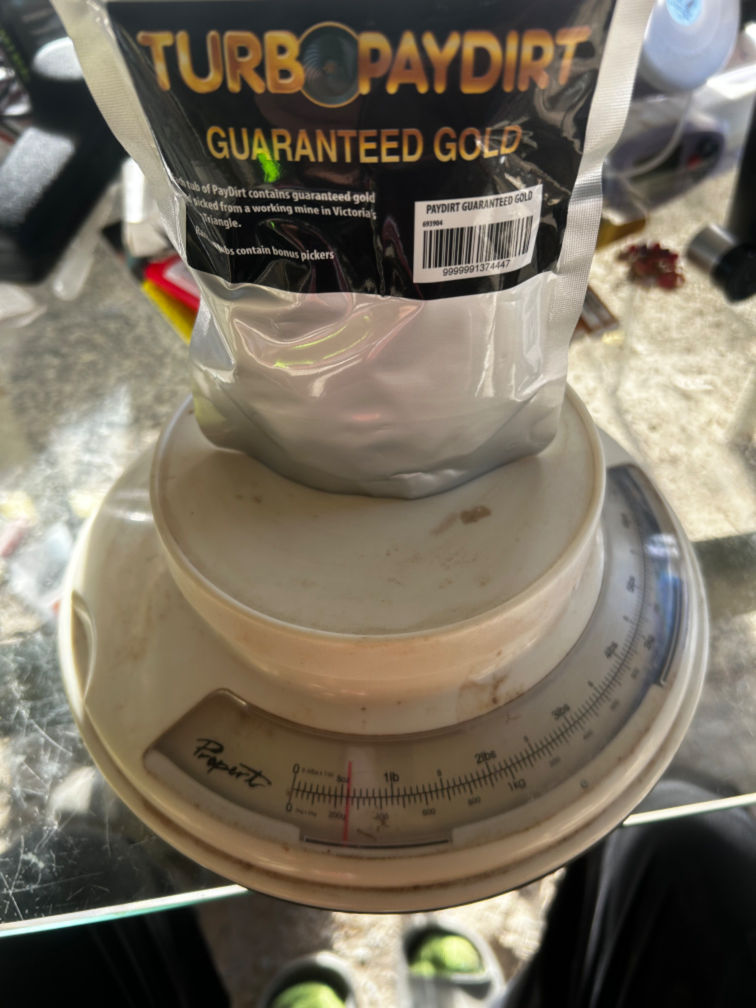
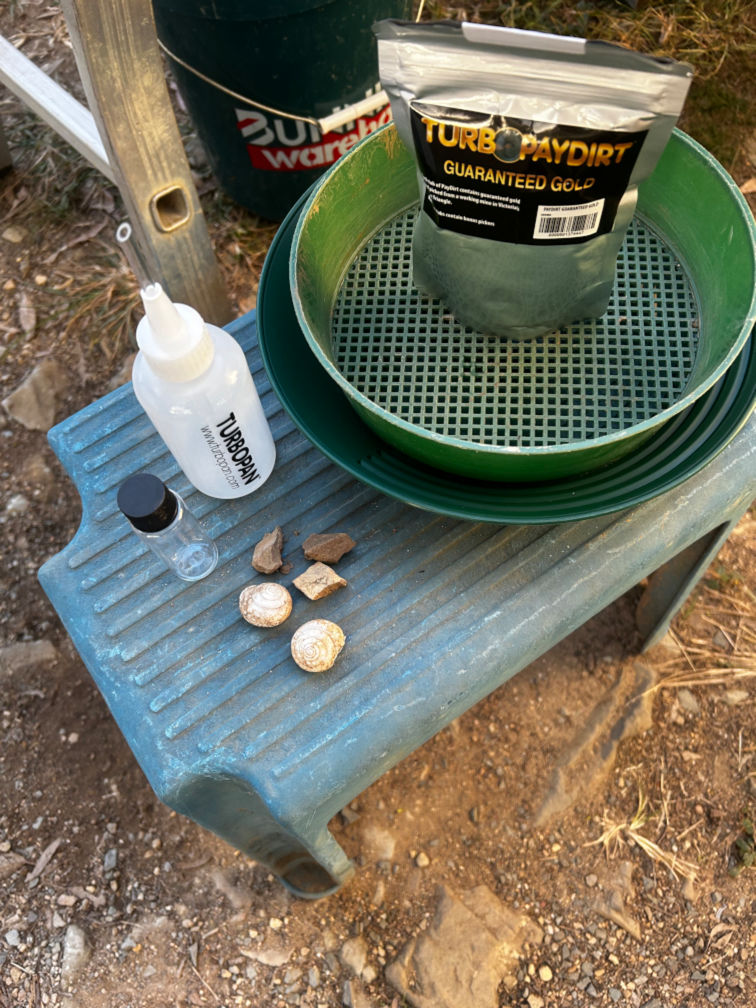
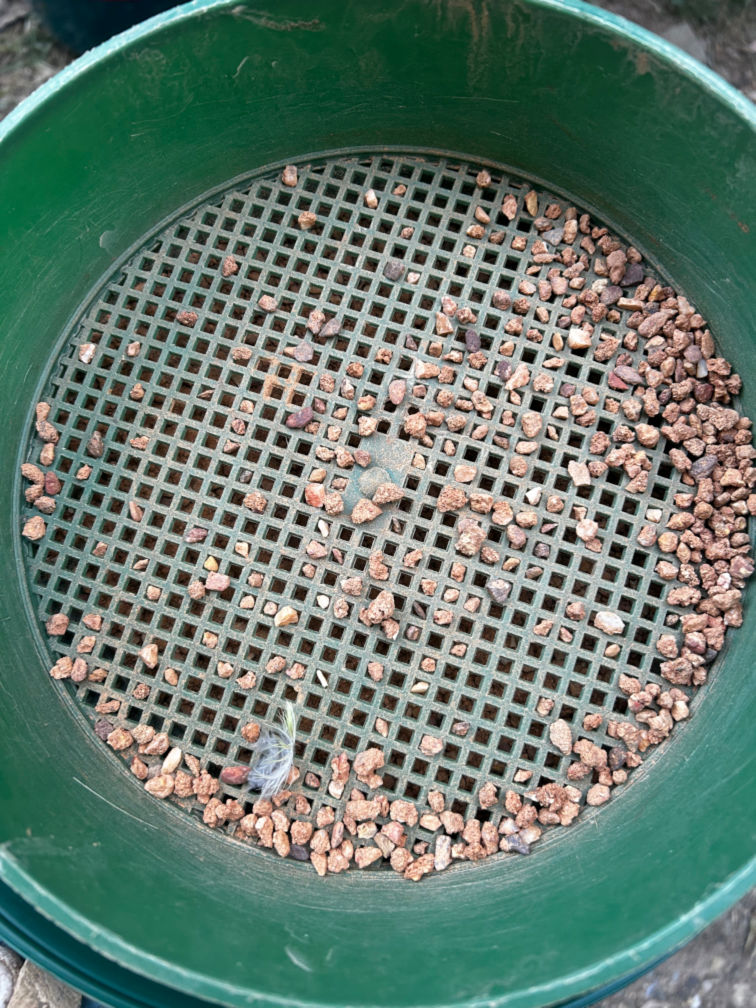
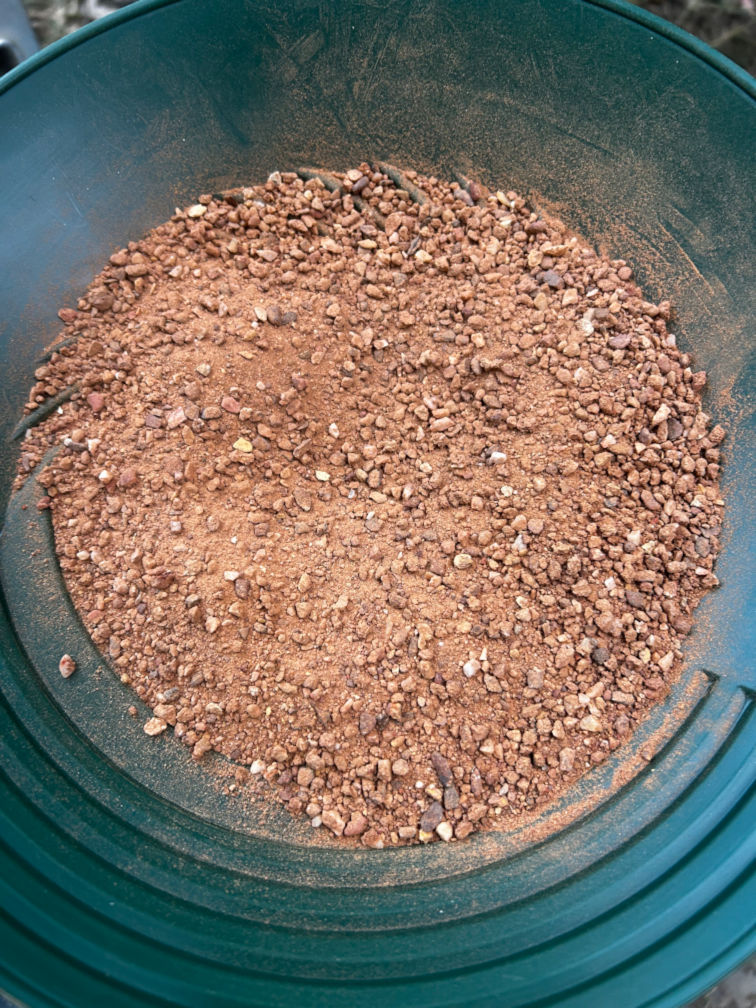
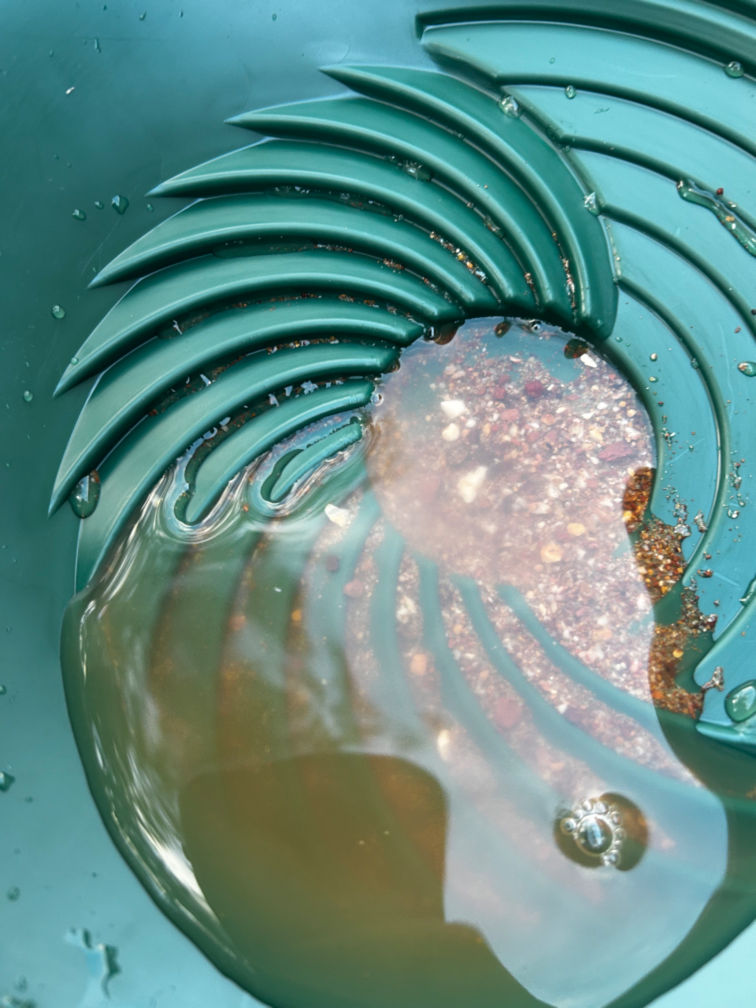
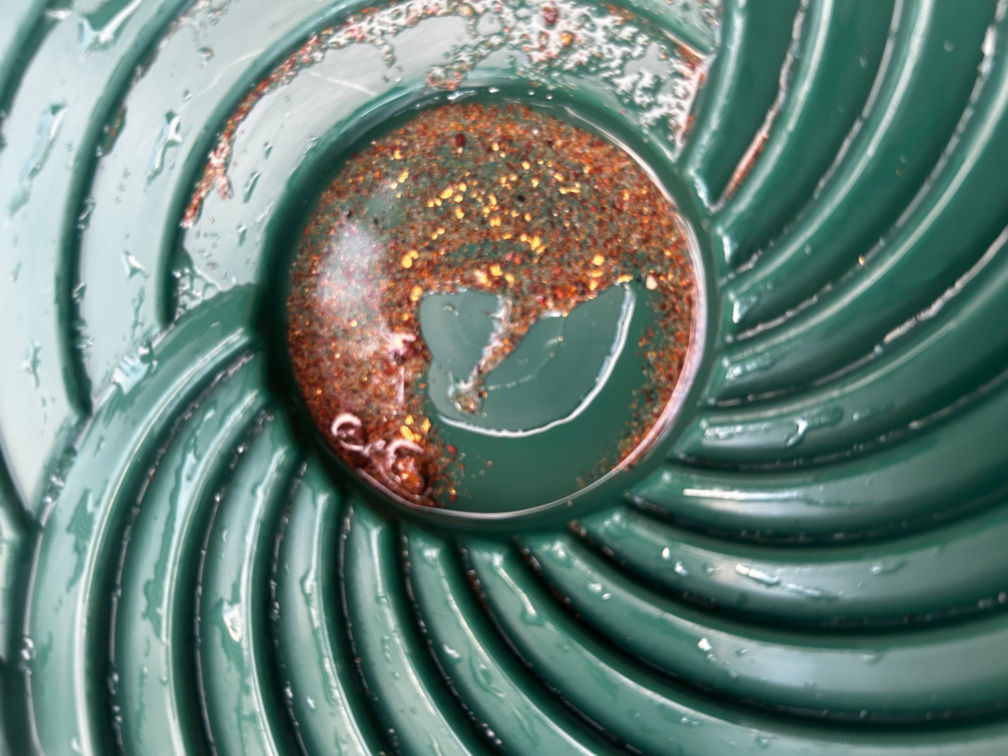
On a separate but related note, my new turbo pan arrived the same day.
I went all out and got a kit that included some paydirt as well.
Naturally, I had to try it.
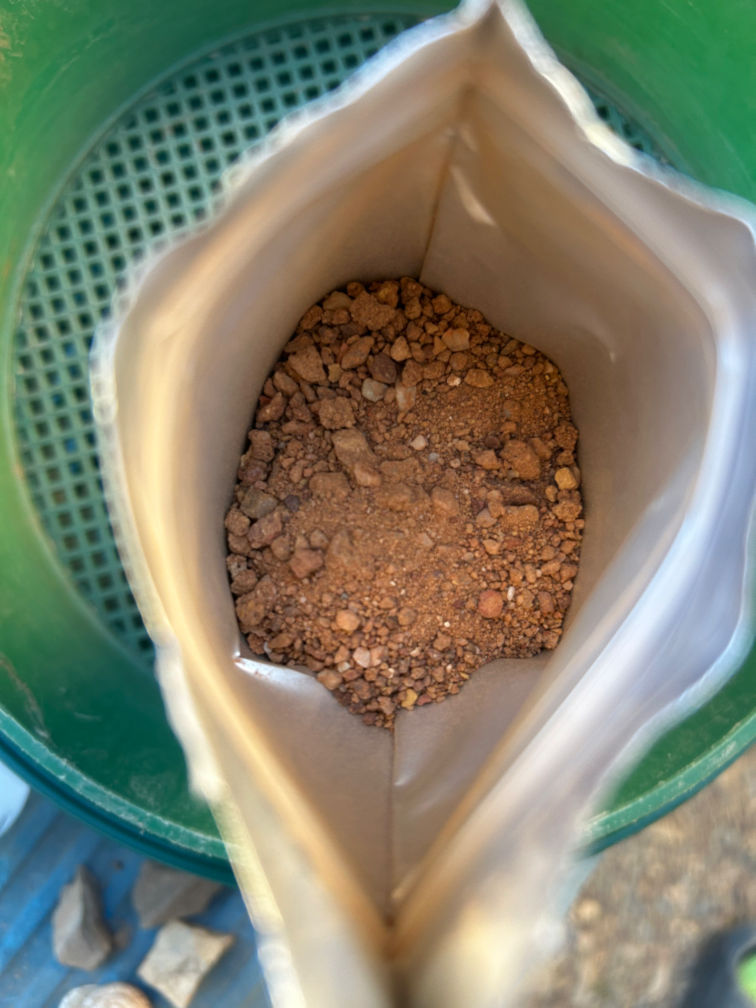
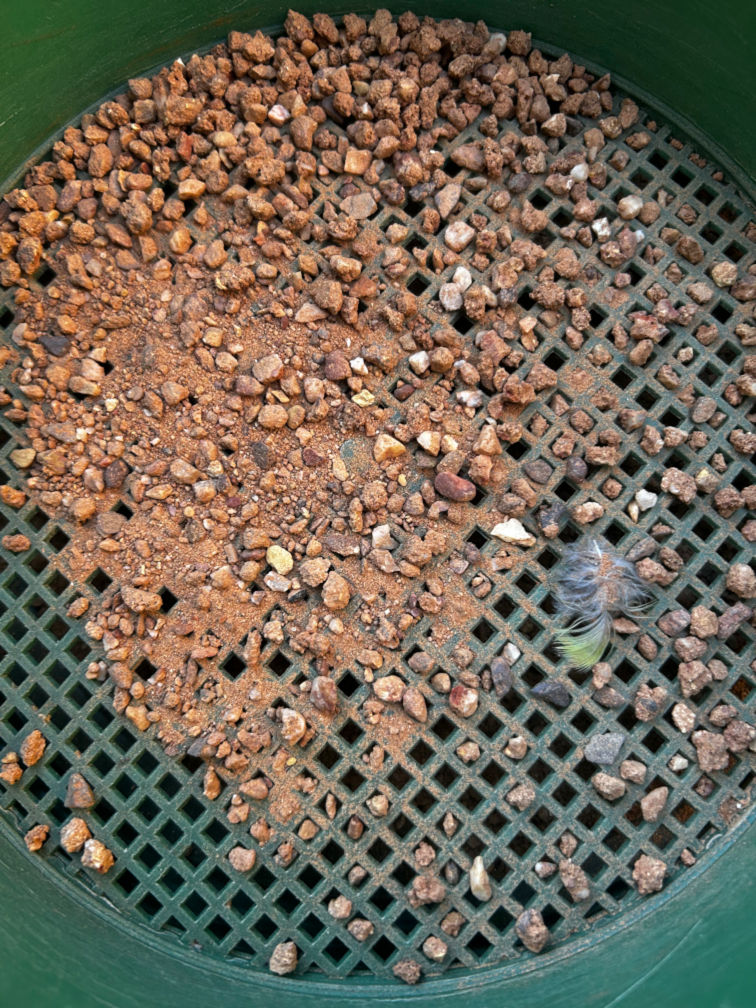
The paydirt was very different from the material I have been working locally. It had a noticeable red/orange colour throughout it, which is not something I have really worked with before.
That alone made it useful practice.
The kit apparently had a minimum of 0.1 grams of gold.
I recovered 0.08 grams.
That means I almost certainly left some behind.
So, just like my field concentrates, the used paydirt material will need to be re-panned so I can see what I missed.
Floating Gold and a Lesson Learned
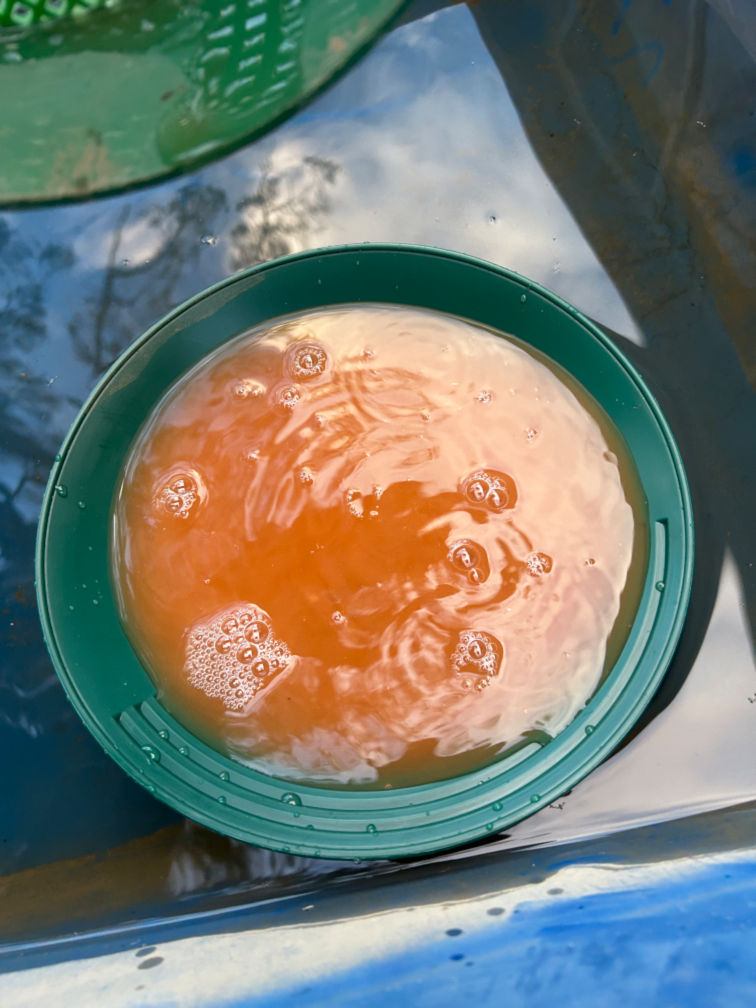
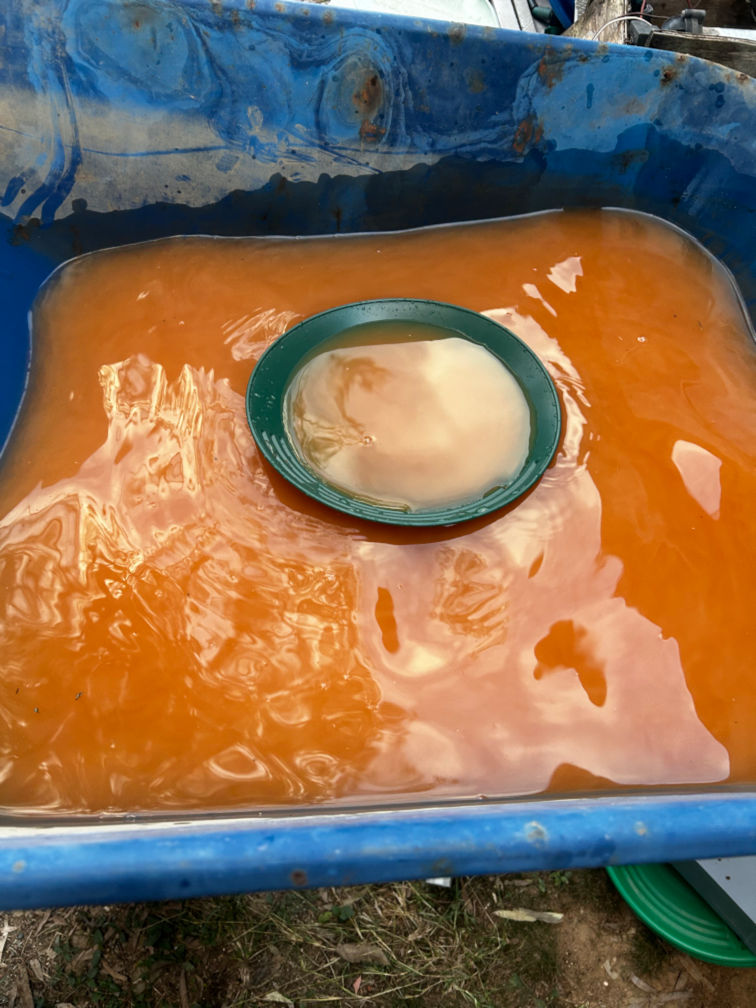
One thing I noticed too late while panning the paydirt was that some of the gold was floating.
That was a good lesson.
I should have used the detergent agent from the beginning instead of waiting until I noticed the floating gold.
By the time I realised what was happening, I may have already made the recovery harder than it needed to be.
That is exactly why paydirt practice is useful.
It gives me a known target. If there is supposed to be at least 0.1 grams in the material and I only recover 0.08 grams, then I know my technique still needs work.
That is not a failure.
That is feedback.
And feedback is useful.
What I Learned From This Trip
This trip did not go exactly how I planned, but it probably gave me a better plan for future trips.
The main lessons were:
- One proper site is probably enough for one fossicking day.
- Scouting and sampling are not the same thing.
- If an area is outside the designated fossicking area, it stays as observation only.
- Old holes and rough ground are real safety hazards.
- Site 4 deserves more time.
- Creek features need to be observed more carefully.
- Deep-to-shallow-to-deep water changes may be worth testing further.
- Possible colour should be removed and stored carefully.
- Smaller, well-contexted concentrates are better than random mixed material.
- Mica-heavy material is annoying but useful practice.
- Interesting quartz and heavy rocks are worth setting aside, but not overhyping.
- Suspected mercury or unknown silver material needs immediate separation.
- Cheap detectors may not survive creek work.
- Paydirt can expose weaknesses in panning technique.
- Floating gold is something I need to prevent earlier.
That is a lot from one day.
Not a lot of gold, maybe.
But a lot of learning.
What I Will Do Differently Next Time
The next fossicking trip will probably be simpler.
One main site.
More time.
Less rushing.
Better focus.
If I go back to Site 4, I want to spend more time around the creek feature I noticed - the deeper water, shallow gravel bar, and drop-off into deeper water again.
I also want to be more deliberate with sample labelling, especially if I test multiple settings within the same site.
Instead of thinking in terms of locations only, I need to start thinking in terms of sample types:
- Gravel bar material
- Deeper water edge
- Drop-off material
- Mica-heavy material
- Clay or heavy layer
- Material behind rocks
- Concentrates from a specific section
That would make the home analysis much more useful.
I also need to decide whether the metal detector is worth bringing every time.
If it is giving false readings, it may not be. But if it can reliably help me identify scrap iron, high-tone targets, or areas worth checking, then it may still have some value.
For now, the detector is on probation.
Final Thoughts
This trip started with three targets and ended with one main lesson:
Slow down and work one site properly.
The Never Mind scout reminded me to respect boundaries and watch my step.
The heatmap target became a future family fossicking area.
Site 4 became the real focus of the day.
That is where I found a couple of possible flecks of colour, collected concentrates for better daylight testing, noticed useful creek features, isolated more suspicious silver material, and brought home a few interesting quartz and veined rocks to inspect further.
The detector may or may not have survived.
The turbo pan reminded me that even known paydirt can still beat my technique.
And Site 4 gave me enough reason to return.
No dream nugget yet.
No confirmed rich patch.
No dramatic vial full of gold.
But there were possible flecks, better observations, and another useful step in learning gold the hard way.
For now, that counts.
Part of the Gold Experiment Series
This post is part of my ongoing gold fossicking and smelting experiment series:
Learning Gold the Hard Way: Fossicking, Smelting, and Small-Scale Experiments
You can follow the full progress log on the main hub page, where I will continue adding updates as the experiment develops.
** Originally posted on jaysndees blog **






