
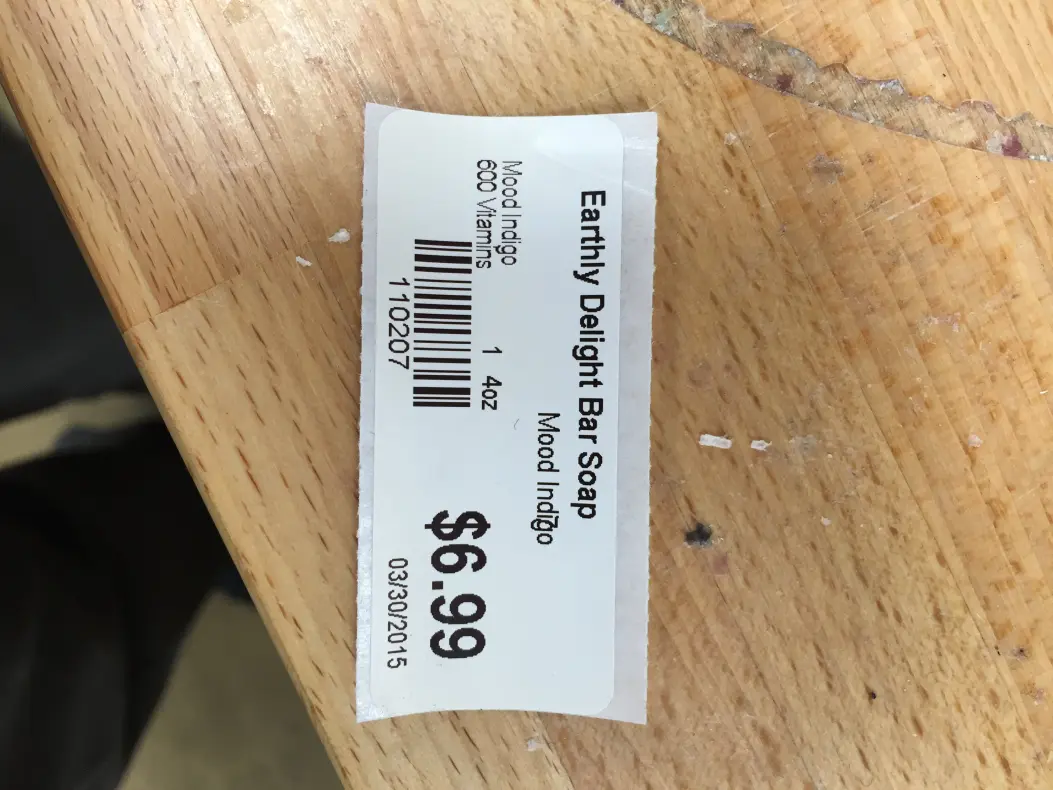
The fourth column in the new items spreadsheet is dedicated to brand name. A seemingly straightforward concept which is nonetheless much more labor intensive than he ever would have guessed. Having uniform brand names for every product in a line is a huge help, for searching items in the system, for setting the sale prices in advance of their weekly flyers. But it’s the kind of thing that must be chipped away at over time, because they’re currently not all that uniform.
One major reason for this is that their second largest supplier, Harmony Hill, to cite one example, doesn’t even have a brand name column in their monthly price file. They put this information in with the item description, and yet even here, for instance, sometimes they will spell out a brand like Heinz, sometimes abbreviate it Hnz or Hz.
So he understands Teri’s edict, when training him, about firing the new item file back at employees if not 100% perfect. But for him, if he knows what needs fixed, he will just do it himself, barring some catastrophically large and incorrect batch or something. To do otherwise feels like being needlessly difficult. Yes they hope to impress on as many people as possible to make this as correct as possible. But the real point is to add new items as quickly as they can. Expecting people on the floor to consistently spell out or in some instances abbreviate (this is a very tight field, regarding how much space they have on their shelf tags) brand names is an unrealistic stretch.
It’s often not even clear what these brand names are, especially if a new product line. One afternoon a grocery department employee up in Palmyra, Trudy, emails him a new item file with a message to call her when they’ve been added, because they have a shipper of the product that she wants to put out ASAP. This is a Harmony Hill product line, however, which means that not only is the item description in all caps – another pet peeve he is working through, if for no other reason but to also free up more space – but the brand name leads off every description: some cracker brand, eight different flavors, with the initials M F.
“Alright,” he says, calling Trudy a couple of hours later, “I added these M F crackers. You should have tags waiting in your office.”
She starts cracking up and replies, “okay, that’s good. I’ll go get the M F tags. I need to put out this M F shipper.”
Syntactical puns might closely resemble gallows humor, but hey, Edgar figures, they’ll take what they can get. He can’t be the only person who finds this stuff funny. In fact he knows he isn’t. While tracing the origins on some of this data is pretty much impossible, he thinks that whoever was formerly entering items into the Hobart system, a completely different database sending information down to the deli, meat, bulk and produce scales, that person must have had a demented comedy streak. It could have been the former deli merchandiser, the wine enthusiast, but he kind of doubts it. This stuff smacks of a younger sensibility, some smarmy hacker type, kind of in the Thad demographic. For example, any of their lunchmeats that are smoked and have cracked pepper as part of their item description, these have been named, to cite the example of the turkey breast, SMOKE CRACK PEPPER TURKEY.
Who can say how many years this has been labeled as such? With countless packages of sliced lunchmeat going out the door in just this manner. The plot does thicken a bit, however. Because whoever was responsible for this clearly knew how to spell the word pepper. And yet in virtually every item Edgar has yet come across, as for the ingredients themselves, it has been spelled papper. Again, you really can’t say for certain, because this individual might have disappeared years ago, and tracing motives is pure speculation. Yet Edgar just knows somehow, on some gut level, that this person was making fun of Dolly, her accent, which is why pepper has been spelled papper and walnuts walnits on just about every item these apply to in the deli scale. Because this is how these words sound coming out of her mouth, though even she obviously doesn’t spell them as such.
Other examples amount to laissez-faire aesthetics, or if nothing else cringe inducing ideas about abbreviations. These are obviously matters of taste, but just as it kind of drives him crazy that Universal Foods abbreviates the word Organic as Og (couldn’t they at least make it Org? What the hell is this? Zero grams?), every Applegate item in these deli scales has been given the brand name Agate.
“Mmm, agate roasted chicken breast, sounds delicious,” Edgar mumbles aloud, changing the latest one he’s stumbled across.
After a couple of weeks spent listening to Teri’s laundry list of pet peeves, this could be his first reciprocal rant. One day he just can’t take any more of the all caps screaming on half the items in their system, and applies a mass correction in their master Excel sheet (=, select fx, select PROPER, drag across x number of columns, drag down through x number of rows; copy, paste special values), to clean up the entire lot of them.
“It’s a proven fact that this is easier to read…,” he says.
“That’s true,” she agrees, from the next desk over.
“…and not only that, it gives us more room to work with on our tags. All caps takes up more space.”
Not that this will entirely clear up the mysteries. Some require his drifting down to the floor. The cryptic origins of this DMOG product line is driving him bananas, its providence and whereabouts, until he’s finally able to track down an example in the coffee section at Southside. Davis Mountain Organic. Okay, yeah, this product line will be renamed DavisMtn now. Enough of this DMOG crap. On a similar note, another witch hunt leads him to the grocery aisles of Palmyra, wondering what in God’s name this FING SHTBRD item in the Harmony Hill catalog might be. This is all the description he has to go by, other than the brand name ahead of it, of course, WALKER FING SHTBRD. Walker brand, finger shortbread. Why yes. It’s all making so much more sense now.
And yet, however important, these are only a tool for keeping things straight, as cosmetic changes take a backseat to the pricing itself. Implementing retail changes, based upon the ever-fluctuating costs, and whatever other out-of-whack scenarios he might encounter. Universal Foods and Harmony Hill provide a monthly file on their website, which he is able to download. Otherwise, he is pawing through the invoices as they come in, and then any other gaps are filled in either by asking a vendor for a new price file, or – although Dale is just about the only merchandiser doing so – having someone send it to him themselves, and asking Edgar to update the product line.
Teri helps him out on the major pair of updates, United and Harmony, the first two months. Basically this involves matching up, via a decoder key of sorts, the United category code to their own department numbers – although this isn’t 100 percent perfect, as for example United couldn’t possibly have 20,000 items categorized in the same department as a Healthy Hippie grocery store might. Then applying the correct markup, then rounding this off to the nearest .x9 cent retail. Which kind of sounds like a major hassle at first, until Teri explains with a cackle that she searched endlessly online awhile back, and found the Excel formula for that:
=(round(g2+0.05,1))-0.01
whereas of course g2 would be the first cell it’s applied to, subsequently dragged on down through the entire spreadsheet.
This formula is exactly the sort of thing that seems simple enough, until you’re trying to wrap your mind around how to pull it off. Would Edgar have eventually stumbled onto this formula himself? Most likely, sure. But the problem with everything being online these days is that…everything is online these days. You’re forced to wade through endless reams of clickbait, nonsense, and incorrect answers before finding something that works. So he’s eternally grateful that she already figured this one out.
Except there is one additional wrinkle, represented by retails that would actually end in .09. These price points are considered tacky eyesores (for the rest of his days, Edgar suspects retails that end in .09 will bother him), and Duane has asked them to instead round these down to the .99 below. Nobody has yet devised a great mass replacement solution for this, so they muddle along on these by sorting, finding, and then replacing in the Excel file.
In dealing with these major vendors, there is also a tiny file internally known as the Exceptions List, no more than 30 items long, that he must run immediately after the price change file, each month. These are the items where they aren’t rolling with the indicated margins, because they just won’t sell at that price – which basically shakes out as all of their organic milk, upon which they are charging just pennies above cost, and one popular vitamins item that Dale says is priced way out of line in the Universal catalog.
Their Orchestra program is advanced enough that it will automatically generate a shelf tag every time an updated retail is uploaded to their system. All he needs to do is sync to the other two stores, connect in remotely via VNC, and kick off the tag printing there. It does have its limitations on processing speed, however, which they discover one painful afternoon, early into his tenure, when about 5000 tags are spewing out, for grocery alone, at their Southside store.
Fortunately grocery manager Craig is on top of things enough to spot something amiss right away, which Edgar and Teri soon pin down specifically, after he draws their attention to it (Harry Redcrow, however, seems to regard them with suspicion, particularly Edgar, whom Harry still might consider an idiot). It appeared that maybe this system could not process a batch that large, not immediately. It was tripping the print flag for every item whose retail had changed, even though the retail had not yet actually changed in the system. The tags were printing with the previous retails.
In the future, they learned to either wait a couple hours to print out the tags, or else process the batches in smaller chunks. And beyond these concerns, although of much less urgency than making sure the price was correct – of utmost importance to shoppers and the state’s weights & measures auditor both – Edgar would also print out tags any time the preferred supplier changed, or the item number, or anything else of significance. One thing that was driving him bonkers right out of the gate, for example, was that they had the same PLU number in bulk for both the salted and unsalted variety of every nut item. He knew that Teri was extremely limited with her time, before his arrival, and doing what she could, but it made no sense to him that, say, the plain old peanuts might have one PLU number, for both bins, each showing an item number (or SKU, the number used for ordering from Bellwether) of something like 103260/103250 on each, for the salted and unsalted.
But above all, one of the major reasons Duane had just created Edgar’s position was that he wanted to move away from this ambiguous, lackadaisical updating method, whereby merchandisers would change retails whenever they felt like it. Or not. The last thing Duane wanted at this point was a retail by committee approach. Edgar is to crank out these prices by departmental margin, end of story. Or not quite – because even within this program, there are still certain situations where what Edgar has begun to think of as should be pricing continues to hold sway.
His first lesson on this front concerns their diaper lines, a day where Teri’s not around, and he’s looking at an invoice where it becomes obvious that they are way, way under margin on these diapers. He updates some prices and cranks out new tags, based upon the correct markups on these housewares items…but within an hour has gotten numerous complaints from every corner, that these are some ridiculous retails. At which point he takes these findings to Duane, who concedes, yeah, okay, maybe in this instance, we need to actually just charge the grocery margin on these diapers, not the housewares one. And so Edgar instantly changes the retails back.
Should be pricing isn’t limited to this situation alone, however. It also applies to Palmyra’s beer and wine. In fact, this is where Edgar first coins the name for it. Virtually every week, he’s updating the retails, based upon the new cost, and then Corey objects to half of them, claiming that the Rogue bombers “should be” this and the Dogfish six packs “should be” that. He eventually requests that Edgar send him all the cost updates, and he will determine the retails, a process that Duane reluctantly allows.
Otherwise, business marches on unimpeded. And in these early stages, the updates are coming fast and plentiful. Yet whereas Palmyra has a fairly tech savvy person on hand in the form of a goth leaning cashier named Shelly – Teri instructed him right out of the gate to always ask for Shelly with anything even remotely tech related at that store – they really don’t have such a person at Liberty Avenue. Tonya and Chloe are definitely the top two there in that regard (a store manager who is often compared to Wilford Brimley is probably not your first pick in the modern technology sector), and yet, even so, Duane has vaguely hinted that, yeah, if at all possible, Edgar probably wants to take any major tag update batches over to Liberty Avenue, and deliver them himself.
This leads to a pair of memorable encounters with Russian Robert, early into his first spring on this new job. He has taken over about one hundred updated tags on a random weekday afternoon…and then the very next day, brings over about a hundred more. Robert is not pleased about the first, and positively apoplectic about the second.
“Again?!” Robert questions, eyebrows raised, as Edgar hands him this string of tags, at this cart in the middle of the floor where the bulk manager is working. And then holding the shelf tag string aloft, as Edgar is backing away, Robert continues, adding, “dis bullshit. I talk Duane bout dis.”
“That’s cool,” Edgar tells him with a laugh, “you talk to Duane about that.”





