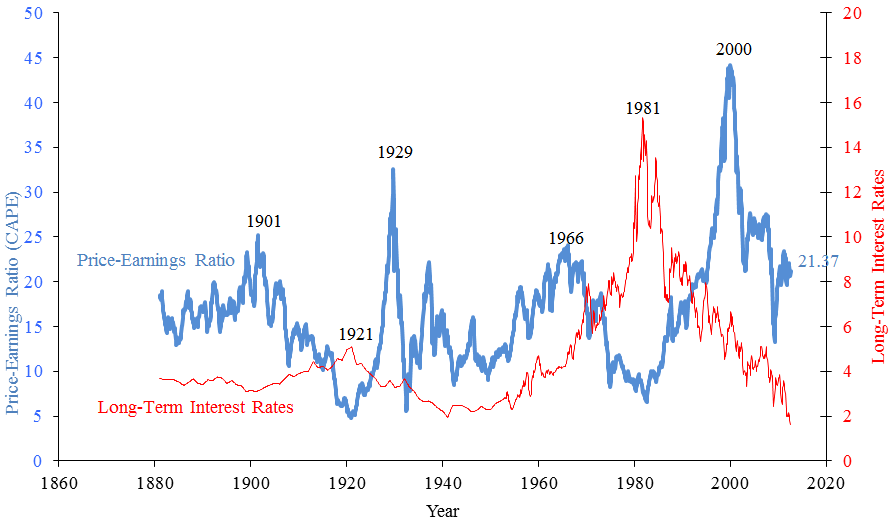
The Price-to-Earnings (P/E) ratio is a commonly used metric in stock analysis, but the Price-to-Intrinsic Value (P/I) ratio can also be a useful tool in determining the relative value of a stock. The P/E ratio is calculated by dividing the current market price of a stock by its estimated intrinsic value. This ratio helps investors determine if a stock is overvalued or undervalued.
A stock with a low P/E ratio is considered undervalued, as the market price is lower than its intrinsic value. This suggests that the stock may be a good investment opportunity, as the market may be mispricing the stock. On the other hand, a high P/E ratio indicates that the market price is higher than the intrinsic value of the stock, which may mean that the stock is overvalued.
To use the P/E ratio, investors need to estimate the intrinsic value of a stock. There are different methods to do this, including the discounted cash flow (DCF) model and the earnings power value (EPV) model. The DCF model calculates the intrinsic value of a stock by projecting the future cash flows of the company and discounting them back to their present value. The EPV model, on the other hand, calculates the intrinsic value of a stock based on the earnings power of the company and the cost of capital.
Once the intrinsic value of a stock has been estimated, investors can compare it to the current market price to determine the P/I ratio. A general rule of thumb is that a P/E ratio of less than 1 suggests that the stock is undervalued, while a ratio of greater than 1 indicates that the stock is overvalued. However, it is important to keep in mind that there is no set benchmark for the P/I ratio, and that each stock should be evaluated on a case-by-case basis.
In conclusion, the P/E ratio can be a useful tool for investors in evaluating the relative value of a stock. By comparing the current market price of a stock to its estimated intrinsic value, investors can determine if a stock is overvalued or undervalued. However, it is important to use caution when interpreting the P/E ratio and to consider other factors, such as the company's financial health and future growth prospects, before making an investment decision.
If you like this article, don't forget to 👍 and tipping 👇