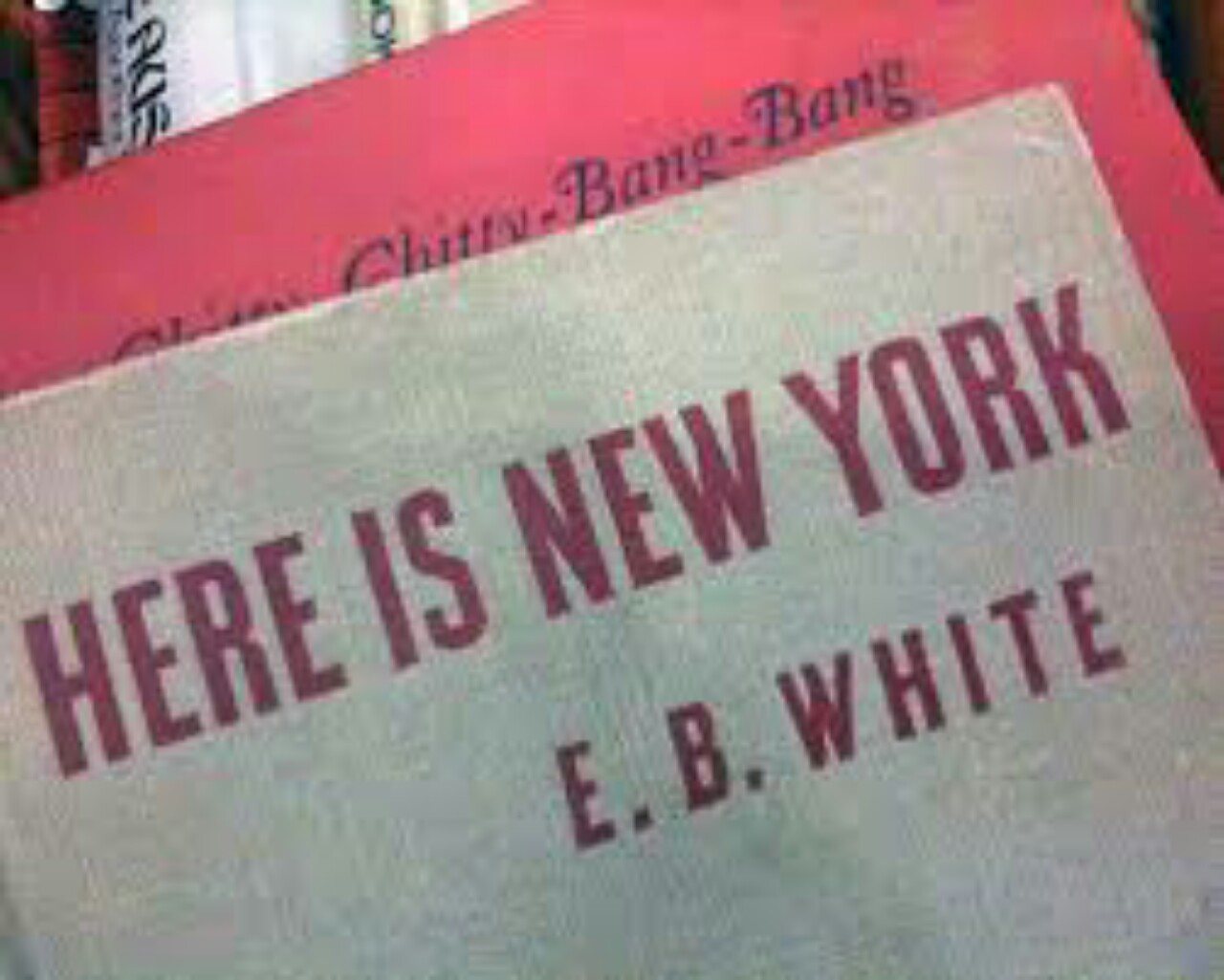
“Download this book from the university database or the web, read it, and write an essay that has something to do with architecture. I will begin accepting your essays on Tuesday and the deadline is Friday of next week,” my Professor blurted.
Then he hurriedly shut off the screen, scooped up his notes, corralled his mess of colored laser pointers strewn all over the small presenter’s table on the stage, and haphazardly threw the whole lot into his leather document holder - an old, large, ugly thing; resembling the bulky bag you’d see Indiana Jones lug around for snatching priceless artifacts from ancient, snake and scorpion infested, booby-trap ridden Egyptian tombs.
It was just after lunchtime on Friday afternoon.
The following Monday was a national holiday; therefore, no classes would be held. That meant all of us could enjoy a long weekend. Consequently, everyone - especially my professor - was very eager to start off the long weekend as early as possible.
After he exited the auditorium, I could hear the murmurs of indignation welling up among my fellow classmates of this Arts and Architecture course. To them, the prospect of an essay assignment eating up any morsel of their partying time during this long weekend was an outrage!
Being new to New York and the university, and naturally somewhat of a loner anyway, I didn’t join in the collective moans and groans of the group.
Instead, I wanted to get a head start on the essay and hopefully have much of it done before my habitual midnight jogging.
To me, my plan of attack was simple: read the book, look for any mention of significant architecture, extract any architectural descriptions, give a brief historical overview of the structures, and submit my impression of its symbolism of the past versus today’s appraisals.
But as I explain in this essay, that plan was soon trashed early on. And the connections between E.B. White’s “Here is New York” and architecture resembled nothing that I could have ever imagined.
E.B. White’s “Here is New York” is based upon an article he submitted previously to Holiday magazine. I had never been exposed to the book before.
My impression in a word? Brilliant!
It’s no wonder that “Here is New York” has garnered many accolades and become the favorite of millions of readers around the world; prompting each person, including myself, to read it over and over again.
IT’S THAT GOOD.

- Elwyn Brooks “E.B.” White
And it’s also no surprise that E.B. White was awarded a special Pulitzer Prize for his full body of literary contributions in 1978.
HE’S THAT GOOD. Really.
It’s hard to describe how much insight, grit, wit, and extraordinary literary prose is packed into those 54 pages. I honestly forgot about my essay assignment while I was reading his book.
Eventually, I remembered my mission and went back to the story for anything related to architecture.
But after reading “Here is New York” for the second time, I realized that my initial plans were worthless and had to be immediately discarded; feeling quite disappointed and harboring a growing resentment towards my professor for this sneaky, curve-ball of an assignment.
It was tantamount to a sadistic dirty trick.
I pictured my professor snickering with his cohorts at a bar and having a perversely grand time thinking about the assignment, the "misery bomb", he had dropped on the students - and right at the start of a long weekend too!

- Empire State Building
You see, although the book mentions a few famous New York buildings (e.g., the Empire State Building, St. Patrick’s Cathedral, the Hippodrome, the Metropolitan Opera, the Church of the Epiphany, the Brooklyn Bridge, etc.), “architecture” is rarely mentioned in depth.
After sulking a bit, I decided to take another route.
Maybe the assignment was to connect famous “architectural styles” to E.B. White’s book?
I feverishly researched what popular architectural styles are in New York, only to find out that just like the New Yorkers in the book, the architectural styles of New York are extremely varied.
In other words, from the Art Deco style of the Chrysler building and the Beaux-Arts style of Grand Central Station to the Second Empire Baroque style of the St. Regis-Sheraton Hotel and the Gothic Revival style of St. Patricks Cathedral, the number of architectural styles found in New York appeared to rival the number of ethnic groups, languages, businesses, and religions.

- St. Patrick's Cathedral
With every dead end, I was growing more and more frustrated. The assignment was turning into a hair-pulling, unsolvable riddle.
I gathered my composure and reread the book for the third time. Oddly, I noticed something I hadn’t in my first two readings.
Above all other types of buildings mentioned in the book, churches stood out; being mentioned several times (e.g., the church of the Epiphany, the Riverside church, the generic white church of a small town, a church administration building called the Morgan House, and of course, St. Patrick’s Cathedral).
My spirits rose a bit with this new lead; mainly because I was afraid my essay would end up being just another lame, unoriginal, and vacuous descriptive essay; an essay void of any semblance of an essay-worthy thesis. In short, an essay that pretty much presents prima facie material.
My foray into the architectural styles of the churches mentioned in “Here is New York” allayed my fears of appearing amateurish, while at the same time sparking a glimmer of hope and bolstering my resolve to crack this stubborn riddle of what E.B. White’s book and architecture had in common.
All the church structures mentioned in “Here is New York” had one thing in common: Their architectural styles hearken back to the Greek and Roman era.
For example, the Church of the Epiphany’s architectural style is Norman Gothic, the Morgan House’s architectural style is Greek Revival, and the Riverside Church’s and St. Patricks Cathedral’s architectural styles are both Gothic Revival.
But even armed with this piece of the puzzle, I was still at a loss on how I could fashion an essay from just this one connection; that is, “Here is New York” is about New York and all the church’s in the book have architectural styles inspired by ancient Greek and Roman times.
Scratching my head, I kept thinking, “What am I missing here?” On a whim - or should I say, as an act of last resort, merely “grasping at straws”, I halfheartedly googled E.B. White and desperately hoped there was something, anything, else I could put into my essay.
What I found was totally unexpected.
Guess what?
Most of us know Elwyn Brooks “E.B.” White is the Pulitzer Prize winning author of “Here is New York”, but there is another famous E.B. White:

- Confederate Army Reenactment
Edward Brickell “E.B.” White (January 29, 1806 - May 10, 1882) was a West Point Graduate, achieved the rank of Lieutenant Colonel in the Confederate Army, and served at James Island and North Carolina during the Civil War.
BUT...
He is better known as E.B. White “The Gothic Revival Architect responsible for beautiful Greek and Roman designs.”

- Huguenot French Protestant Church
(Charleston, South Carolina)
And like a person belonging to the “third city of New York” in the book, the group that gave New York its “passion”, Edward Brickell White moved from his home in Charleston, South Carolina to New York in 1879 - seeking a better life, more architectural projects and business opportunities.
Imagine that?
I finally solved the riddle. There isn’t just one, but at least three strong connections, three ties that bind “Here is New York” and architecture:
-
New York itself.
-
Gothic style architecture, and last, but surely not the least...
-
E.B. White - BOTH OF THEM.
Parting Shot
I should mention E.B. White (the author) had a son named Joel White, a naval architect and his stepson, Roger Angell, a famous fiction writer and editor for The New Yorker. Roger wrote the Introduction for his stepfather’s “Here is New York”.
By JaiChai
About the Author
He is a retired U.S. Military veteran. Believing that school was too boring, he dropped out of High School early; only to earn an A.A., B.S., and MBA in less than 4 years much later in life – while working full-time as a Navy/Marine Corps Medic. In spite of a fear of heights and deep water, he freefall parachuted out of airplanes and performed diving ops in very deep, open ocean water. He spends his days on an island paradise with his teenage daughter, longtime girlfriend and three dogs.






