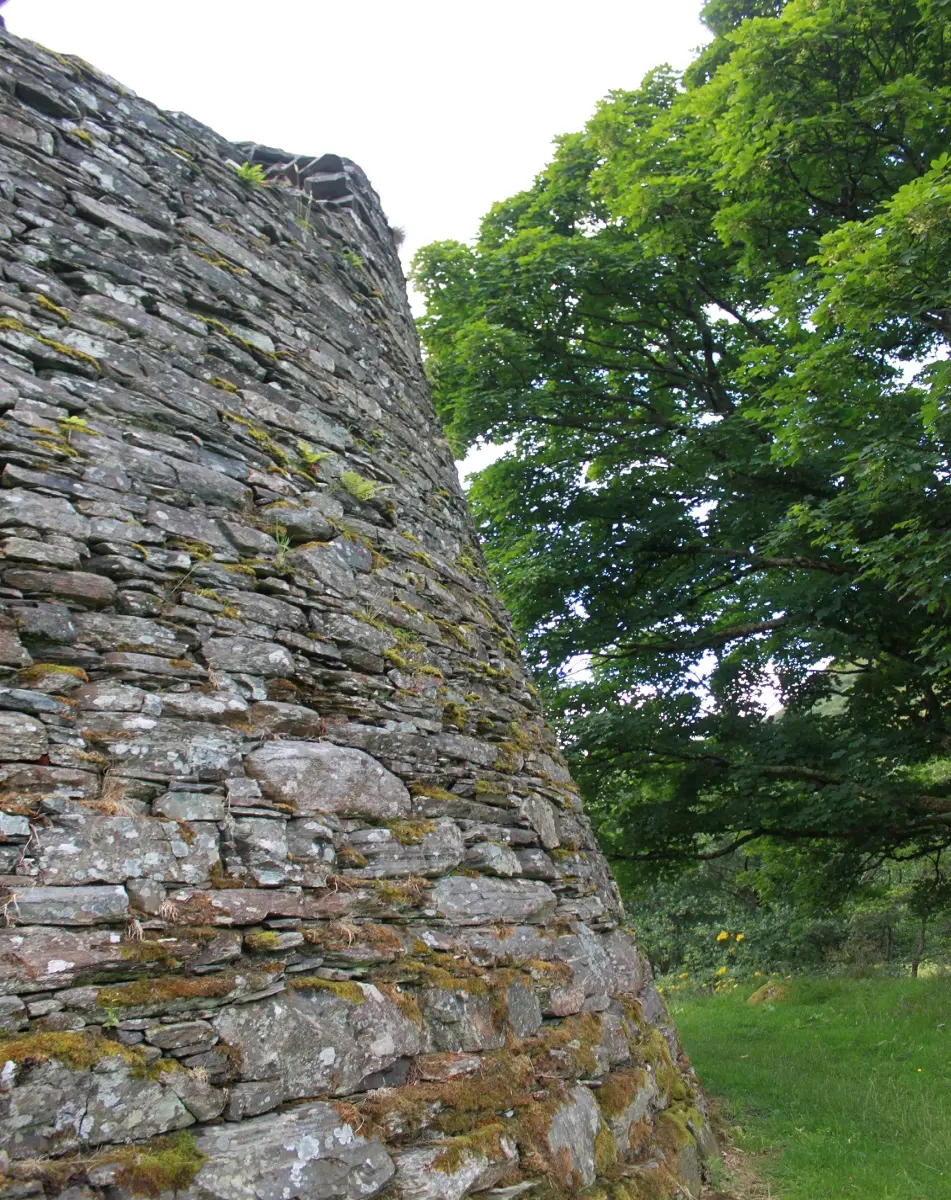
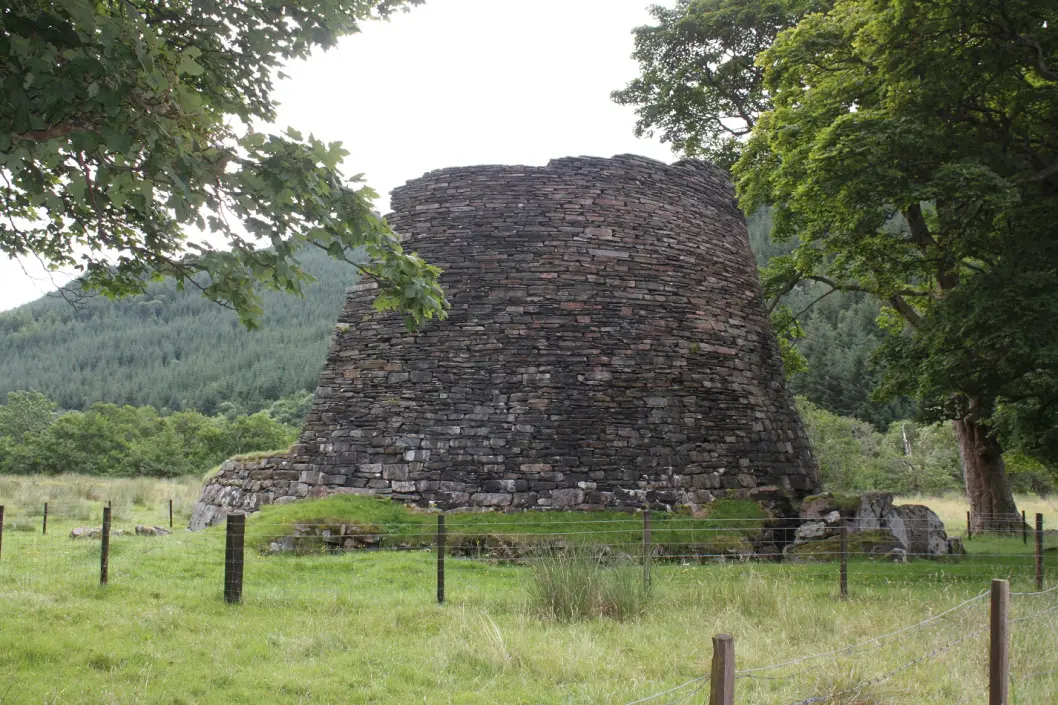
Scotland has many iron age forts called brochs. The largest concentration of them is in the North East, in the county of Caithness. However, the remains of two very good examples can be found in Glenelg, which is on the West Coast, near the Isle of Skye, but on the mainland. These are the best preserved examples I've seen on the mainland, and they are around 2,000 years old - and are maintained by Historic Environment Scotland. They are named Dun Telve and Dun Troddan. They are both free to enter.
These brochs are at the end of a single track dead end road. You have to turn of the A87 which runs between Invergarry and Skye, at ShielBridge. From there its a good 10miles or so down a very picturesque, remote and quiet road - the scenery from the drive alone is worth the trip. On the way to the Brochs you can also stop at the ruins of Bernera Barracks which are a few hundred years old.
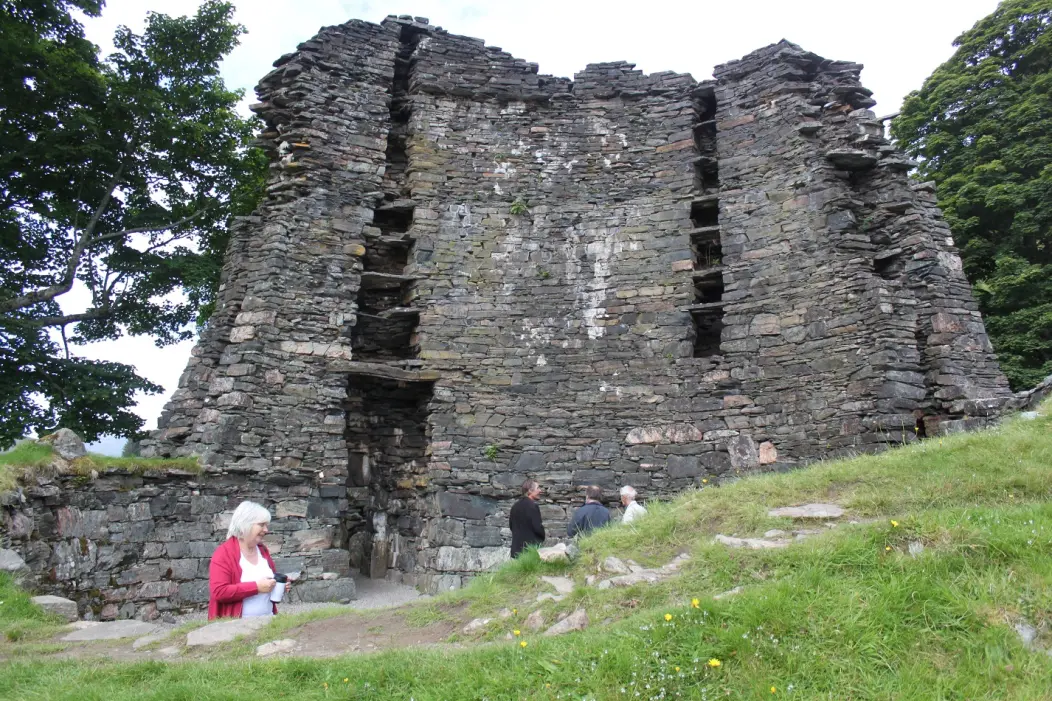
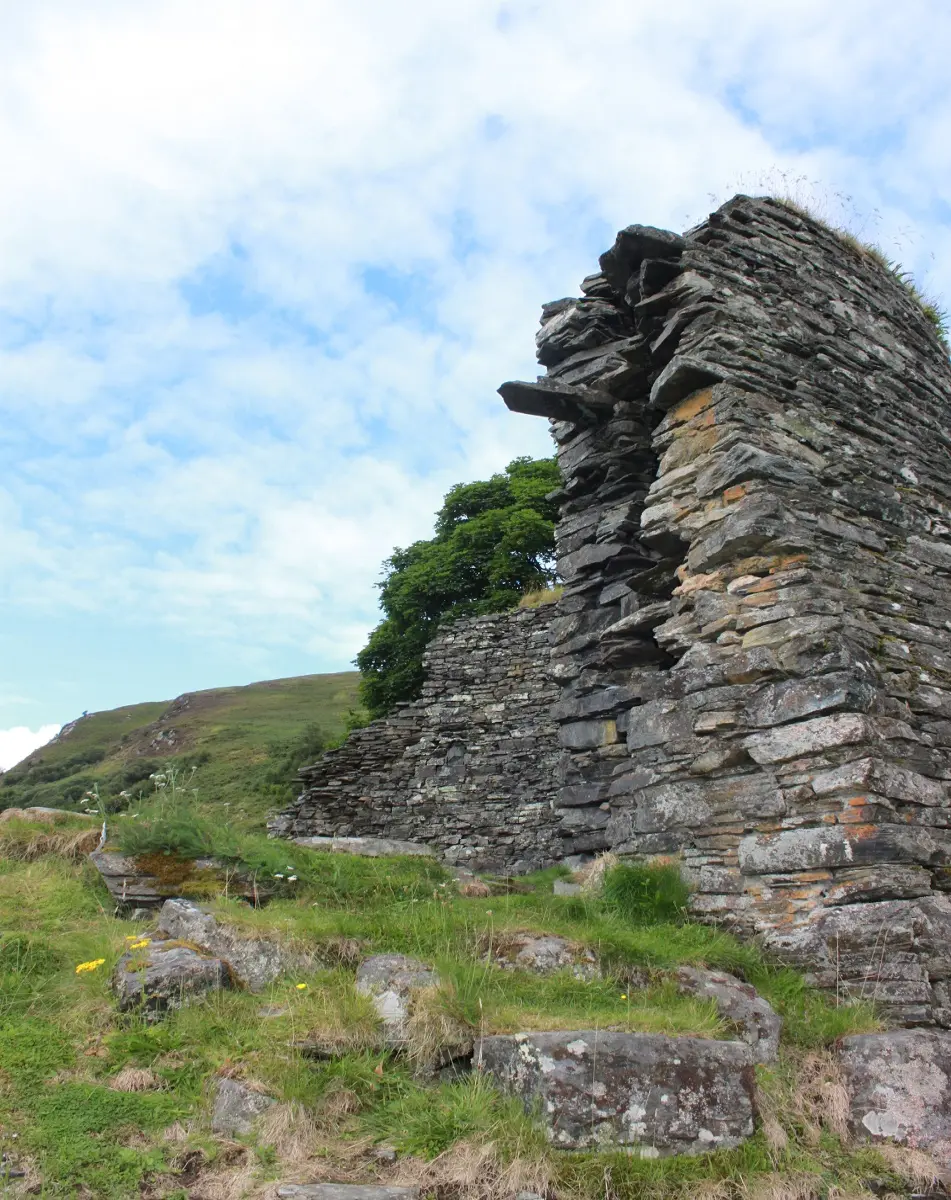
The brochs are large defensive forts but during the iron age. You can get an appreciation of the size from the pic above. The walls are pretty thick, and the design is clearly to provide protection from invaders allowing the population to retreat inside and shield up.
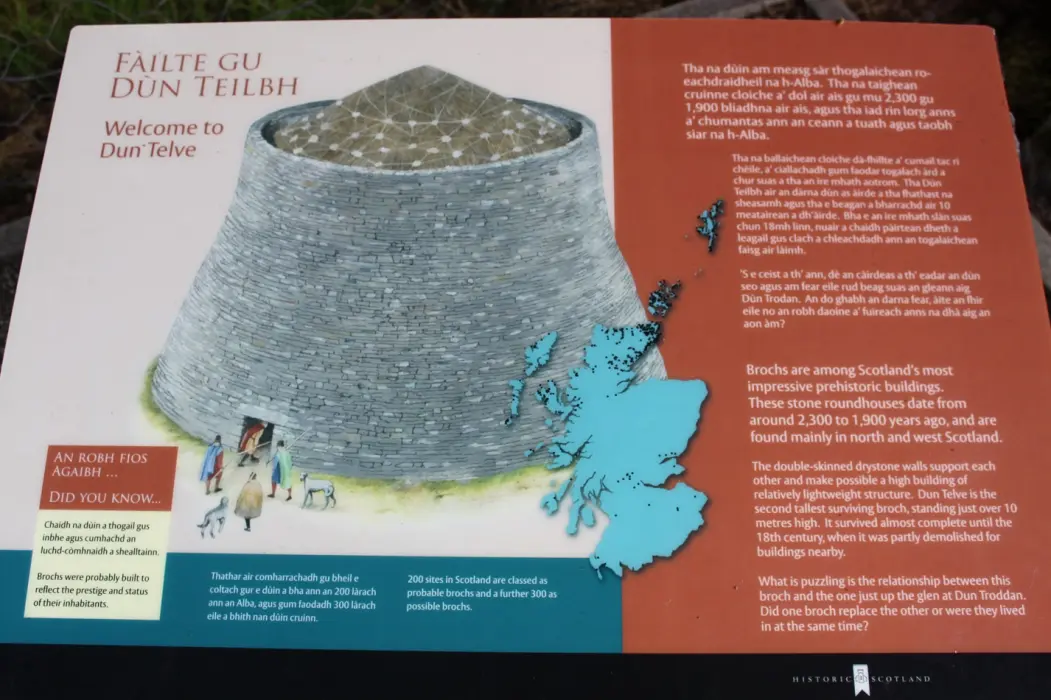
I've visited quite a few around Scotland including one in the Outer Hebrides and a few in Orkney and the one thing that really amazes me is that the design is very similar across all of them, which I find really interesting noting when they were built and how far apart. In the information board above it is quite sad to read that Dun Telve stood nearly complete until it was partly demolished to provide building stone for the construction of other buildings during the 18th century - I guess that due to the remoteness of the area it would have been very hard for the locals to find any other building materials so they did what they had to do.
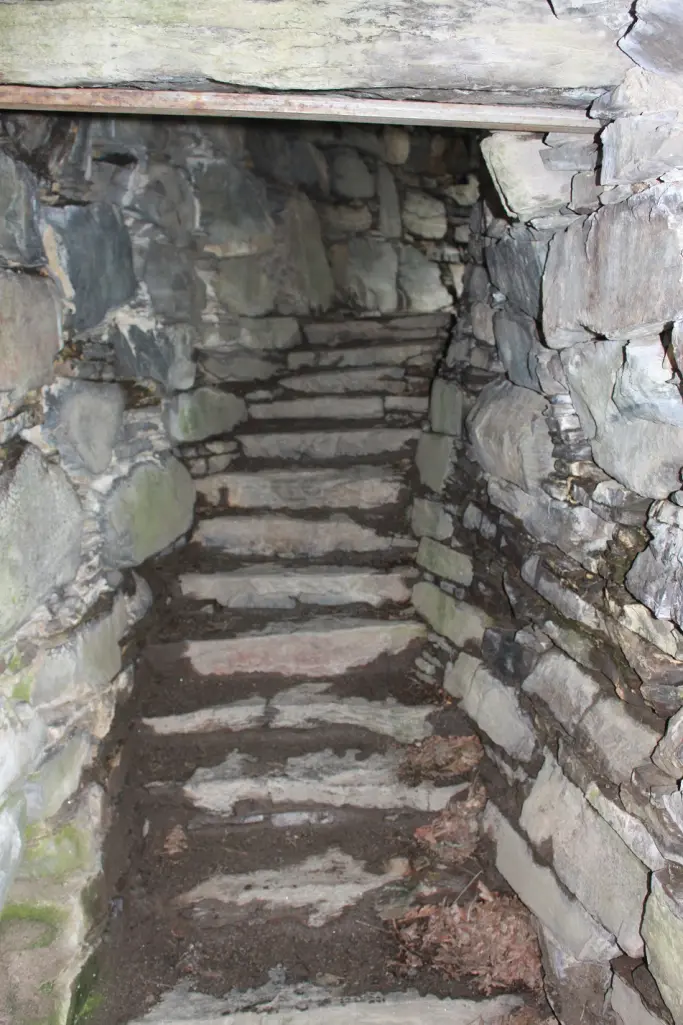
The passageways are all quite characteristically similar across the brochs I've visited - and are quite low in height - maybe 4 foot at best - and I dont know if that is a reflection on the height of people at the time, or more on their limited construction ability - I would have thought the latter. The walls are generally quite thick, as they contain passageways within them as can be seen in the following pic.
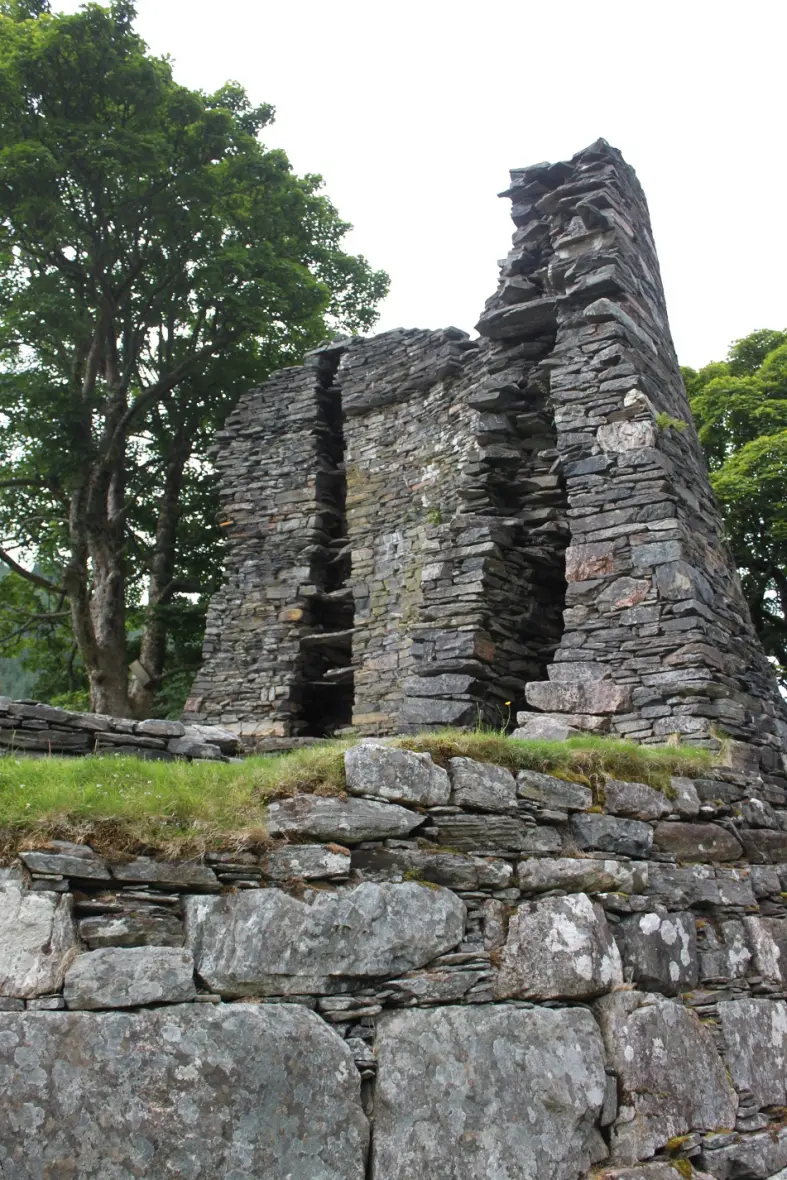
These two brochs are very close to each other which is also quite intriguing, as I've never seen two that close before (or even remotely that close). Having them both so close also makes the trip worth while.
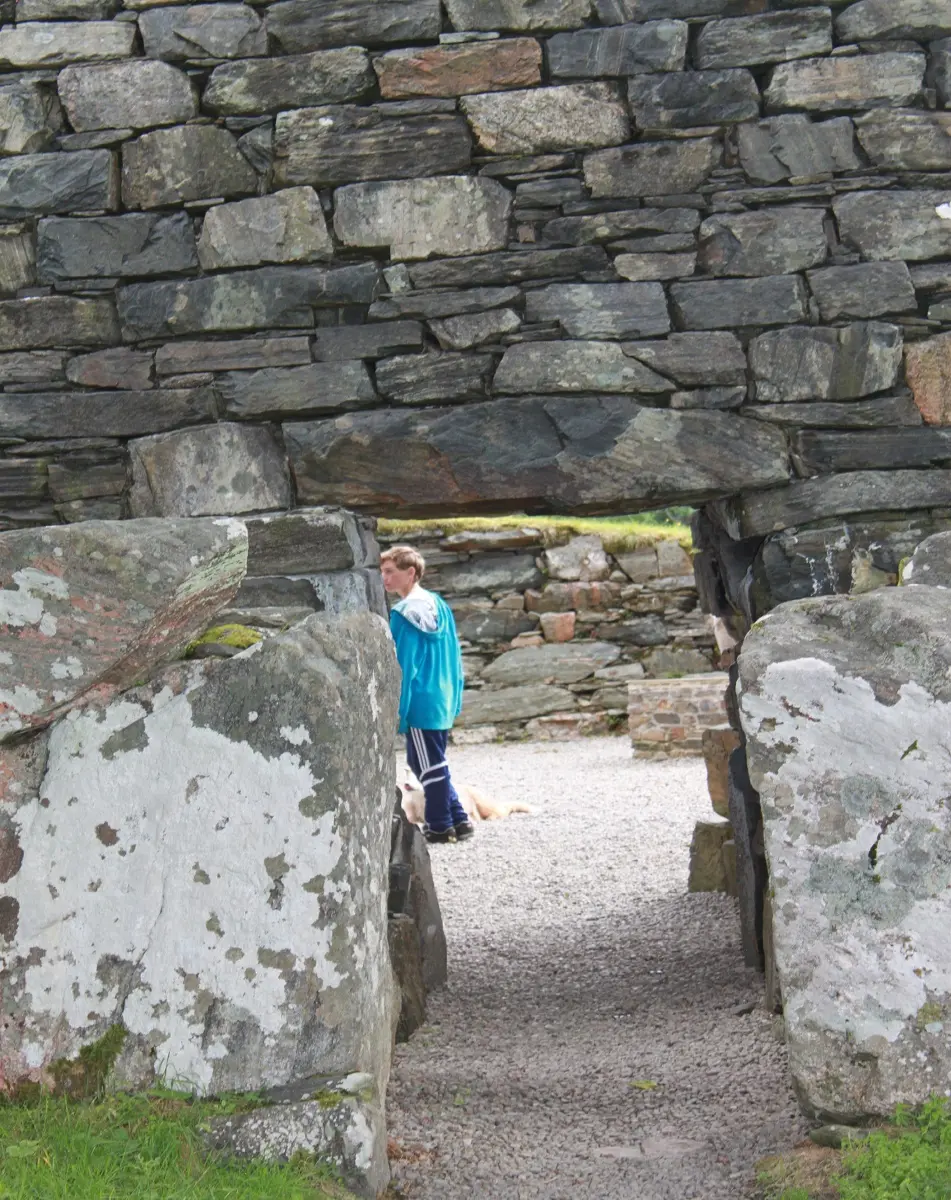
I struggle to comprehend how these must have been built, assuming they were largely built by hand, with maybe some animal power thrown into the mix. You can see the size of the stones at this entrance which must have been pretty difficult to excavate, move there and then set in place.
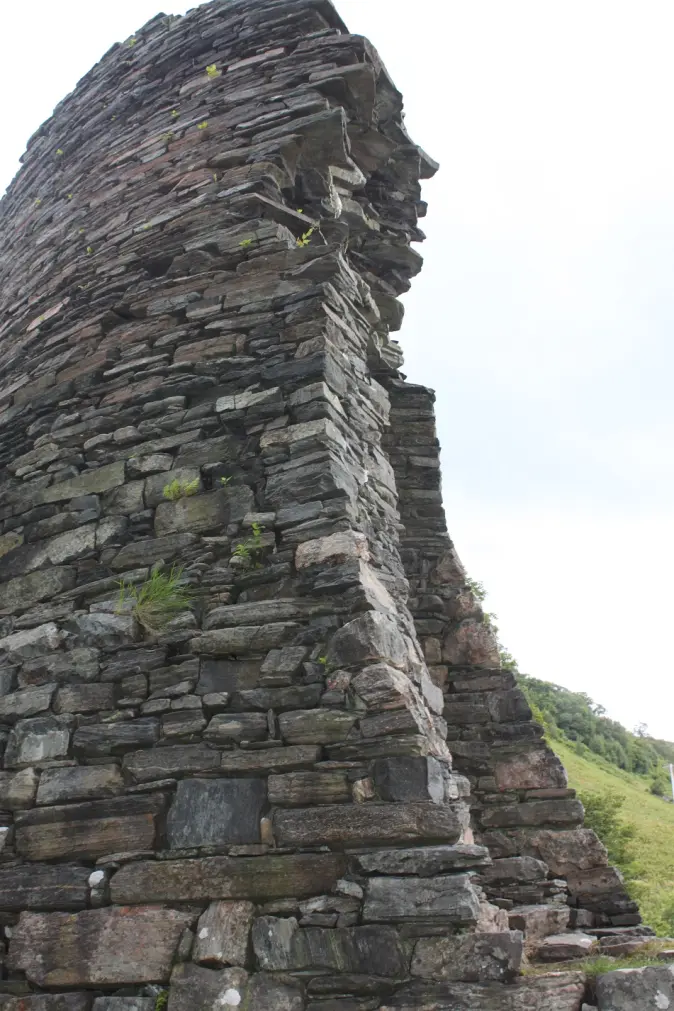
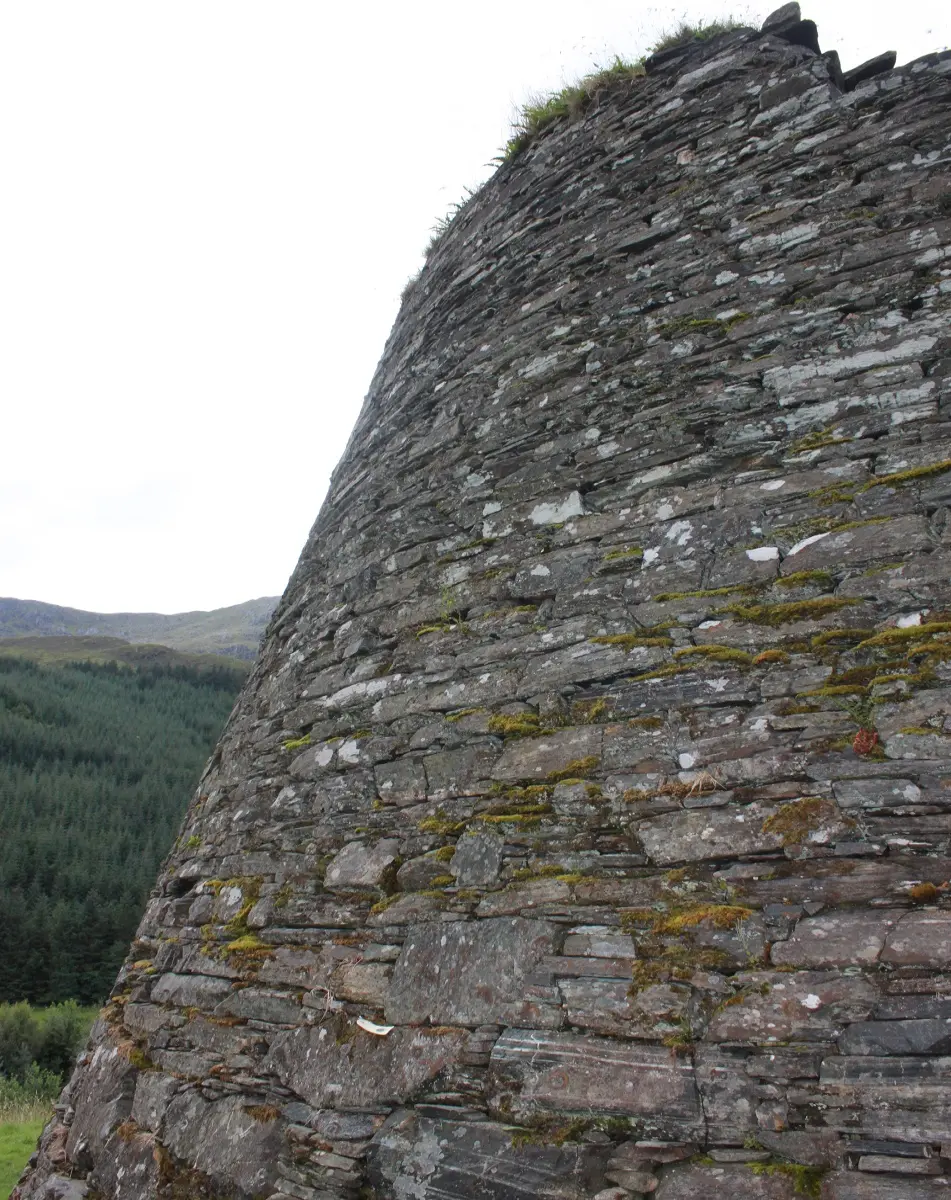
The craftsmanship is also impressive. The curves are well set and the stonework is neat, and to have stood this long (which obviously some modern repair) is quite a feat.
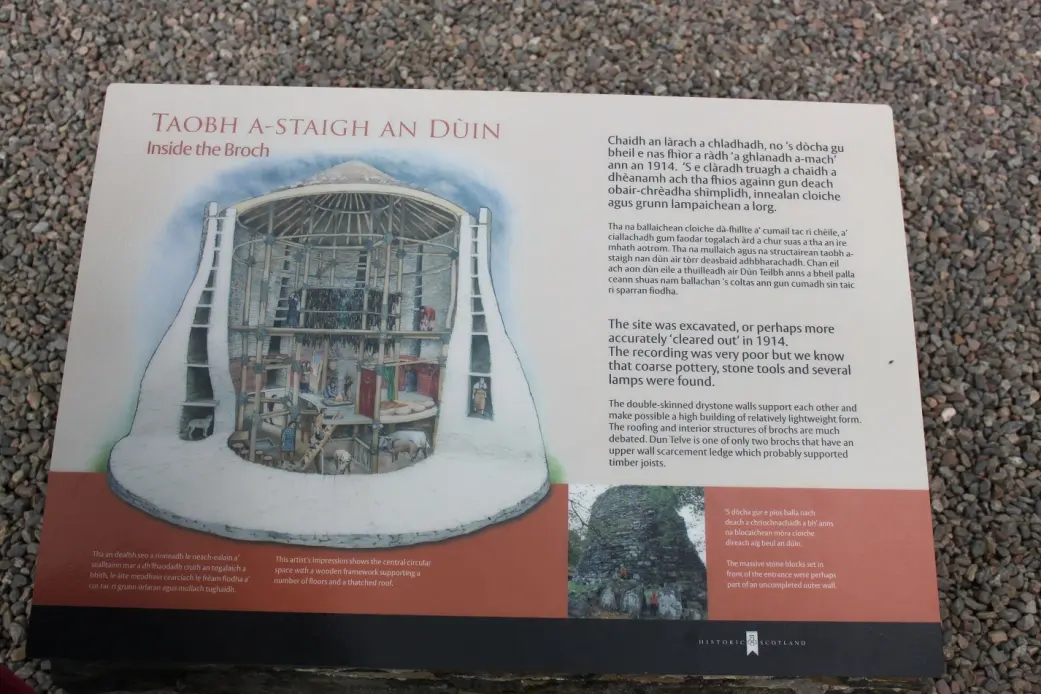
They would have been impressive structures to behold all those years back, and I do wonder what they would have been like inside - but it is not known for sure exactly what they were like, with the info board above providing a possible idea.
If you ever are in the area, then they are well worth the visit - including the drive and Bernera Barracks, it all adds up to a good half day out, all for free !
Links:
Dun Telve and Dun Troddan Brochs, Glenelg
The following site provides more information on iron age brochs and has the aim of actually constructing a broch !
If you want to support important buildings, history and heritage in Scotland and the UK, then please consider the following:
For a reasonable annual membership price, both provide access to numerous historic properties across Scotland which are great for days out. Once you've been a member for more than a year you also got free access to other properties across England, Wales and Northern Ireland (including half price entry during your first year) - so its well worth the investment, plus its all for a good cause.