
Greetings Publish0x community, it's been a while since you're not hearing from my side. Today, I'm in front of you to join the latest writing competition organized by Publish0x. If you haven't read it yet, please check the campaign announcement post written by Igor. Personal wallets are the first step into the cryptosphere, in my opinion. So far, we have several options even for the same chain: Trust & Metamask for Ethereum (and its side chains), Sollet & Phantom for Solana, and Terra Station Wallet for TERRA/LUNA chain. In this piece of writing, we will start with why you need a wallet while interacting with crypto, what features wallets should have, what are the current options, and lastly I'll try to cover the pros and cons of using the Tally Ho wallet. The reading scheme is explained below:
- What is a personal wallet? Why do you need it?
- What are the pros and cons of using well-known crypto wallets?
- What does Tally offer? What's new and more importantly how?
- BONUS: A User Guide to Start Using Tally Ho Wallet?
What is a personal wallet? Why do you need it?
Crypto assets need ''storing''. The only way to store your cryptocurrencies is by having a crypto-native wallet. It's not physical wallets that are carried in our pockets. While crypto assets are a kind of digital asset class, their storage is also digital. In digitalized world of crypto, there are 2 main options to store crypto assets: putting them on CEX (centralized exchanges) or withdrawing them to your wallet. The 'personal wallet' phrase in the sub-heading reflects the second option. But the function of a wallet is limited to storing value? Of course, not!
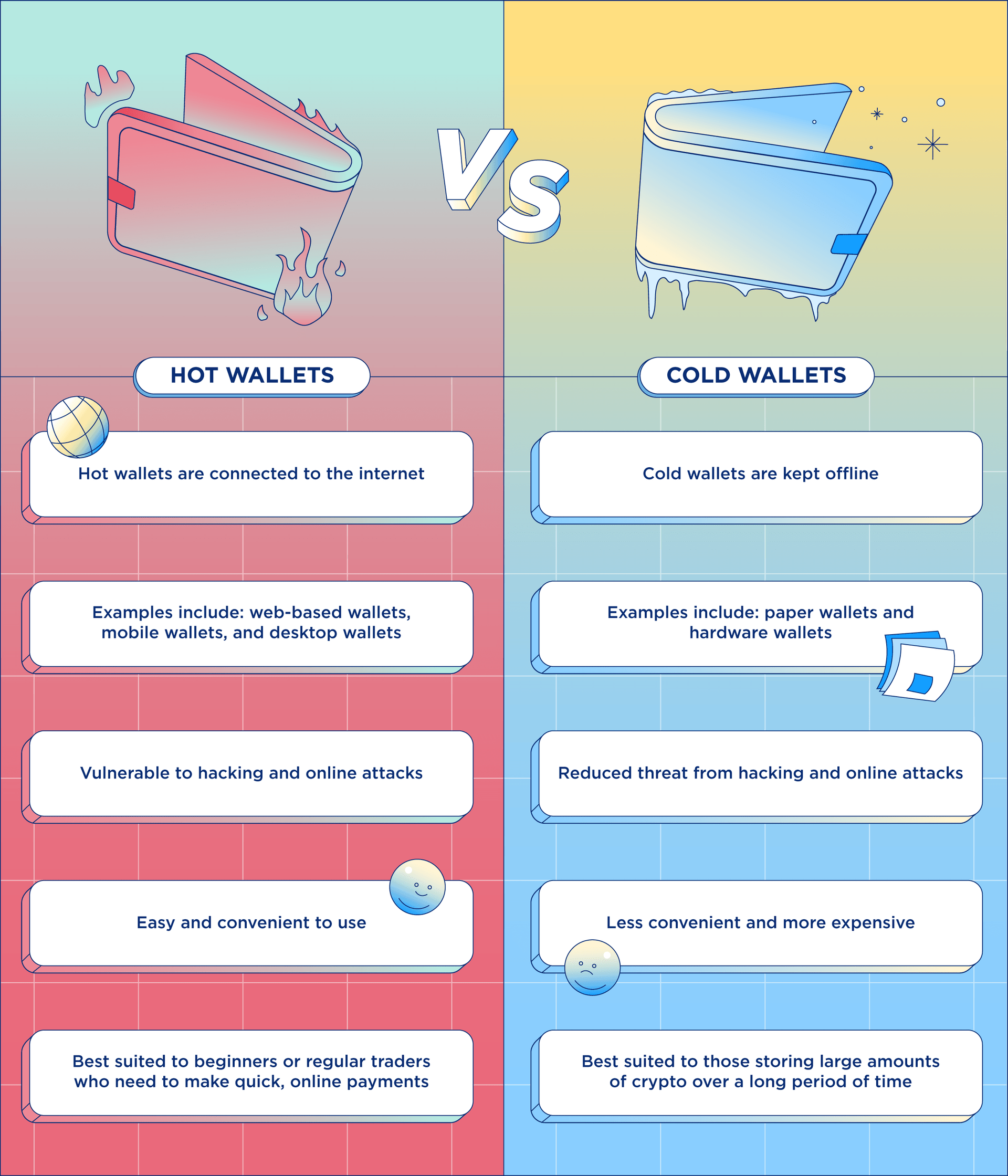
The primary goal of using a personal crypto wallet is storing value. On the other hand, encrypting and/or signing information, executing a smart contract by permission, or identification of a document through an in-wallet sign are some examples of what you can achieve by having a crypto wallet. There are many types of wallets that provide the features I mentioned above. We can group them into 2: Hot & Cold Wallets. Hot Wallets are mobile and/or desktop wallets that have direct access to the Internet connection. So, they're vulnerable to any online attack. But those wallets are chosen mostly due to ease of use. You should only add them to Chrome/Edge & start using them. On the other hand, Cold Wallets have no direct Internet access. So, they are more resistant to online attacks. But it requires to pay more than the others to get one. The infographic made by Crypto.com below explains this topic well.
Shortly, each type of wallets have their own pros and cons. Think the advantages they provide and the possible risks they have carefully before getting started. But, we can say that both the hot and cold wallets have a developer/dev team other than us. It means that the background control is dependent to them. Here comes the first distinct feature of Tally Ho wallet: Tally Ho is a free, open-source Web3 wallet built and operated by the same people who use it. Metamask collects fees through in-wallet swap function but we have not seen any distribution of such fees to the community who actually uses Metamask wallet. Tally Ho, the open-sourced Web3 wallet starting from day 1, distributes all the revenue received by management to its community. This is another feature that distinct Tally from Metamask or any other wallet provider.

What are the Pros and Cons of Using Well-Known Crypto Wallets?
The term ''well-known crypto wallet'' means Metamask for this sub-topic. Because, we're dealing with a Web3 wallet that works for the Ethereum blockchain. Most of Publish0x users have extension wallets, including me, and Metamask is most probably the first we all downloaded after interacting with crypto. In past, there are no more options to store assets in the form of either Bitcoin or Ethereum within a wallet. Now, there are more L1 chains, so it's possible to store your assets in form of Solana, Avalanche, or Terra. Because Metamask is the first wallet everyone interacts, there are lots of how-to guides to download & set up a Metamask wallet. If you are not familiar with how to use a Metamask wallet yet, please consider reading my blog on Publish0x. I'm sure you've something to learn about.
If we're dealing with Metamask, one of the best feature it has is multi-chain availability on 1 extension. Excluding test networks, I've 8 different networks running on a single Metamask extension including the Ethereum, BSC, and Polygon chains. If you use Metamask & have Phantom extension on Chrome in order to reach Solana chain, this is a great combination! You can deposit/withdraw almost all of the supported currencies in most of CEXes. But, there's always a dark side, too. First of all, Metamask may block any country/region & stop providing service. Through this GitHub document, it's possible not to reach Metamask and its features from a restricted region. We saw an example of this back in Q1,22. Many Venezuelans complained about that incident.
This is the picture you will face if your region is blocked from Metamask itself. It's totally against the reason why we're here right now: decentralization. Putting everything to the Internet and claiming that ''it's true decentralization'' is not proper. The true decentralization comes with the community itself & develop using many helping hands at the same time. For Metamask, it didn't come through that way. It's first developed in 2016, decided to go decentralized at some point but even considering the example above, it's far from decentralization.
So, What's the Solution? What's Tally Ho Wallet, briefly?
From 2020 Summer to that day, the term 'decentralization' gained impact on our lives and general crypto community. Most of us wanted to use the DApps to gain decentralization but it's not the concept at all. Using DApps with Metamask doesn't make sense but if you had no more available options, it works somehow. Now, there is an opportunity: Tally Ho Wallet. Tally Ho is first community-driven, Web3 wallet after many years. Now, we don't have to trust, we can verify it!
It is a response to the shift towards corporate-run, closed source software in today’s most popular cryptocurrency wallets. The idea of Tally Ho Wallet was first came into the action in Summer 2021, and in November 2021, the code has been published on GitHub. From that day, it's decentralized and open-sourced. Please check the ETHDenver talks about Tally Ho Wallet below.
Tally Ho Community Edition wallet is live now and available for everyone who wants to test. But, please don't forget that it is a trial version. So, you may face with some bugs or find places that needs improvements. In case of such situation, please reach the team members on Discord server. Community Edition is available to anyone with 3 different extension options: Chrome, Firefox, and Brave. To reach full decentralization and give the authority to community, there must be a DAO around. Yet, it's not available for Tally Ho but community multisig and DAO structure is ready. So, expect an announcement...
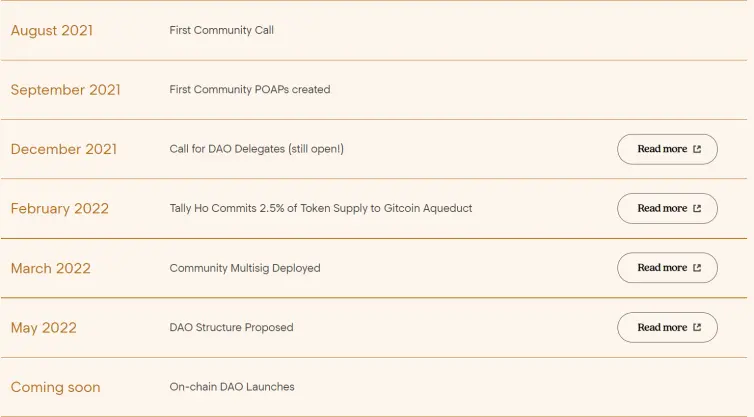
In addition to that, the most important way of ''giving back to the community'' is launching a governance token, airdropping most of the supply to contributors, and letting them to decide the next steps of protocol. The name and total supply has already been decided: $DOGGO token will be the native token of Tally Ho community and it's limited 30 billions of units. More than 1/3 of total supply is reserved for ''community merkledrop'' and it's said to be that the most fair launch ever according to multiple factors. Details can be found on the governance forum of the Tally Ho. Please consider registering the governance forum, let the community hear your voice.
After all, you're ready to set up your Tally Ho wallet. Check next chapter, please.
A User Guide to Start Using Tally Ho Wallet Extension?
Before starting, I must repeat that it's still in the beta phase. So, it's possible to face some bugs now. Don't be scared or afraid, please contact with the team members or community mods immediately. BUIDL TOGETHER.
Head over to the download page, first. Select the Internet explorer you want to use Tally Ho. I choose Chrome, for example. Then click ''add extension''. So, it's that simple. You will see the extension image on the upper right corner.
Because it's still in the development phase, I recommend you to start not with an existing wallet. Please select ''Create New Wallet'' and decide the password which unlocks your Tally Ho wallet. In this stage, you may even set Tally Ho wallet as 'default' wallet choice for future DApp use. Please continue and write down the 24-word phrases. You can't reach your wallet without missing any of them. After all, verify the words.
Soi everything set up! You're ready to begin Web3 journey with a truly decentralized wallet. Have fun!
*This article is created to share my personal opinion about Tally Ho Wallet and its features to the Publish0x community. None of the words above contain any kind of investment advice! Please DYOR (Do Your Research) before investing.
**If you are interested in writing articles about ANYTHING on Publish0x, you can follow this link.






