

Innovation in waste management and recycling has become increasingly important in recent years due to the growing concern over the impact of waste on the environment and climate change. Waste management and recycling are essential for reducing the amount of waste that ends up in landfills and reducing greenhouse gas emissions. Innovative technologies and approaches are being developed to improve waste management and recycling practices, and governments are implementing regulations to encourage sustainable waste management practices.
The current state of waste management and recycling is a major concern for many countries. With the increasing population and consumption levels, the amount of waste generated is also increasing. In many countries, waste is still being disposed of in landfills, which can lead to environmental problems such as groundwater contamination, soil pollution, and greenhouse gas emissions. Innovative technologies in waste management such as waste-to-energy, composting, and recycling are being developed to address these issues.
The role of government and regulation is also crucial in promoting sustainable waste management practices. Governments are implementing regulations to encourage waste reduction, reuse, and recycling. They are also providing incentives for businesses and individuals to adopt sustainable waste management practices. In addition, governments are investing in research and development to improve waste management and recycling technologies.
Key Takeaways
- Innovative technologies and approaches are being developed to improve waste management and recycling practices.
- Governments are implementing regulations to encourage sustainable waste management practices.
- The current state of waste management and recycling is a major concern for many countries.
The Current State of Waste Management and Recycling

Innovation in waste management has led to the emergence of new technologies that have revolutionized the sector. These technologies have improved the efficiency of waste management processes, reduced the environmental impact of waste disposal, and increased the effectiveness of recycling programs.
One of the most significant technologies that have emerged in waste management is artificial intelligence (AI). AI has been used to develop efficient waste collection systems that use sensors and analytics to optimize waste collection routes. This technology has also been used in robotic waste sorting, where robots are used to sort waste based on material type, reducing the need for human labor.
Another technology that has been used in waste management is machine learning. This technology has been used to develop predictive models that can forecast waste generation patterns, allowing for better planning of waste management processes. Digitalization has also been used to improve waste management processes, with the use of cloud-based systems and mobile apps that allow for real-time monitoring of waste collection and recycling processes.
Advanced recycling technologies have also emerged in waste management, including the use of robotics in recycling processes. These technologies have improved the efficiency of recycling processes, reducing the amount of waste that ends up in landfills. The Internet of Things (IoT) has also been used in waste management, with the use of sensors to monitor waste levels in bins, allowing for better waste collection planning.
Overall, the use of innovative technologies in waste management has led to significant improvements in the efficiency and effectiveness of waste management processes. These technologies have reduced the environmental impact of waste disposal, increased the effectiveness of recycling programs, and improved the overall sustainability of waste management practices.
The Role of Government and Regulation
Government and regulation play a crucial role in promoting innovation in waste management and recycling. The Environmental Protection Agency (EPA) in the United States, for example, has implemented several policies and regulations to encourage the development of new technologies and methods for waste reduction and recycling. These policies include the Resource Conservation and Recovery Act (RCRA), which sets standards for hazardous and nonhazardous waste management, and the Clean Air Act, which regulates emissions from waste incineration facilities.
Similarly, the UK government has set ambitious targets for waste reduction and recycling, which has led to the development of innovative technologies and practices. The government’s Waste and Resources Action Programme (WRAP) has also provided funding and support for research and development in the waste management and recycling industry.
In India, the government has implemented the Extended Producer Responsibility (EPR) framework, which holds producers responsible for the disposal of their products. This has encouraged manufacturers to develop more sustainable products and packaging, and has also led to the development of new recycling technologies.
Lead regulations have also played a role in promoting innovation in waste management. The Lead-Based Paint Hazard Reduction Act in the United States, for example, has led to the development of new methods for lead paint removal and disposal.
Overall, government and regulation have been instrumental in promoting innovation in waste management and recycling. By setting standards and targets, providing funding and support, and holding producers responsible for their products, governments have encouraged the development of new technologies and practices that are more sustainable and efficient.
Impact on Environment and Climate Change
Innovation in waste management and recycling has a significant impact on the environment and climate change. The primary goal of these innovations is to reduce waste and minimize its impact on the environment. Sustainable waste management practices are crucial to ensure that the environment is protected, and resources are conserved.
One of the most significant environmental impacts of waste is the release of greenhouse gases. Landfills and incinerators are major sources of greenhouse gas emissions, which contribute to climate change. Recycling and waste reduction can help reduce these emissions and mitigate their impact on the environment.
In addition to greenhouse gas emissions, waste also contributes to plastic waste and pollution. Recycling helps to reduce the amount of plastic waste that ends up in landfills and the environment. Sustainable waste management practices, such as composting, can also help reduce pollution and protect the environment.
Innovation in waste management and recycling has the potential to transform the way we manage waste and protect the environment. By adopting sustainable waste management practices, we can reduce our impact on the environment and mitigate the effects of climate change.
Emerging Trends in Waste Management and Recycling
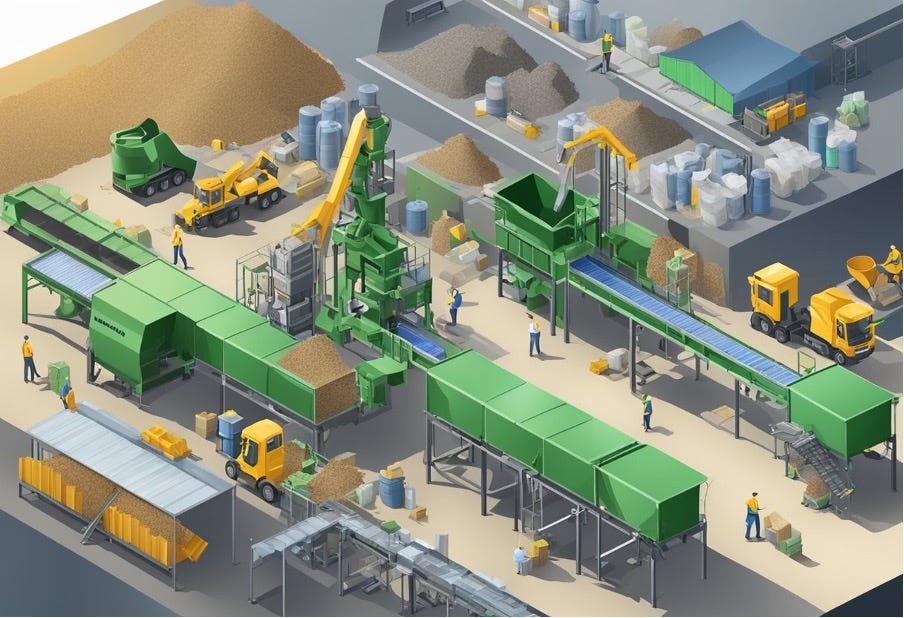
In recent years, there has been a growing interest in sustainable practices and circular economy in waste management and recycling. The focus has shifted from traditional waste management practices to more innovative solutions that aim to reduce waste and promote recycling. Here are some of the emerging trends in waste management and recycling:
Chemical recycling: This is a new technology that aims to recycle plastic waste that cannot be recycled through traditional methods. It involves breaking down plastic waste into its basic components, which can be used to make new products.
Composting: Composting is a natural process that converts organic waste into nutrient-rich soil. It is an effective way to reduce waste and promote sustainable practices.
Sustainable packaging: With the growing concern over plastic waste, there has been a shift towards sustainable packaging materials. Compostable materials, such as bioplastics, are becoming increasingly popular.
Circular waste management: Circular waste management is a system that aims to reduce waste and promote recycling by keeping resources in use for as long as possible. This involves designing products that can be easily recycled or reused.
Food waste reduction: The amount of food waste generated globally is staggering. Startups are emerging that aim to reduce food waste by connecting surplus food with people who need it.
Sustainable practices: There is a growing interest in sustainable practices across all industries. Waste management and recycling are no exception. Companies are setting sustainability goals and implementing sustainable practices to reduce their impact on the environment.
HDPE: High-density polyethylene (HDPE) is a type of plastic that is commonly used in packaging. It is a highly recyclable material and is becoming increasingly popular in the recycling industry.
Batteries: With the growing use of electronic devices, there has been an increase in the amount of batteries being disposed of. Battery recycling is becoming a popular solution to reduce waste and promote sustainability.
Cardboard: Cardboard is a highly recyclable material that is commonly used in packaging. It is an effective way to reduce waste and promote sustainable practices.
Solar energy technology: Solar energy technology is becoming increasingly popular in waste management and recycling. It is an effective way to reduce energy consumption and promote sustainability.
In conclusion, waste management and recycling are undergoing a transformation towards more sustainable practices. With the emergence of new technologies and innovative solutions, the industry is moving towards a circular economy that promotes recycling and reduces waste.
Frequently Asked Questions
What are some innovative technologies being used in waste management today?
Innovative technologies such as waste-to-energy, bioreactor landfills, and plasma gasification are being used in waste management today. Waste-to-energy involves converting waste into energy, while bioreactor landfills use controlled moisture and oxygen to speed up the decomposition process. Plasma gasification, on the other hand, is a process that uses high temperatures to convert waste into a gas that can be used as fuel.
What are some waste reduction innovations that have been successful?
Successful waste reduction innovations include composting, recycling, and upcycling. Composting involves turning organic waste into nutrient-rich soil, while recycling involves processing waste materials into new products. Upcycling, on the other hand, involves transforming waste materials into products of higher value.
How can waste management companies improve their environmental impact?
Waste management companies can improve their environmental impact by implementing sustainable practices such as reducing waste, increasing recycling rates, and using renewable energy sources. They can also invest in innovative technologies that reduce waste and emissions.
What are some smart waste management projects that have been implemented?
Smart waste management projects that have been implemented include waste sorting robots, smart bins, and IoT-enabled waste management systems. Waste sorting robots are capable of sorting different types of waste, while smart bins use sensors to detect waste levels and optimize waste collection. IoT-enabled waste management systems use real-time data to optimize waste collection and reduce waste.
What is the future of waste management and recycling?
The future of waste management and recycling is expected to involve more advanced technologies such as AI-powered waste sorting and blockchain-based waste tracking. There will also be a greater focus on waste reduction and sustainable practices.
What are some waste management ideas for a more sustainable future?
Ideas for a more sustainable future include promoting the circular economy, reducing single-use plastics, and investing in renewable energy sources. The circular economy involves designing products that can be reused or recycled, while reducing single-use plastics involves using more sustainable alternatives. Investing in renewable energy sources such as solar and wind power can also help reduce greenhouse gas emissions.
This article was previously published in medium






