
If you watch YouTube daily, you've probably seen a video sponsored by a VPN company. There seem to be dozens of these VPN companies out there, sponsoring videos to get you to sign up. It sounds promising. Encrypting your data? Your ISP not being able to spy on you? It sounds like a privacy-respecting dream! Well, the ugly truth is that VPNs are often overrated for privacy. Here's why.
Encryption
VPNs often boast about encryption. They talk about how your data is completely encrypted, and without this encryption, hackers can see any data you send through the web. They're not exactly lying. When you connect to a website using HTTP, it means that your connection isn't secure and the data you send can be seen in plain text. However, most websites nowadays use HTTPS, a protocol that encrypts the data you send. What does this mean for you? Well, a VPN encrypts your data the same way as if you don't use a VPN on HTTPS. Banking websites, search engines, and even Publish0x use HTTPS, so encryption can already be done without a VPN!
No Logs
Another thing a lot of VPNs talk about are their no logs policy, and how they protect against your ISP (Internet Service Provider) spying on you. First off, your ISP can only track you to a limited extent when considering HTTPS. What can't they do?
- See specific pages you visit (anything after the '/' on a site).
- See what you search or type into forms.
The only thing they can really track if you're using HTTPS is the website domain! For example, my ISP can only see "publish0x.com" right now.
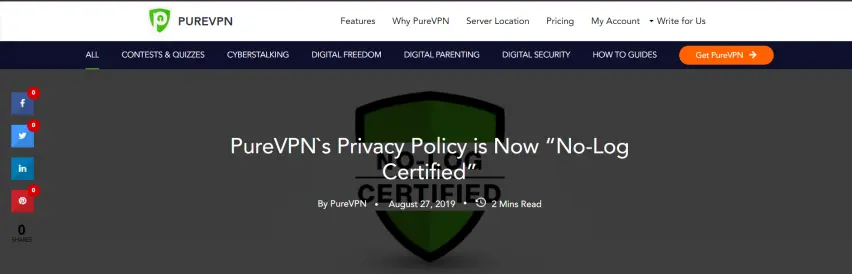
Something else to consider is your VPN service spying! In 2017, VPN service PureVPN had logs that helped the FBI track a man suspected of cyberstalking. However, PureVPN claimed that they have a "No Log Policy." They still have that policy to this day! At the end of the day, you just have to trust your VPN isn't keeping data about you, and that brings up a huge privacy nightmare.
Tor: The Alternative
A free alternative to a VPN is Tor. Tor sends your data through multiple servers that make it nearly impossible to track you. Your data is still encrypted, you block trackers and fingerprinting, and you can access virtually any site. If you want to learn more about Tor, you can visit their official site here. The only downside to Tor is a slower connection, but the tradeoff should be worth it for almost complete anonymity.
Now, there are some exceptions for when you should use a VPN. If you torrent/pirate files off the web, you might want to use a VPN to protect your location data in the form of your IP address. However, it's still not necessary to do that. If you require changing your IP address's location all the time, you'll probably need a VPN to do that. But in the end, if you're using a VPN for purely privacy, think about if you really need it or not after reading this article.
Note: This is my first article on Publish0x! I hope to write more soon, and I'm excited to be a part of this crypto community.






