Since 2020, the industry policy on Blockchain emerged endlessly, from President Xi‘s recent remarks to advance blockchain technology as an important national strategy, to attempts of top tier cities such as Beijing, Shanghai and Shenzhen to stamp out crypto trading platforms. Behind this, it is what the industry needs, breaking away from being like the tree without roots. Not only did it sweep the industry, it also stunned observers who once questioned or even scoffed at blockchain and cryptocurrencies. Inevitably, digital currencies have gradually reached the mainstream. Wallets storing digital currencies also becomes the focus of attention.
One reason why wallets are becoming increasingly prevalent is because of exchanges. From QuadrigaCX, Canada’s largest trading platform, DragonEx, a long established exchange, to various small exchanges, the stolen cases of digital assets that user store in the exchanges have been constantly warning users that exchanges can’t handle the job alone.
A good Blockchain wallet can serve not simply as a "safe" for digital assets, but also as an "entry into the Blockchain world." Blockchain wallets can be combined with the different needs of various industries to explore more applications with a wealth of functions and comprehensive designs. In the first half of 2019, the total number of Cryptozoic wallets hit 47 million, a rise of nearly 6 times compared to 2016, according to the Global Currency Benchmark Report. In China, the number of Blockchain wallets has also grown rapidly in the past three years. The most common wallets include HyperPay, Bit pie, token, Cob, and Cash. This article will analyze the five Blockchain wallets mentioned above in terms of user experience, security, supported currency, investment products, and features.
User Experience
1. HyperPay
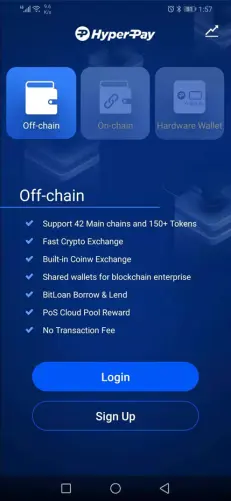
HyperPay is one of the mainstream wallets in China with the second largest number of domestic users. It has three types of entry modes: off-chain wallet, on-chain wallet, and hardware wallet. In the crypto wallet industry, the wallet with both on-chain and off-chain modes are more attractive to users, while the wallet with only on-chain mode sets a higher threshold for users. HyperPay's home page is simple and concise, and registration process is easy and fast. User only has to register with his/her mobile number or email address, and can also set a PIN and fingerprint ID.
2. Bitpie
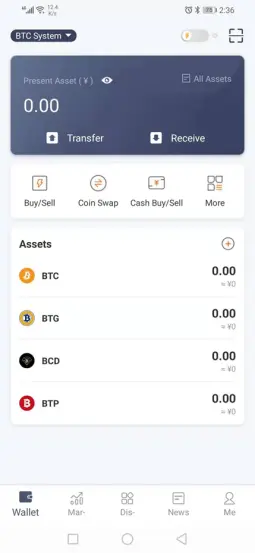
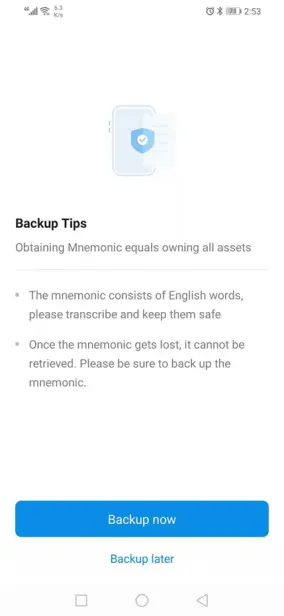
Bitpie is a decentralized wallet. Screenshots are not allowed on the registration page. The warning, "Once your 12-word mnemonics are lost, your assets cannot be recovered" reminds user that they must store the mnemonic word in a safe place. Requiring user to correctly copy the 12 mnemonics can always reduces the user experience, and its function page shown after registration is not intuitive enough.
3. imToken
imToken is an Ethereum-based light wallet. Developed in May 2016, it is one of the mainstream wallets in the crypto circle. Before creating an imToken wallet, you need to perform a risk assessment, which could be very helpful for users who know nothing about crypto wallet. The imToken wallet can be backed up, but users still need to copy the mnemonic words and cannot take screenshots, which can be a little tedious.
4. Cobo
Cobo wallet is also one of the most popular crypto wallets. It has two models: cloud wallet and HD wallet. The off-chain wallet, Cloud wallet, is managed by Cobo. On the contrary, HD wallet is on-chain wallet, and the private key is controlled by users. Creating a Cobo cloud wallet requires copying the mnemonic word. Although the page prompts not to take screen shots, it can still work. The confirmation clicks of mnemonics are time-consuming.
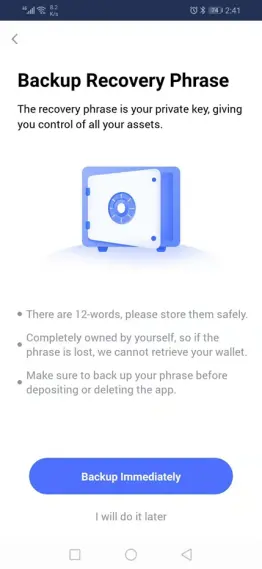
5. Kcash
Kcash is a light wallet that supports Bitcoin, Ethereum, and ACT. It is also one of the most highly regarded wallets in the industry. Although the streamlined operation style can make the page design more concise, it can also weaken the function, which prevents the user from seeing all the applications.
Security
1. HyperPay
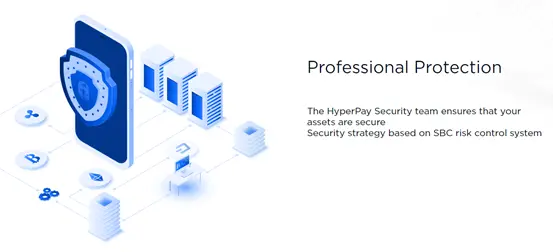
HyperPay has adopted both on-chain and off-chain security measures. The on-chain part used AES symmetric encryption preservation for local data, security development components to enhance the security of the app, certificate binding and RSA to ensure the security of information exchange, as well as exclusive protections against cross-app attacks; the off-chain part used multi-round audits, adopting plans such as hot and cold wallet segregation, CI/CD development program embedded to monitor quality and vulnerabilities, Tier 6 disaster backup solution, and wallet abnormality detecting. All of these have been listed more thoroughly on HyperPay's website.
2. Bitpie
Using technologies such as Bittech, multi-layer protection, cold storage, built-in professional KYC and anti-fraud systems for OTC transactions, Bitpie’s website claims that it has never encountered any security incident. However, in 2018, the Blockchain Security Research Center (BSRC) revealed the specifics of the vulnerability and the attack theory of the Bitpie APP, pointing out that Bitpie not only stores mnemonic seed but also the lexicon in plaintext. In addition, some users have questioned the security of Bitpie's six-digit password and the practice of multiple currencies sharing one seed phrase.
3. imToken
Based on the 0x protocol, imToken does not have a trusted third party. It uses Face-ID / fingerprint or imKey hardware wallet for bulk transactions, which adds several layers of protection to security. Some people, however, have reported that all USDTs they have stored in their ImToken user accounts have been completely transferred. While it is unknown if the news is true, it still raises doubt about imToken’s security.
4. Cobo
Cobo uses a variety of measures such as cold inventory, military-grade hardware wallets, bank-grade encryption chips, QR code identification, 100% offline transactions, and self-destructable systems to protect the safety of user’s assets, which can be more reliable.
5. Kcash
Kcash’s security solutions mainly include Lightning Payment Network, user-owned private key transactions, private key offline, multi-sig technology guarantee, verification codes, fingerprints, live verification and other. No security incident related to Kcash has occurred yet.
Mainnet Currency
1. HyperPay
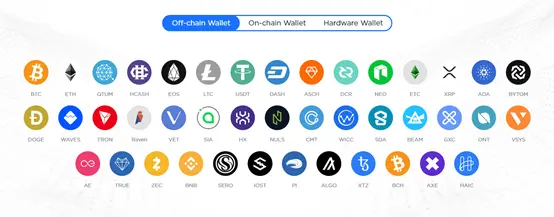
HyperPay currently supports 55 mainnet currencies, and is the wallet that supports the highest number of mainnets in the world. It supports more than 200 currencies, which basically covers all the demands in the market.
2. Bitpie
Bitpie currently supports about 30 Blockchain mainnets, including Ethereum, Bite, EOS, USDT, etc.
3. imToken
imToken only supports BTC, ETH, EOS COSMOS (ATOM) mainnet currencies.
4. Cobo
Second to HyperPay and Bitpie, Cobo supports more than 20 mainnet currencies, covering most mainstream public chain.
5. Kcash
Kcash supports nine major public chains including BTC, ETH, BCH, LTC, ETC, ACT, EOS, GXS, USDT.
Investment Products
1. HyperPay
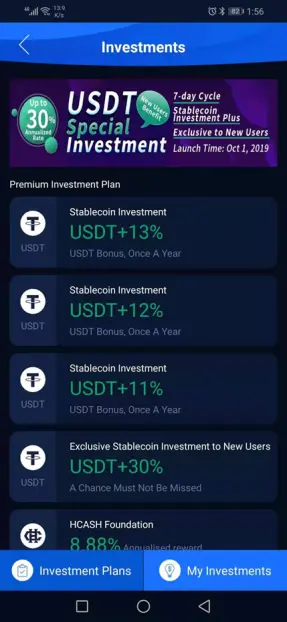
HyperPay has flexible investment products, with different currencies and returns. The investment products can be divided into three major types: Fixed-term investment, dominated by stablecoin USDT and HC, with terms varying from 90 days to 7 days to meet different financial needs. Its annualized rate basically remains in the range of 8.88% -13%, but the return of 7-day stablecoin investment exclusive to new users can reach 30%; HyperFin BitEarn, similar to YueBao of Alipay, covering 9 mainstream currencies such as CNY, USDT, EOS, BTC, etc. with an annualized rate ranging from 2% to 10%; PoS staking, which includes nine high-yield PoS and two regular PoS.
2. Bitpie
Bitpie's investment entry hides deep and its associated function is not very intuitive. Among them, only BTM shows investment functions.
3. imToken
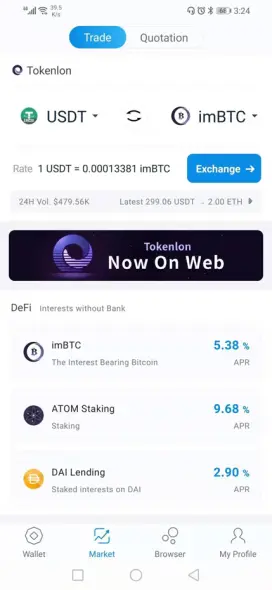
As one of the first cold wallets in the market, imToken does not have its own investment products. While this design reduces the risk dramatically, it also deprive the user chance to earn extra income with idle money . Nevertheless, imToken can also fulfill users’ investment demand by leveraging third-party investment platforms.
4. Cobo
Cobo also has both fixed-term and current investments. Its fixed-term investment products, most of which are offered in mainstream currencies, have relatively higher returns compared to HyperPay. Fixed-term investment must expire before they can be withdrawn, and certain risks remain. The current investment products have lower returns than HyperPay.
5. Kcash
Kcash has two investment products, Kwealth management and Kcash flexible save. Kcash flexible save can be transferred in automatically and withdraw at anytime. The yield of Kwealth management is relatively high, but the term is limited to 90 days. It also offers different currency choice, including both mainstream currencies and Kcash token.
Features
1. HyperPay
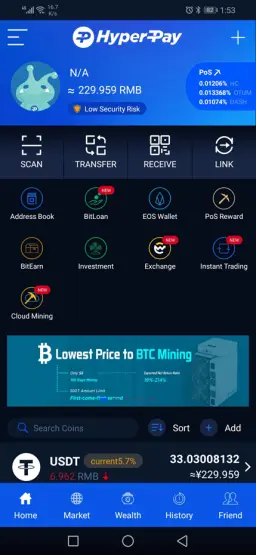
Some unique features of HyperPay can be very appealing to users, such as one-click transfer of assets to CoinW for free, PoS staking reward, instant exchange of original currencies to other currencies, cloud mining as well as hardware wallets, all of which are quite useful.Besides, HyperPay also supports ETH multi-signature and bluetooth firmware upgrade.
2. Bitpie
Bitpie has two main features: Market and DAPP store. Among them, there are a variety of items in the DAPP store, with a full range of subdivisions.
3. imToken
As a cold wallet, imToken doesn’t have many features, and it doesn’t have prominently featured applications except for the Market.
4. Cobo
The special features of Cobo primarily include global Dapp stores and Cobo vault. The practicability is acceptable, but the variety needs to be improved.
5. Kcash
Kcash has many features that are very practical for users., such as Everyday candy, Mortgage loan, etc.
Conclusion
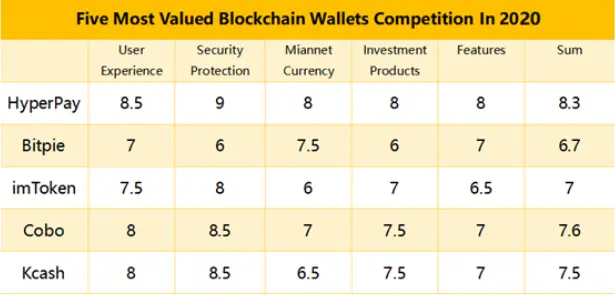
Based the above analyses, we have created the following scope map for your reference (not an investment advice)