

Philosophers often refer to the “view from nowhere” to describe what it might be like to occupy a perspective which is not determined by any contextual or limiting factors. It’s the so-called God’s eye view, and it implies having access to certain and perhaps even absolute knowledge. Yes, it’s epistemologically ironical given that as humans we always have specific perspective on the world which looks “sideways on” instead from an absolute vantage point. But in its best iteration the view from nowhere is used as a thought experiment to think about the limitations of human knowledge and claims to truth and justification.
Nonetheless . . . once upon a time, some philosophers thought this absolute view was attainable through the methods of science, the tools of logic, and the analysis of language. While this project has been largely abandoned, it’s not as if philosophy therefore concedes there are not standards for objectivity. But that’s a different story. Ours concerns finance.
The financial version of this episode involves analysts striving to attain an absolute valuation of an asset — that is, the value of an asset in and of itself at some point in time.
The tools for this “Holy Grail” of endeavors involves speculative calculations based on pricing and cash flow.
How Hard Is It to Determine Absolute Value?
Determining the value of a stock or other asset for the purpose of investment presents several challenges when trying to assess risk in relation to growth.
For example, to be safe you could invest in a mature stock that presents less risk. However, maturity and less risk can also mean that for the amount you invest, you receive little in dividends; or perhaps you would have to invest for several years to make slight profits.
What adds to the problem is that estimating potential for growth can be deceptively altered by emotional sentiment — the dreaded “fear of missing out” (FOMO). So you might rush to get in at a point when an asset has a higher price at a peak in trading, only to see it drop over the next several days.
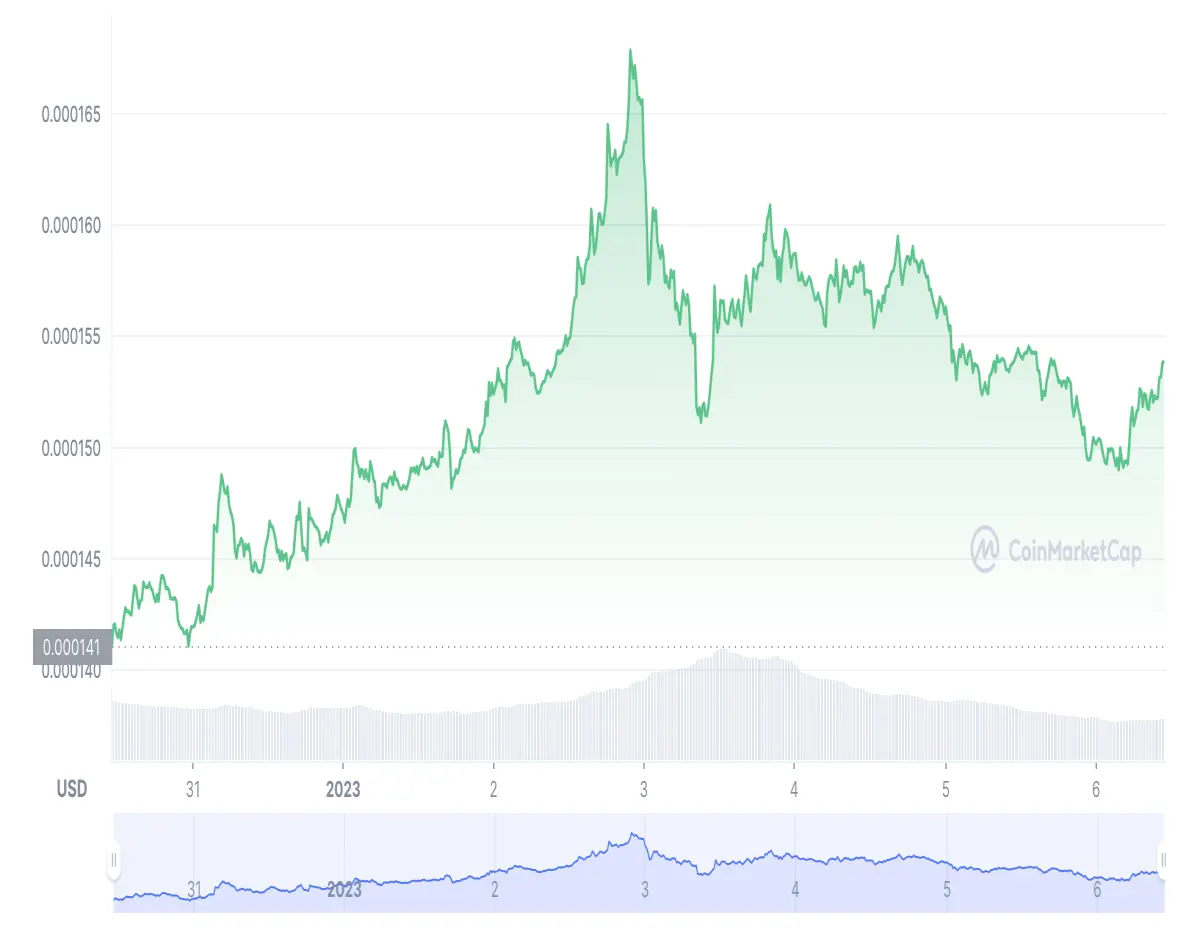
Yet another challenge is determining whether a stock is overvalued, meaning that the price of the asset in the market is higher than it should be. A market correction would mean a drop in the price, and if you happened to purchase the asset when it was high, you’d suffer a loss.
The Methods for Determining Absolute Value
Absolute valuation (AV) is the method of trying to determine the value of the asset in and of itself as a company. It is therefore referred to as intrinsic value (not to be condfused with the intrinisic value of an option), in contrast to evaluating the company in relation to other companies of similar type.
One of the key metrics for AV is the absolute price-to-earnings ratio (P/E), which essentially compares the share price of the asset in relation to its earnings per share. (Though this way of comparing assets and companies is really using a relative P/E ratio.)
To calculate P/E ratio, divide the stock price per share by the earnings per share. Both of which can be found on Yahoo! Finance . . . well, for that matter the P/E ratio is also there:

So, if the share price is more than the earnings per share, then the asset is overvalued. In sum, if an asset’s P/E is high, it is likely overvalued. As we have reported before, a P/E of 15 might indicate overvaluation and less room for growth.
In the image above, we can calculate TSLA’s P/E ratio:
113.08 / 3.14 = 36.01
36.01 differs from what is listed on the screenshot (35.94) due to real-time stock price and calculation lag. But yes, many have thought TSLA has been overvalued for a while.
Another metric involves calculating the discounted cash flow (DCF), which compares the present value of your money to some future state. What’s important to note is that DCF considers the present value of your money as it can be invested and not just the value of your money by itself. An example from Investopedia:
[A]ssuming a 5% annual interest rate, $1 in a savings account will be worth $1.05 in a year. Similarly, if a $1 payment is delayed for a year, its present value is 95 cents because you cannot transfer it to your savings account to earn interest.
This method of analysis allows one to determine what the present value of an investment is based upon future earnings or losses (i.e. cash flows). A higher future state of cash flow means the investment is a good one.
Bearing the above in mind, there are some complications with determining P/E and DCF, which are speculative. In the end, accuracy of the respective calculations depend on
- the reliability of data and data gathering,
- the absence of the manipulation of data,
- accounting for anomalies that might skew the data, and
- limiting the number of assumptions to fill data gaps.
How This Can Be Applied
You can teach yourself how to use the tools of P/E and DCF analysis. Investopedia is a great resource for financial self-tutelage.
Where things get a bit more complicated and interesting is with regard to the valuation of cryptocurrencies. Cryptocurrencies seem like a traditional asset in many respects, but they are like an ungodly beast in many other respects.

More on AV and crypto in our next lesson!
This article was originally published on Medium and is a part of the Crypto Industry Essentials educational program presented by The Art of the Bubble.
Though this article is credited to me, it contains some written material by Sebastian Purcell, PhD from his The Art of the Bubble education series on cryptocurrencies.
If you found this helpful, Subscribe to The Art of the Bubble’s free newsletter.
Join us on Discord for live chat and daily updates.






