
As Bitcoin dominance currently looks high, lots of experts predict a new altcoin season.
However, Bitcoin dominance is still far from its All-Time High:
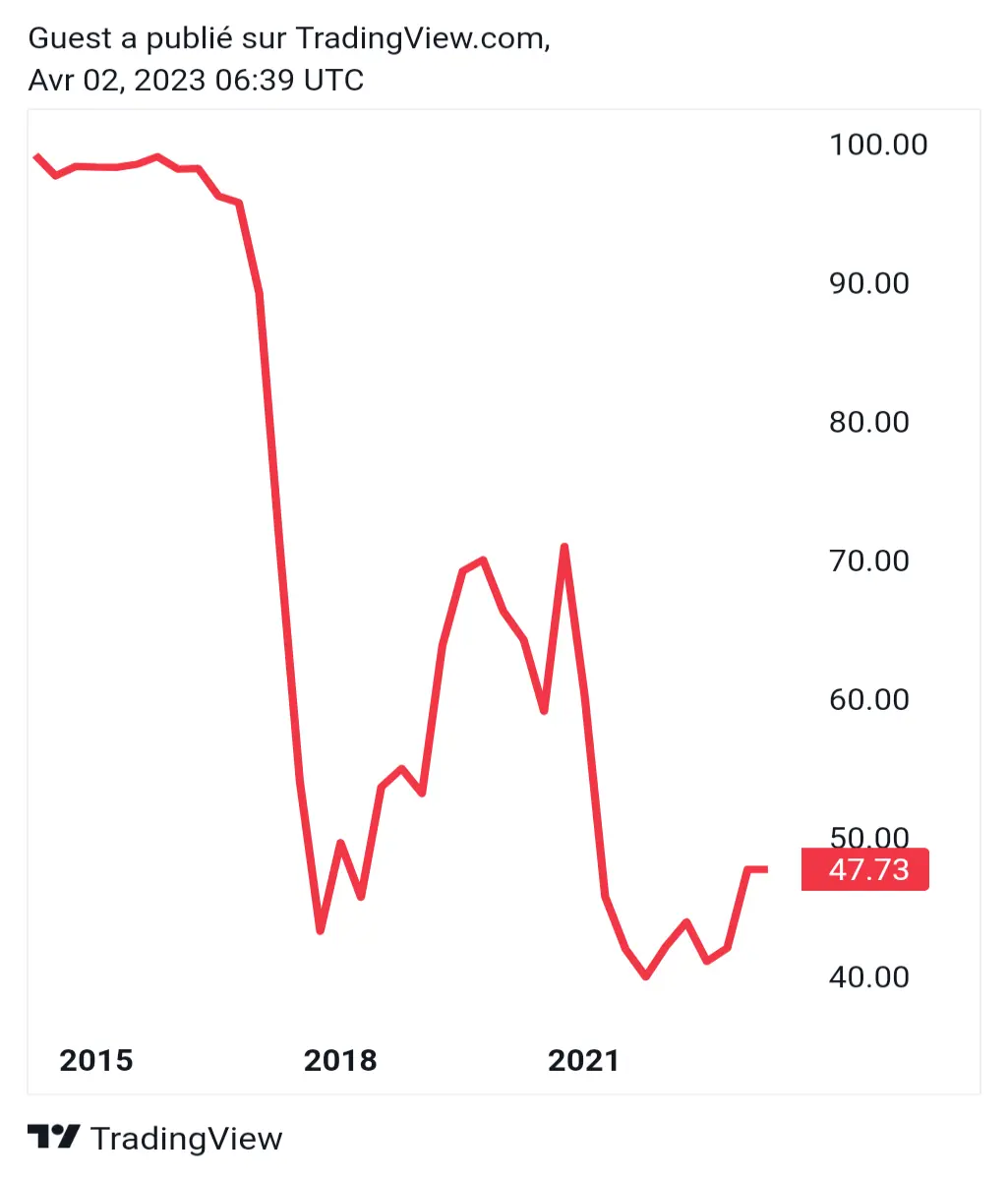
Let's try to focus on what it means.
What is Bitcoin dominance?
Bitcoin dominance refers to the percentage of the total market capitalization of the cryptocurrency market that is held by Bitcoin. It is calculated by taking the market capitalization of Bitcoin and dividing it by the total market capitalization of all cryptocurrencies combined.
For example, if Bitcoin (BTC) has a market capitalization of $500 billion and the total market capitalization of all cryptocurrencies is $1 trillion, then Bitcoin's dominance would be 50% ($500 billion / $1 trillion).
Bitcoin dominance is often used as a metric to gauge the overall health and strength of the cryptocurrency market. When Bitcoin dominance is high, it suggests that investors are more focused on Bitcoin and less interested in other cryptocurrencies. When Bitcoin dominance is low, it suggests that investors are more willing to explore other cryptocurrencies and invest in them.
It is important to note that Bitcoin dominance is a constantly changing metric and can fluctuate significantly over time, depending on factors such as market conditions, investor sentiment, and the performance of individual cryptocurrencies.
The different phases of Bitcoin dominance
Bitcoin dominance has gone through several phases since the inception of Bitcoin in 2009. Here are some of the major phases:
- Early stage (2009-2012): Bitcoin was the only cryptocurrency at this time, so its dominance was 100%.
- Altcoin emergence (2013-2016): As alternative cryptocurrencies, or altcoins, started to emerge, Bitcoin dominance dropped to around 80-90%.
- ICO boom (2017): The rise of initial coin offerings (ICOs) led to a surge in the number of new cryptocurrencies, causing Bitcoin's dominance to drop to a low of 33%.
- Bitcoin resurgence (2018-2019): The ICO boom ended, and investors returned to Bitcoin as a safe haven asset, driving its dominance back up to around 70%.
- Altcoin season (2020-2021): The emergence of new decentralized finance (DeFi) projects and non-fungible tokens (NFTs) led to a surge in the popularity of altcoins, causing Bitcoin's dominance to drop to a low of 40%.
- Recent period (2021-2022): Bitcoin dominance has been hovering around 40-50% as the overall cryptocurrency market has grown and become more diverse, with Bitcoin continuing to be the largest cryptocurrency by market capitalization but facing increased competition from other cryptocurrencies.
It's worth noting that Bitcoin dominance can fluctuate significantly over time, and it's difficult to predict future trends.
How to trade Bitcoin dominance?
Trading Bitcoin dominance can be done through a few different strategies:
- Spot trading: This involves buying or selling Bitcoin and other cryptocurrencies based on changes in Bitcoin dominance. For example, if Bitcoin dominance is expected to increase, an investor may buy more BTC and sell other cryptocurrencies. If Bitcoin dominance is expected to decrease, an investor may sell Bitcoin and buy other cryptocurrencies.
- Futures trading: Bitcoin dominance futures contracts are available on some cryptocurrency exchanges. These contracts allow traders to bet on future changes in Bitcoin dominance and make profit if their prediction is correct.
- Options trading: Options contracts are another way to trade Bitcoin dominance. These contracts allow traders to buy or sell Bitcoin dominance at a specific price and date in the future.
- Spread trading: This involves simultaneously buying and selling Bitcoin and other cryptocurrencies based on changes in Bitcoin dominance. The idea is to profit from the price difference between two cryptocurrencies as Bitcoin dominance changes.
It's important to note that trading Bitcoin dominance can be risky, as the cryptocurrency market is highly volatile and unpredictable. Traders should do their own research and analysis before making any trading decisions, and only invest what they can afford to lose.
Disclaimer: this article does not contain any financial advice. The information is provided for general informational and educational purposes only.
Please find below some referral links to earn a bit more crypto...






