
# 🕷️ Card Spotlight #10: Spider-Man 2099 — The Spider-Man of the Future
-----
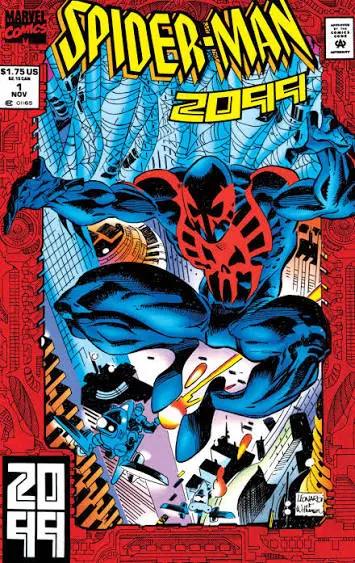
*We started this blog with the Spider-Man of today. Now let’s talk about the Spider-Man of tomorrow.*
-----
## Coming Full Circle
If you’ve been following the blog from the start, you know that our very first card spotlight was on **Peter Parker — the Amazing Spider-Man**. The original. The gold standard. The reason the name Spider-Man means anything at all.
But one of the most beautiful things about the Spider-Man legacy is that it doesn’t belong to just one person. Across the Marvel multiverse, countless heroes have taken on the mantle. Miles Morales. Gwen Stacy. Spider-Ham. And today’s subject — a man from a dark, cyberpunk future who was inspired by Peter Parker’s legend to become something extraordinary.
**Miguel O’Hara. Spider-Man 2099.** The wall-crawler of the future is in the spotlight. 🕷️
-----
## Who Is Spider-Man 2099?
Miguel O’Hara was a brilliant, prodigal child who was awarded enrollment in the Alchemax School for Gifted Youngsters at an early age. He proved to be a genetics genius and eventually became the project head of the genetics program for Alchemax.
Created by Peter David and Rick Leonardi, Miguel O’Hara debuted in Amazing Spider-Man #365 before getting his own eponymous series in 1992. A geneticist for Alchemax, O’Hara inadvertently combined his DNA with that of a spider, which resulted in him getting superhero powers.
But the how is just as important as the what. After a fatal experiment involving a criminal test subject failed, Miguel decided to quit Alchemax in protest of their unethical practices. However, Miguel’s spiteful colleague, Tyler Stone, poisoned him with an addictive drug called Rapture as punishment for quitting. Desperate to rid himself of the addiction, Miguel used Alchemax’s gene-resequencer to restore his DNA to its original state — but a jealous colleague sabotaged the process, and 50% of his DNA was rewritten with the genetic code of a spider.
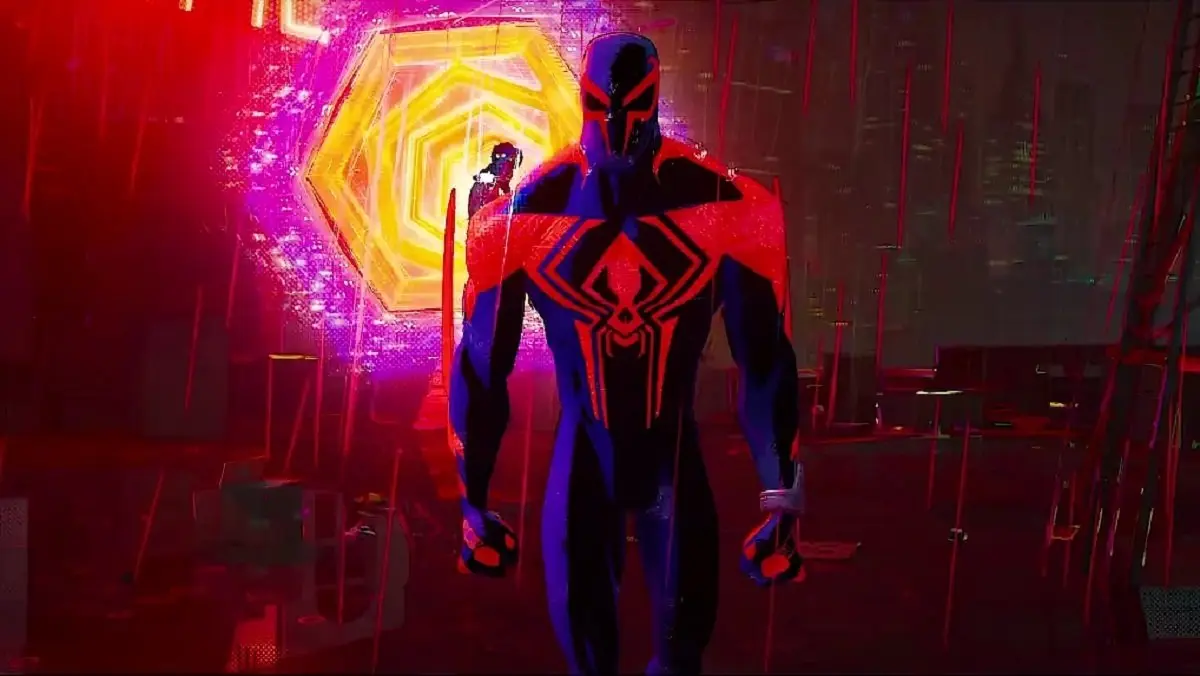
The result? Powers that are both similar to and distinctly different from Peter Parker’s. Miguel possesses superhuman strength, stamina, durability, speed, agility, and reflexes, along with accelerated healing, wall-crawling via talons on his fingers, organic webbing from his forearms, and paralytic venom via fangs. Where Peter shoots mechanical web from wrist shooters he invented himself, Miguel shoots **organic webbing naturally** from his own forearms. Where Peter has a tingling spider-sense, Miguel has enhanced **telescopic vision**. And where Peter’s suit is spandex, Miguel’s iconic black-and-red costume is made from **unstable molecules** — incredibly tough and adaptive.
For the most part, O’Hara’s stories, which are notably dark and gritty, deal with him fighting back against devious corporations and new versions of classic villains in the cyberpunk-inspired dystopian future of 2099. His world is one where mega-corporations rule society, poverty is rampant, and the law serves the powerful. Miguel becoming Spider-Man isn’t just about stopping crime — it’s about fighting an entire corrupt system. That gives him an edge and a moral weight that makes him one of Marvel’s most compelling legacy heroes.
### Inspired by a Legend
What makes Miguel’s origin especially touching is that Miguel’s genetics research at Alchemax was specifically inspired by surviving records of Peter Parker, AKA Spider-Man. A century into the future, Peter Parker is ancient history — a legend whispered about in old files. But his legacy inspired a genius geneticist to reach for something greater. That’s the power of what Peter Parker built. Spider-Man 2099 exists *because* of Spider-Man. It’s a passing of the torch across a hundred years of time.
### On the Big Screen
**Oscar Isaac** voices Miguel O’Hara in Sony’s acclaimed animated Spider-Verse films. He appeared first as a post-credits tease in *Spider-Man: Into the Spider-Verse* (2018), and then took center stage as a major character — and a morally complex antagonist — in *Spider-Man: Across the Spider-Verse* (2023). Isaac’s portrayal gave Miguel a fascinating duality: a man who genuinely believes he’s doing the right thing for the multiverse but whose methods and rigidity make him the obstacle our heroes must overcome. It’s one of the most nuanced animated villain-adjacent performances in recent memory, and it made Spider-Man 2099 a mainstream sensation overnight.
-----
## Spider-Man 2099 in Marvel Snap
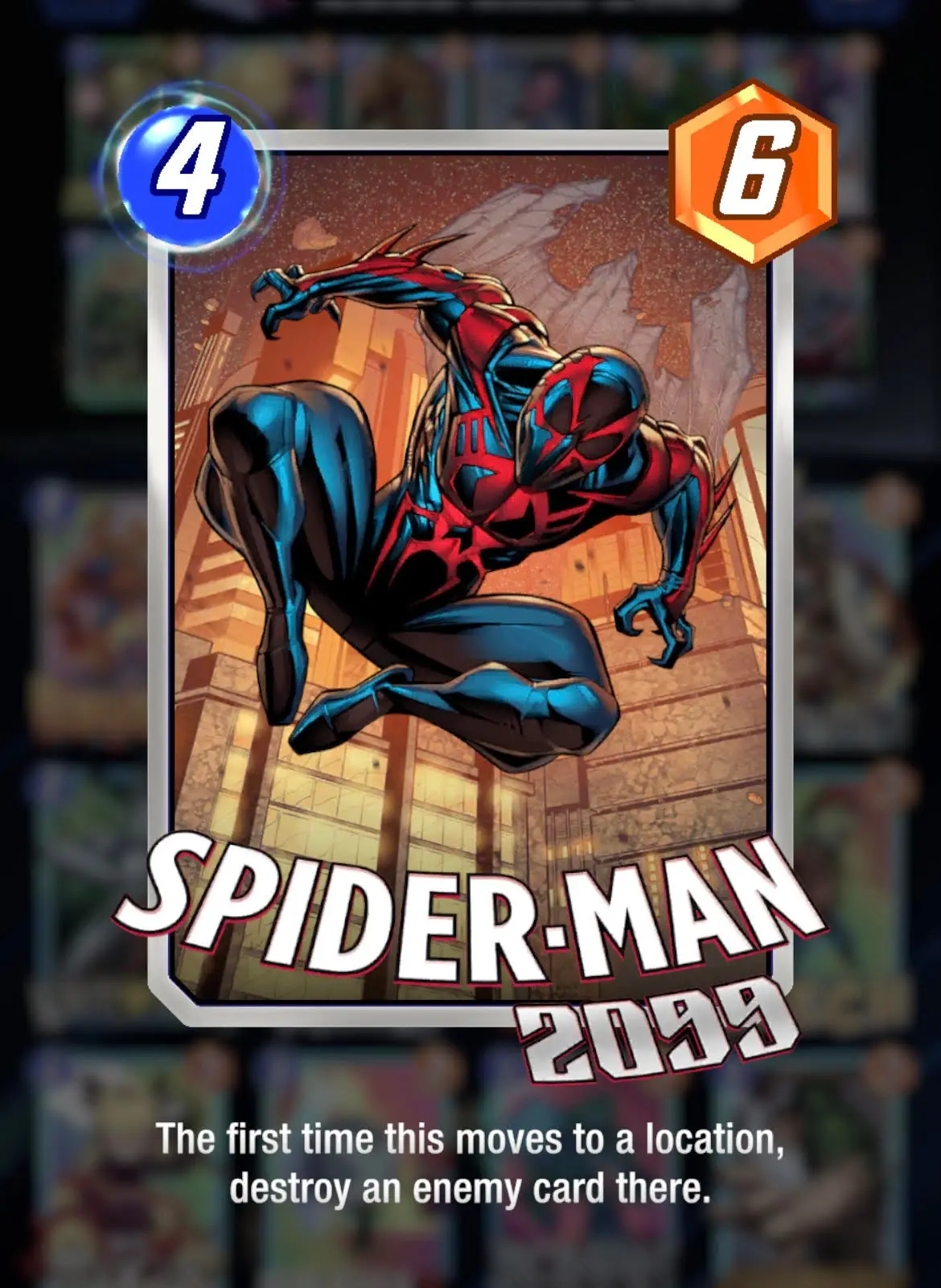
Now let’s talk about how Miguel shows up on the board — and how his card history mirrors his character perfectly. Just like Miguel himself, this card has gone through some evolution to find its best form.
### 🃏 The Original Card
Spider-Man 2099 was originally a 4-Cost, 6-Power card with the ability: “The first time this moves to a location, destroy an enemy card there.”
The concept is brilliant and deeply on-brand. Miguel is a man who acts with brutal efficiency in a world that doesn’t reward hesitation. Drop him somewhere, move him to an enemy location, and he **destroys** whatever he lands on. Not displaces. Not debuffs. *Destroys*. Gone. Permanently.
In his origin story, O’Hara accidentally severed the arm of Aaron Delgato, an Alchemax employee who attacked him, as he did not yet understand his powers. Second Dinner clearly had that energy in mind when designing this card. Miguel 2099 doesn’t mess around.
### 🔧 The Buff — Getting the Stats He Deserved
On February 1, 2024, Spider-Man 2099 was buffed from a 4-Cost/6-Power card to a 5-Cost/9-Power card. Second Dinner noted that “Spider-Man 2099 has been a below-average card for quite a while — never one of the worst, but also not a true contender,” and that they wanted to try and get some “big move” cards into fighting shape.
The cost went up by 1, but the power jumped by a massive 3 — making him a genuinely threatening stat card even before his ability triggers. At 5-Cost/9-Power with a destroy effect on his first move, he became one of the most powerful payoff cards in the entire movement archetype. The buff transformed him from a fringe option into a legitimate finisher.
### ⚡ His Current Form
Today Spider-Man 2099 sits at **5-Cost, 9-Power** with the ability: *“The first time this moves to any location, destroy an enemy card there.”*
That 9-Power alone makes him worth considering in move decks. Stack the destroy effect on top, and you have a card that can single-handedly dismantle an opponent’s best location in the late game. Move him into a spot where your opponent has their biggest card sitting — a 15-Power Magneto, a fully powered Thor — and watch it vanish. Then you’ve got 9 Power sitting where their best card used to be. The swing in momentum is enormous.
-----
## How to Play Spider-Man 2099 Today
Spider-Man 2099 lives in **movement decks** — and he’s one of the best finishers the archetype has:
**The Core Movement Package** — Pair him with classic move enablers like **Ghost-Spider** (who swaps locations with a card you play), **Iron Fist** (who moves the next card you play to the left), and **Cloak** (who lets both players move cards to his location next turn). These cards set up Miguel’s move and trigger his destroy effect at exactly the right moment.
**The Turn 6 Finisher Play** — The most devastating line is playing **Cloak on turn 5**, opening up a move to his location on turn 6. Then on turn 6 you drop Spider-Man 2099 and immediately move him via Cloak into a location your opponent is winning — destroying their key card and planting 9 Power in its place. It’s a two-card swing that can flip a game completely.
**Destroy Synergy** — Knull also benefits from Spider-Man 2099’s ability since it gains the Power of the destroyed card. Run both together for a move/destroy hybrid deck that punishes opponents for playing high-power cards.
**Best Synergy Cards:**
- **Ghost-Spider** — Perfect move enabler, also synergizes with the movement theme
- **Kraven** — Gains +2 Power every time a card moves to his location
- **Dagger** — Gains +2 Power when another card moves to her location
- **Heimdall** — Moves all your cards to the left on reveal, potentially triggering Miguel’s destroy
- **Knull** — Feeds off the destroyed card’s power
-----
## The Verdict
Spider-Man 2099 is everything a legacy hero should be — deeply connected to the original, but distinctly his own. The cruel world of 2099 has taught Miguel that the ends justify the means, and that philosophy is baked right into his card. He doesn’t slow down. He doesn’t negotiate. He moves, he destroys, and he plants his flag.
We started this blog with Peter Parker swinging through Queens. Ten cards later, we end up a century in the future with Miguel O’Hara tearing through the dystopian towers of Nueva York. The Spider-Man legacy spans time itself — and in Marvel Snap, both of them are worth building around.
That’s the beauty of the Spider-Verse. 🕷️
-----
*Thanks for reading Card Spotlight #10 — our tenth spotlight! Which Spider-Man is your favorite across the whole multiverse? Drop it in the comments! And if you’ve been reading since Post #1, thank you — this blog wouldn’t exist without you.*
*— **Seven-NATE-Nine***
-----
*Next up: Card Spotlight #11 coming tomorrow! 🔥*






