
# 🇺🇸 Patriot Week — Day 1: USAgent — The Man Who Wasn't Ready
---
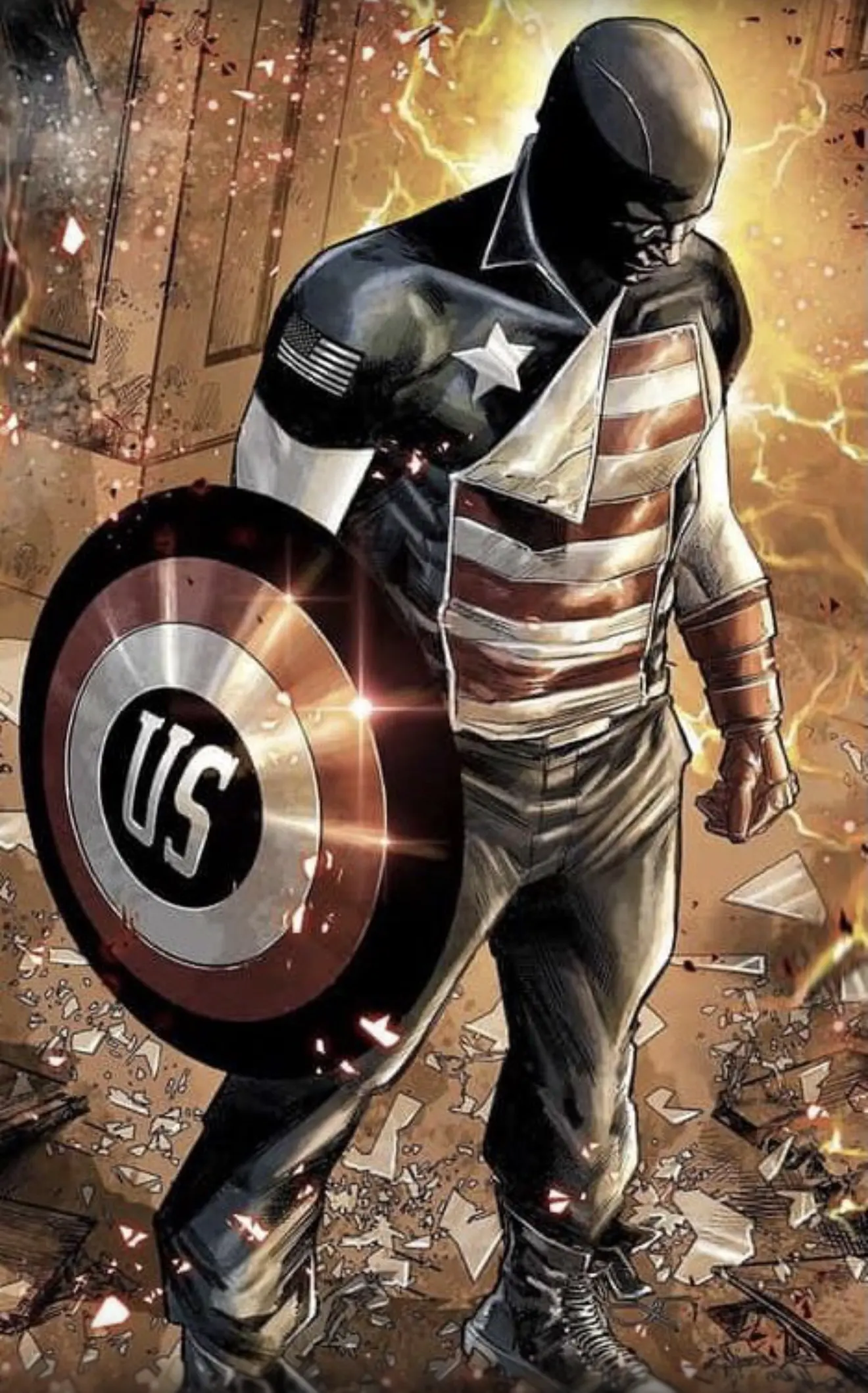
*He was given the shield before he was ready for it. He wore the stars and stripes before he understood what they meant. And when the weight of the symbol became too much, he cracked — violently, publicly, and completely. John Walker is not a villain. He is a warning. And one of Marvel's most honest stories about what happens when the wrong person carries the right symbol.*
---
## Welcome to Patriot Week 🎆
**July 4th is six days away.** And this blog is going to spend every one of those days celebrating the patriotic heroes of the Marvel universe — building day by day toward the ultimate American hero on Saturday.
We begin not with the ideal but with the cautionary tale — the man who took the shield and showed us, in the most painful way possible, exactly what it means to be unworthy of it.
**John Walker. USAgent.** Let's get into it. 🇺🇸
---
## Who Is USAgent?
U.S. Agent (John Walker) is a former member of the West Coast Avengers and former Captain America. He frequently goes on spy missions for the US. He was originally created to be the Super-Patriot, described as a man "who embodied patriotism in a way that Captain America didn't — a patriotic villain." He debuted in Captain America #323 in November 1986, created by Mark Gruenwald and Paul Neary.
That framing — "a patriotic villain" — is the key to understanding everything about John Walker. He wasn't designed as a simple antagonist. He was designed as a mirror: a character who looks like Captain America on the surface and is fundamentally different underneath, exposing by contrast exactly what makes Steve Rogers extraordinary.
**John Walker** grew up in Custer's Grove, Georgia — a small town where patriotism wasn't an abstraction but a family tradition. His older brother Mike died in Vietnam, and that loss shaped John's entire identity around service, sacrifice, and the desire to prove himself worthy of the uniform. He was a genuinely gifted athlete and soldier — and when he underwent a Power Broker procedure that gave him superhuman strength, speed, and durability, he became physically capable of nearly anything.
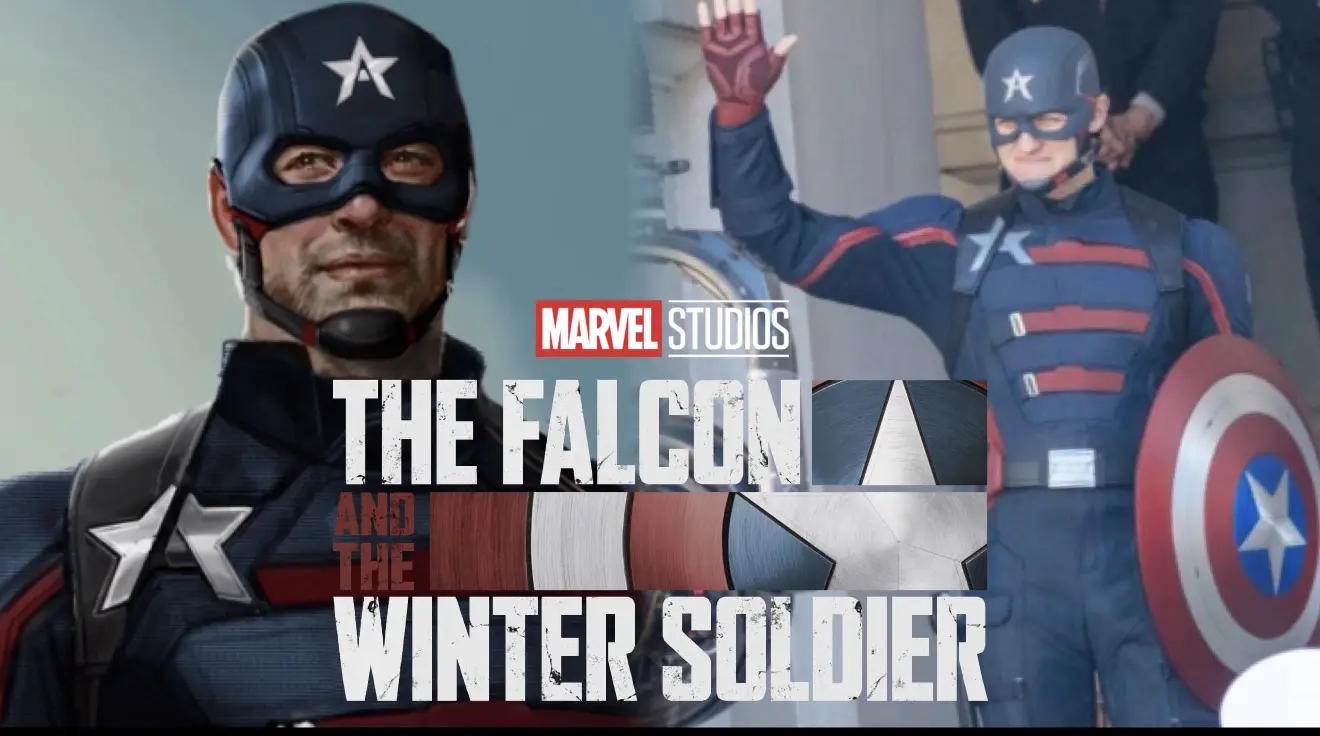
When Steve Rogers resigned from the Captain America identity during a conflict with the government over his independence, **John Walker was selected as his replacement.** He was government-approved, military-trained, physically enhanced, and deeply patriotic. On paper, he was everything a government-designed Captain America should be.
The problem was the gap between the symbol and the man carrying it.
### The Weight of the Shield
Steve Rogers had spent decades earning the moral authority that came with the shield — through sacrifice, through humility, through choosing others over himself again and again. John Walker had the physical capability. He did not yet have the character.
When a villain called the Watchdogs killed his best friend Battlestar's partner during a confrontation, Walker snapped. In front of cameras, in front of witnesses, he beat the killer to death with the shield.
The image went around the world. A man in the Captain America uniform, committing an act of brutal, unrestrained violence. The shield — which Steve Rogers had always used to *protect* — had become something else in Walker's hands.
He was stripped of the Captain America identity. Given a new one: **USAgent** — a darker uniform, a similar power set, and a more morally ambiguous role operating in the shadows where the government needed things done that Captain America couldn't be seen doing.
### The Complicated Legacy
What makes John Walker genuinely interesting rather than simply a failed imitation is that his story doesn't end with his disgrace. As USAgent, he has gone on to become a legitimate, complex hero — doing real good in the world, working through the trauma of what he did, and gradually becoming someone who understands the difference between power and worthiness in ways he couldn't when he first picked up the shield.
He has been a member of the West Coast Avengers, the Commission on Superhero Activities, the Omega Flight, and various government black ops teams. He has saved lives. He has made terrible choices. He has, across decades of comics, grown into one of Marvel's most quietly compelling characters — the man who failed to be Captain America and had to figure out what he was instead.
### On the Big Screen
**Wyatt Russell** plays the character in *The Falcon and the Winter Soldier* (2021) and reprised the role in *Thunderbolts* (2025). Russell's portrayal was one of the Disney+ series' greatest achievements — a performance that made John Walker deeply sympathetic even as he made catastrophically wrong choices. The scene where Walker kills the Flag Smasher with the shield — in public, in broad daylight, on camera — was the show's most devastating moment, and Russell played it with genuine, broken anguish that made it impossible to simply dismiss Walker as a villain.
He was a man who wanted to be the hero. He just wasn't ready for what being the hero actually cost.
---
## USAgent in Marvel Snap — The Saboteur
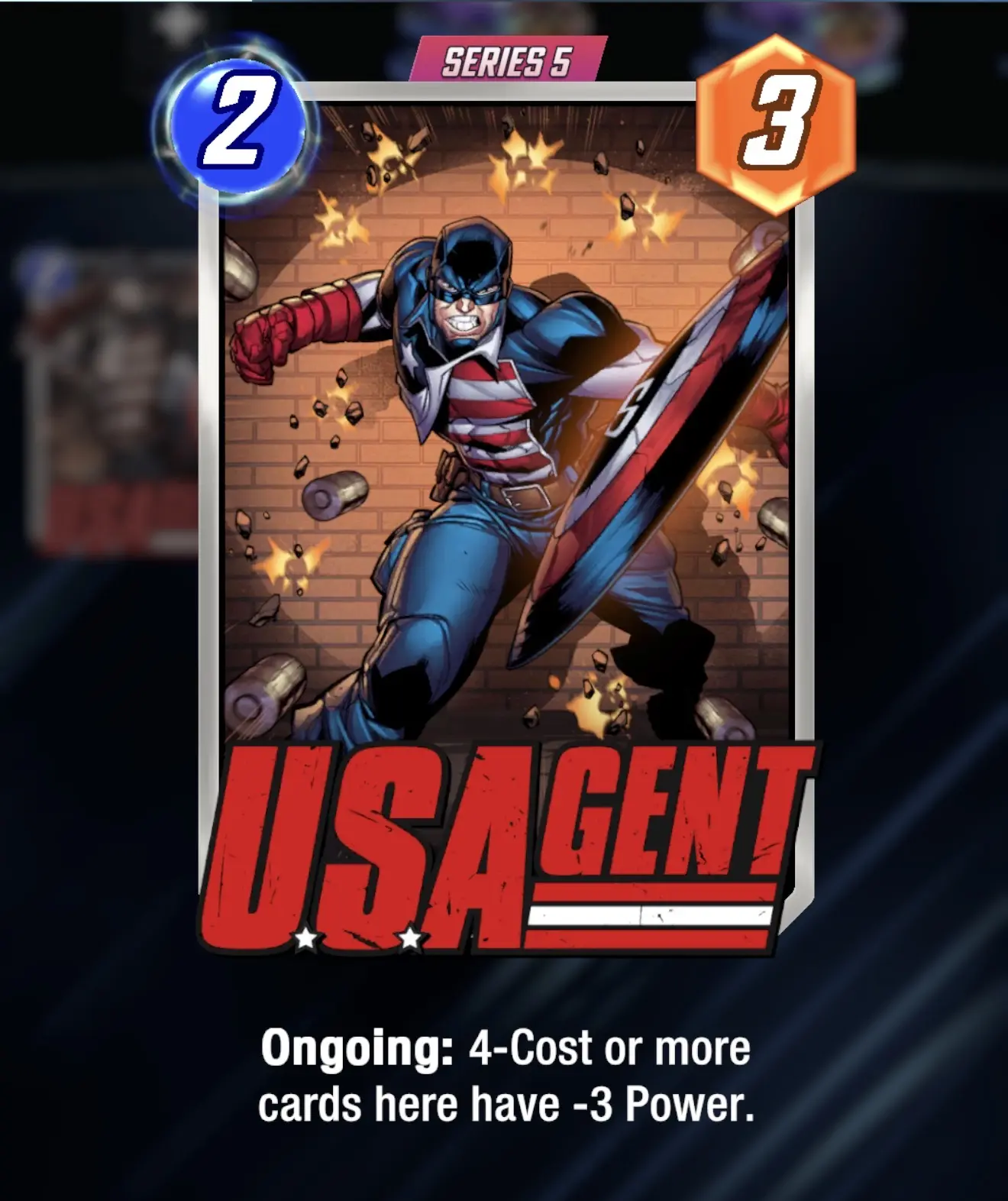
Now here's where USAgent's Marvel Snap card captures his character with almost poetic precision. Because John Walker, in the comics, makes everyone around him worse when he's in the wrong position. His card does exactly that — to your *opponent's* most powerful cards.
### 🃏 The Card
U.S. Agent is a 2-Cost, 3-Power card with the Ongoing ability: "4, 5, and 6-Cost cards here have -3 Power."
Two energy. Three Power. And every expensive card your opponent plays at his location loses 3 Power permanently while he's there. Your opponent's Magneto? Goes from 12 to 9 Power. Their Iron Man? Goes from 0 to -3 Power (yes, negative). Their Galactus? Goes from 6 to 3 Power.
U.S. Agent has the same ability as another card, Man-Thing, but with slightly different effects. John Walker affects four, five, and six-cost cards, whereas Man-Thing affects one, two, and three-costs, meaning you will want to bring Luke Cage if you're using either of them.
That last point is crucial: USAgent's debuff applies to **both sides** — your own high-cost cards at his location also get the -3 Power penalty. So the key is either playing him at a location where you're committing cheap cards and your opponent is committing expensive ones, or pairing him with **Luke Cage** — whose Ongoing ability prevents your own cards from having their Power reduced.
### 💡 The Strategic Depth
USAgent is a **disruption card** — one that punishes your opponent for bringing their big finishers to his location while requiring you to build your own power elsewhere or through low-cost cards:
**The Luke Cage Partnership** — Luke Cage's Ongoing ability prevents your cards from having their Power reduced. Pair him with USAgent and you neutralize your own downside completely — your cards are immune, your opponent's expensive cards still take the -3 hit. This is the core USAgent combo.
**The Control Shell** — USAgent fits naturally into control-oriented decks that want to deny your opponent their big late-game plays. Alongside Jean Grey (Post #34, who forces your opponent's first card to her location), Storm (Post #17, who floods a location), and Professor X (Post #18, who locks it down), USAgent becomes the card that makes committing expensive finishers to a controlled location actively punishing.
**The Low-Cost Counter** — In decks built around cheap, efficient cards rather than expensive finishers, USAgent's downside doesn't apply — you're not playing 4, 5, or 6-Cost cards at his location anyway. His 2-Cost body with 3 Power is already solid base value, and the Ongoing debuff makes that location a trap for any opponent trying to close out with a big card.
**Best Synergy Cards:**
- **Luke Cage** — Neutralizes USAgent's self-debuff entirely, essential pairing
- **Jean Grey** — Forces opponent's first card to USAgent's location (Post #34!)
- **Storm** — Flood + USAgent creates a powerful location denial combo (Post #17!)
- **Professor X** — Lock down the location USAgent is debuffing (Post #18!)
- **Cosmo** — Prevents On Reveal responses to USAgent's position
- **Mister Fantastic** — Pairs in Ongoing shells where USAgent contributes low-cost Ongoing pressure
---
## The Verdict
John Walker is one of Marvel's most important characters precisely because he fails. His failure illuminates exactly what Steve Rogers' success means — not just physical capability or patriotism or military training, but the specific, irreplaceable combination of humility, compassion, and genuine selflessness that makes Captain America worth believing in.
He took the shield and showed the world what the shield looks like in the wrong hands. And then — slowly, painfully, across decades of comics — he became something genuinely his own.
In Marvel Snap, his card debuffs your opponent's most powerful late-game cards — making the biggest, most expensive threats they bring to his location weaker and less effective. He undermines the finishers. He makes the giants smaller. He is, in the most literal game-mechanical sense, the card that proves that showing up isn't the same as being worthy.
**Welcome to Patriot Week.** The countdown to July 4th begins now. 🇺🇸
---
*Thanks for reading the first post of Patriot Week! Are you running USAgent in a control shell with Luke Cage? And what did you think of Wyatt Russell's portrayal in Falcon and the Winter Soldier? Drop it in the comments!*
*— **Seven-NATE-Nine***
---






