The Pygmalion effect is widely known among teachers. It exhorts us to set high expectations for our students because we are cognizant of the impact we have for them. If we set the bar high, our charges will rise to the occasion to meet the elevated standard, thus stretching their capabilities in the process.
Teachers are often reminded to be guided by the Pygmalion effect either intrinsically or by well-meaning school administrators. The flip side of this, however, is that we feel unsettled when we have not been able to complete as much teaching as we would have liked during a lesson. We are consumed by the guilt of short-charging our students. This is certainly what the new teacher in my department feels. I am incidentally assigned to be her buddy.
Having pondered her situation, I decided that a feasible way to help her calibrate her expectations is to share unreservedly what I try to achieve with my students during a lesson. Hence, this blog post. So, this is what I did yesterday.
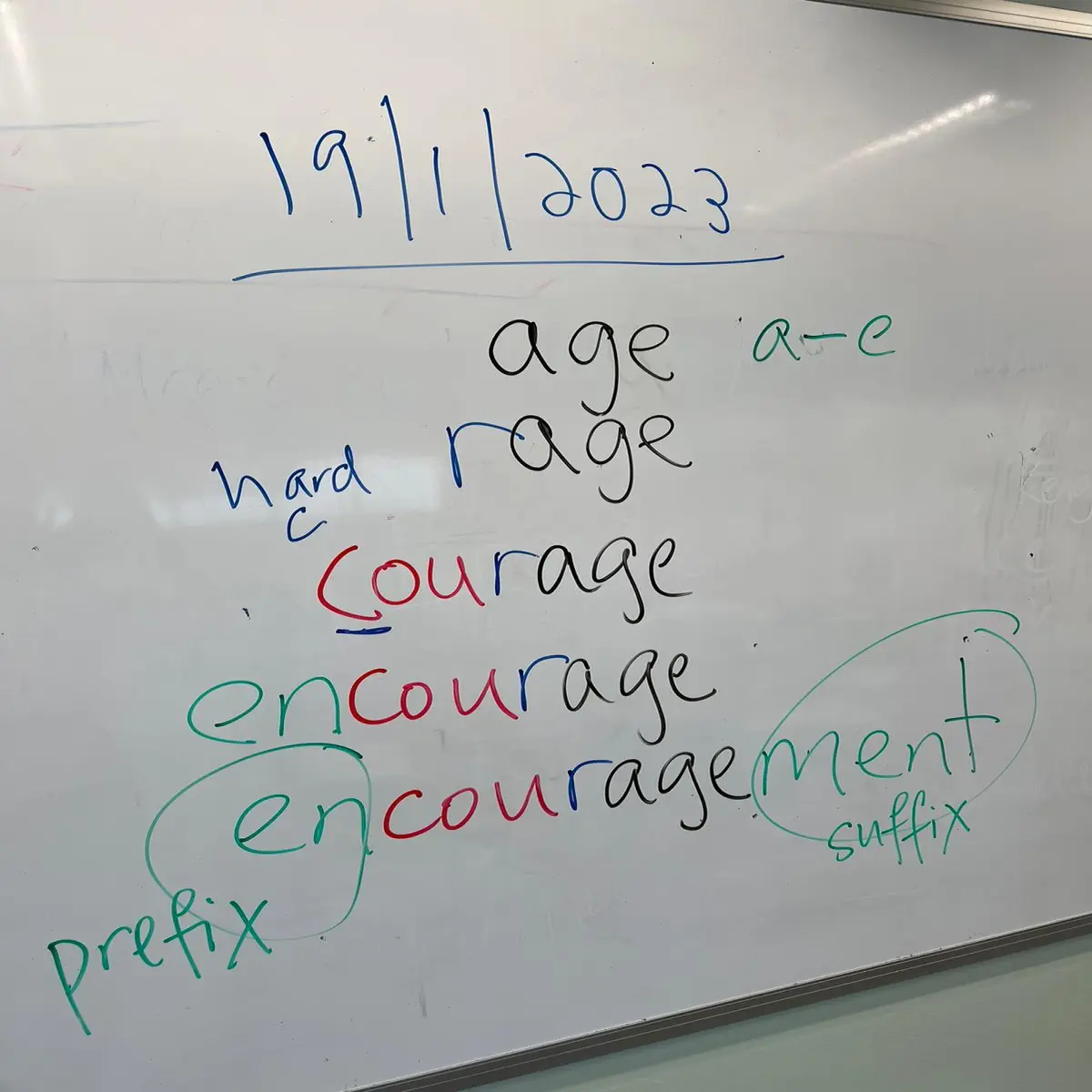
I wanted to revise the magic ‘e’ rule with my class. So, I asked them to spell ‘age’. Even that proved to be a difficulty for some of them because they thought why on earth I had asked them to write the letter ‘H’. It was a fast way to sieve out the weak spellers among them.
Then, I got them to spell ‘rage’. That went on more smoothly because even the least confident students would tentatively say ‘r?’ when proved for the initial sound of this word.
‘Courage’ proved to be disastrous. Some of them spelt it as ‘carage’. Nevertheless, it was a good opportunity for me to tell them about the schwa and file a reminder in my head about needing to teach them that at some point in time. Here, I have a question: how do I start teaching students about the schwa, given that spelling unstressed vowels is an unpredictable affair?
‘Encourage’ was tackled more successfully than ‘courage’. Some of them started off the spelling with a ‘n’, which lent itself to a teachable moment about how every syllable requires at least a vowel. I do have another question that I hope someone can answer: why ‘encourage’ and not ‘ancourage’?
Next, I got them to spell ‘encouragement’. Most of them could handle it. However, for the weakest spellers, I had to break this suffix down into ‘men’ and ‘t’. Actually, getting them to spell ‘men’ was no easy feat.
Finally, I asked them to spell ‘encouraged’. Honestly, as a true blue Singaporean, I get rapped on the knuckles by my Japanese wife for not enunciating the final consonant properly. So, I was heartened that all of them heard my ‘d’. Either that or they were well versed with the formation of past tense verbs.
This is all I managed to achieve with my class within 30 minutes. Just ‘rage’ leading up to ‘encouragement’/‘encouraged’. Of course, if I were to dissect this lesson critically, the best spellers in the class weren’t stretched, for they spelt most words quickly and got a lot of downtime while I moved around to help their classmates. But I think they left the lesson, feeling good about themselves since they had the chance to readily help their classmates. For the weakest spellers, they got plenty of authentic chances to write ‘age’. Some of them might feel buoyed by the fact that they could spell certain phonemes correctly. Personally, I was happy about leveraging one word to introduce them to the magic ‘e’ rule, schwa and affixes (en-, -ment, -ed). Of course, there is room for improvement (and zero space for guilt), but there’s another story to be crafted with another lesson.