
I always thought that youngsters' failure to capitalize first letters and put full stops was a result of them not caring enough. Then, I came across this:
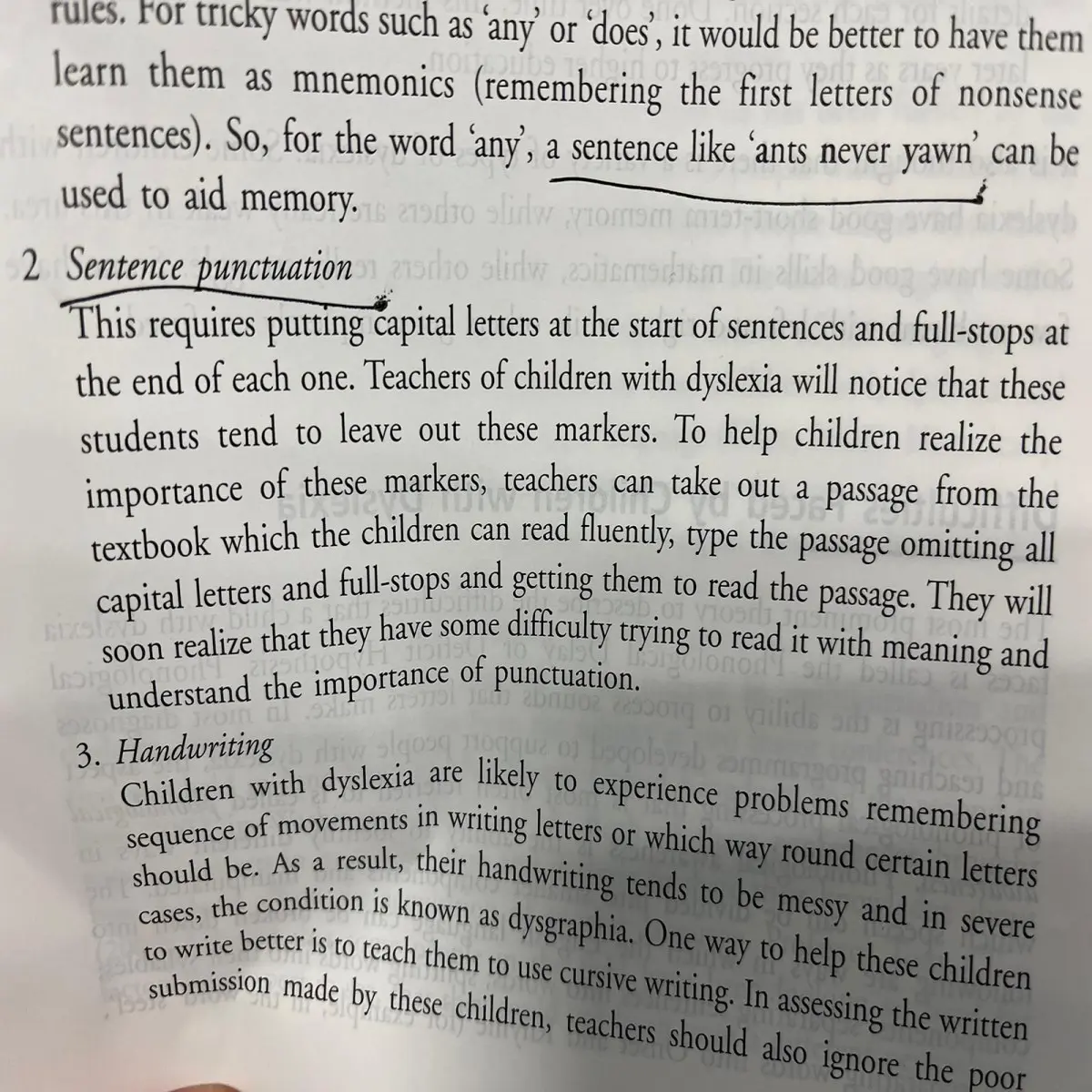
On a quest to find out more, I posted the following question on the Orton Gillingham moodle site and r/Dyslexia:
I recently learnt that some dyslexic students have problems with capitalising the first letter at the start of a sentence and putting a full stop at the end of a sentence because they may be confused about how different punctuation symbols look like. This is a problem that I want to focus on after I realised that these problems they have with punctuation are transferred over when they type things on their laptops. They didn’t capitalise my principal’s surname when they wrote to her on Padlet!
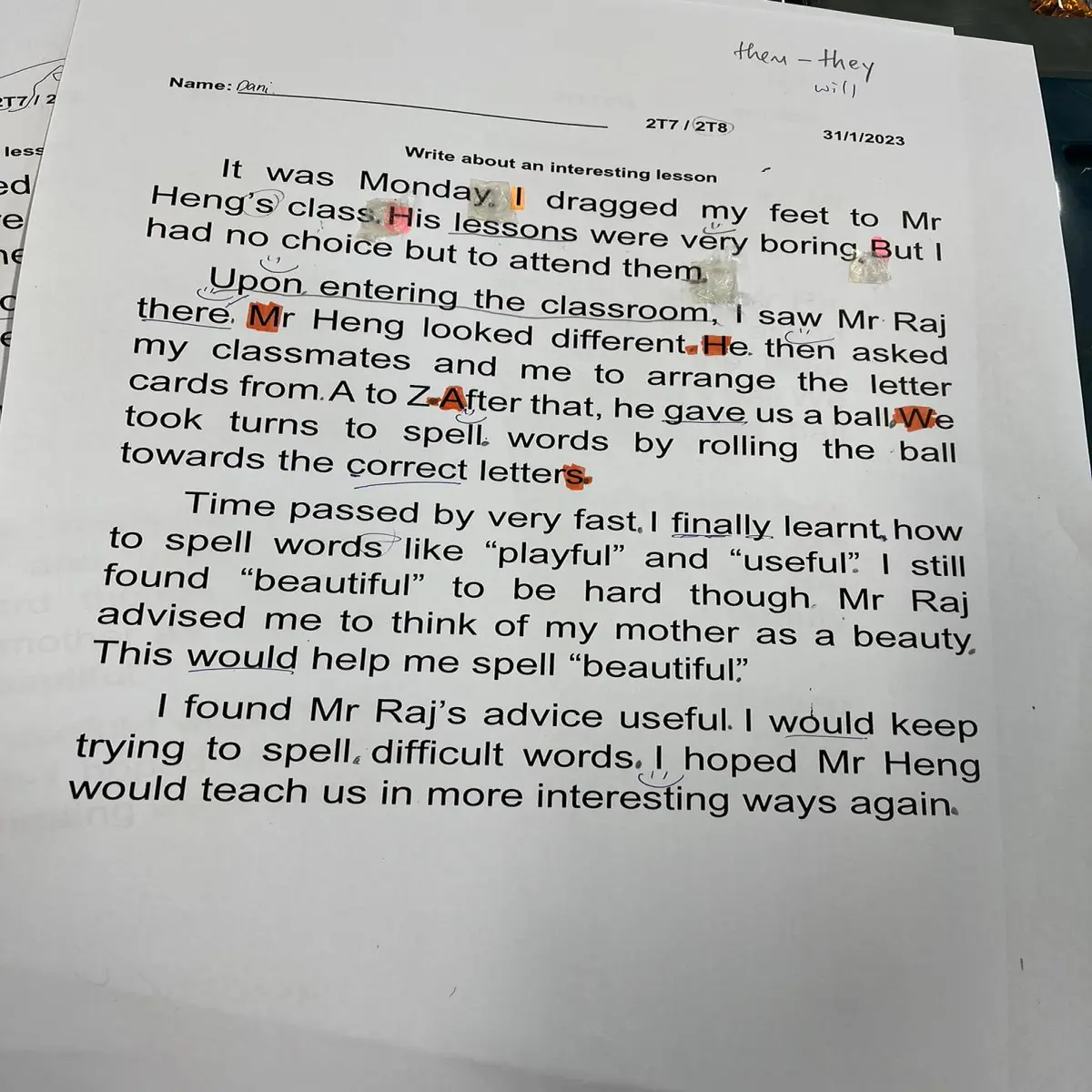
So today I came up with the idea of putting double sided tape on bubble wrap. Students were to identify the places in which they had to put full stops in an article and paste the bubble wrap. Are there other best practices you employ to teach dyslexic students punctuation?
Here are some tips I gathered from these more knowledgeable others:
- Learning grammar mechanics is not something that can be effectively taught using "oral only" instruction and will rely heavily on writing practice. The Orton Gillingham Online Academy offers a Developing Essential Grammar workbook with teaching and practice exercises.
- My problems stemmed from my teachers not explicitly explaining the rules of punctuation. I just placed full stops and commas mostly willy-nilly, because the only rule I knew was that they came with a breath in speech and listed items had commas between them. So my advice when teaching punctuation is make sure to fully and completely explain the rules. What is a sentence? What is a dependent clause? What is an independent clause? What are lists of items? After what words do you not need to put a comma for some weird reason? What is a comma, full stop, and semicolon?
- Knowledge builds on each other. If I'm still wondering if this is a predicate, subject or noun and the lesson is already at punctuation, the train is already at the next station while I'm just trying to find the station. To understand punctuation, one must understand sentence structure. It's not so much the method as it has more to do with the structure in which the knowledge builds on one another.
- Grammarly is a great asset, and I use this guide https://www.sussex.ac.uk/informatics/punctuation/. The Hemingway App has also helped me with sentence lengths (https://hemingwayapp.com)
Honestly, the bubble wrap idea didn’t work out too well because my students soon got bored with it. Anyway, knowing that dyslexic people have problems with punctuation made me more aware of the fact that I should teach punctuation explicitly. So, I hope this realization helps someone out there too, heh.






