
Introduction
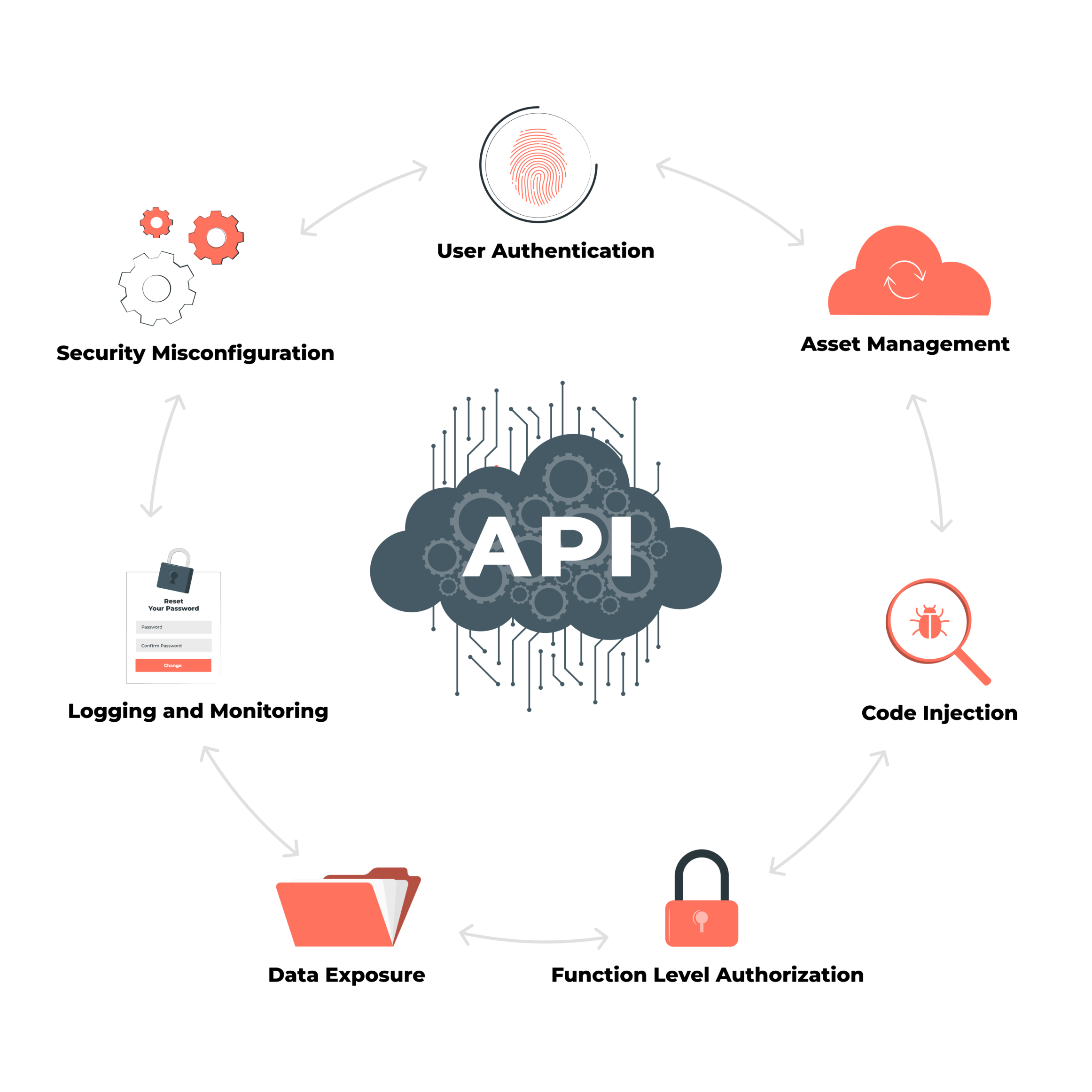
Web application API security testing refers to the process of evaluating and assessing the security of the Application Programming Interfaces (APIs) that are used by web applications. APIs facilitate communication and data exchange between different software systems, allowing them to interact with each other.
Here are some key aspects of web application API security testing:
1. Authentication and Authorization
2. Input Validation
3. Data Integrity
4. Error Handling
5. Rate Limiting
6. Session Management
7. Secure Transmission
8. API Permissions and Scope
9. Security Headers
10. Log and Monitoring
API security testing is crucial to identify and address potential vulnerabilities in the API layer, as compromising APIs can lead to unauthorized access, data breaches, and other security incidents. Organizations often use specialized tools and methodologies to conduct thorough API security assessments. To assist in gaining some foundational knowledge, below are some resources that can help.
Educational/Training Resources (Websites, Videos, Books, etc...)
-
Postswiggers API Testing Documentation (https://portswigger.net/web-security/api-testing)
-
CSbyGB API Gitbook Page (https://csbygb.gitbook.io/pentips/web-pentesting/api)
-
OWASP API Top Ten (https://owasp.org/API-Security/editions/2023/en/0x00-header/)
-
Sheildfy API Security Checklist (https://github.com/shieldfy/API-Security-Checklist)
-
Dana Epps Blog - Beginners Guide to API Hacking (https://danaepp.com/beginners-guide-to-api-hacking)
-
HackTricks - Web API Pentesting (https://book.hacktricks.xyz/network-services-pentesting/pentesting-web/web-api-pentesting)
-
Awesome APISEC (https://github.com/arainho/awesome-api-security)
-
APIsec University (https://www.apisecuniversity.com/)
-
YouTube Videos - Everything API Hacking Playlist (https://www.youtube.com/playlist?list=PLbyncTkpno5HqX1h2MnV6Qt4wvTb8Mpol)
-
TCM Security - Practical API Hacking (https://academy.tcm-sec.com/p/hacking-apis)
-
Corey Ball - Hacking APIs: Breaking Web Application Programming Interfaces - Book
Tools and Lab Resources
-
OWASP API Tools (https://owasp.org/www-community/api_security_tools)
-
APIsec University Tools and Resources (https://www.apisecuniversity.com/api-tools-and-resources)
-
Postman (https://www.postman.com/downloads/)
-
SwaggerUI (https://github.com/swagger-api)
-
TryHackMe - Bookstore Lab (https://tryhackme.com/room/bookstoreoc)
Conclusion
In conclusion, webapp API security testing is an essential process to evaluate and ensure the security of the Application Programming Interfaces (APIs) used by webapps. The identified key aspects, ranging from authentication and authorization to error handling and secure transmission, highlights the comprehensive nature of API security testing. The potential risks of compromised APIs that can lead to unauthorized access and data breaches does underscore the importance of thorough security assessments. To assist in building a foundational understanding, a curated list of knowledge resources, including documentation, Github pages, and video playlists, along with tools and labs has been provided. By leveraging these resources and doing your own research you can assist organizations in enhancing their API security posture and proactively address vulnerabilities in the ever-evolving landscape of web application security.
Thank you for taking the time to read the "API Security Assessment/Pentesting Resources". If you found the content informative and are interested in cybersecurity, be sure to visit Cyb3r-S3c frequently and check out my YouTube channel, Cyb3r-0verwatch. Please feel free to use the information provided in a way that best suits your needs, and if you have any questions, please feel free to reach out to me using the Cyb3r-S3c Contact Form. Thank you again for visiting Cyb3r-S3c, keep learning - the only way to improve is to keep learning!
/Signing Off,
Pragmat1c_0n3





