
The crypto market fever continues to grow, as does the diversity and complexity of assets, but with the number of lost or unrecoverable assets also increasing, it is estimated that hundreds of billions of dollars of virtual currency are in limbo in the market, but advances in artificial intelligence can help recover lost digital assets lost this.
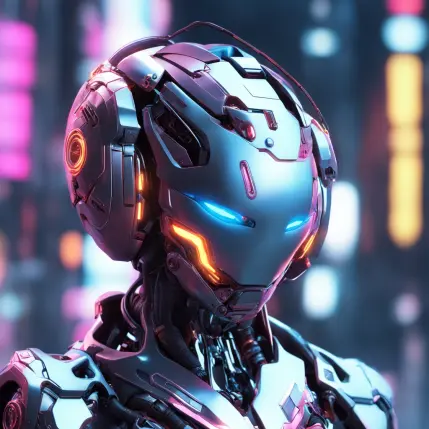
The crypto market is growing rapidly, and with it the diversity and complexity of its assets. Its spirit has benefited from advanced technology and innovative applications, but also increased the number of lost and unrecoverable assets. According to estimates, hundreds of billions of dollars of virtual currency are currently still pending in the market due to unexpected events such as forgotten passwords, hardware failures and other accidents.
According to the study, about 6 million bitcoins out of a total supply of 21 million bitcoins were found to have been lost, possibly due to factors such as forgotten passwords, hardware failure, or the owner of the asset being no longer alive, while 29 percent of bitcoins had not been transferred in the last five years , which may include long-term investors or long-time traders, and a large number of bitcoins are actually in unrecoverable status, simply because users forgot their passwords or were unable to access them due to technical problems.
For example, in 2013 James Howells, a man in England, accidentally threw away a hard drive containing 7,500 Bitcoins, which are still buried in a landfill despite their current market value, and Stefan Thomas, former CTO of Ripple, previously revealed that he has 7,002 Bitcoins stored in the private key of his hardware wallet, IronKey, but he forgot the password, and only has two out of 10 chances left to guess the password, and if he fails, then the private key and the 7,002 Bitcoins stored will be lost. erased and permanently lost in the black hole.
Fortunately, however, these lost digital assets can 'might' be recovered in the future through the development of Artificial Intelligence (AI). Regardless of the size of the user's assets, crypto wallet recovery services can help users to recover lost Bitcoin or Ethereum from both soft and hard wallets.
AI + GPU + Algorithm
First, AI-trained models, especially OpenAI-based GPT-2 models such as PASS-GPT, have become a front-end technique for recovering encrypted assets. PASS-GPT analyzes a large amount of information regarding user behavior, password patterns, and analysis, and from this information the model can identify likely password structures and commonly used vocabulary to predict passwords that users are likely to create, and PASS -GPT can also use incremental sampling to generate a series of difficult-to-decipher password combinations, which is critical for brute-force hacking attacks because it can efficiently generate password choices that are invisible to the mind, thereby increasing the chances of recovering lost assets.
PASS-GPT has been proven to outperform other models in password guessing by 20% due to its gradual sampling technique.
This is followed by the power of modern GPUs and CPUs, with the use of modern GPUs (Graphics Processing Units) and CPUs (Central Processing Units) providing excellent computing power for the AI models just described.
Pada awalnya dirancang untuk memproses grafik komputer dan gambar game, GPU sangat efisien dalam melakukan sejumlah besar operasi paralel, yang berarti GPU dapat menangani ribuan operasi sekaligus, sehingga ideal untuk serangan brute-force cracking, di mana komputer mencoba setiap kombinasi kata sandi yang memungkinkan hingga menemukan kata sandi yang tepat.
The GPU's speed in processing these operations has also led to the use of AI models such as PASS-GPT, which upgrade hardware and software to the highest levels to make the entire computing system more powerful.
Finally, recovering an encrypted wallet password also requires the ability to strengthen protection against “Side-channel attack (SCA)”, which is a type of security attack that, instead of cracking the password directly, analyzes physical signals (e.g. power consumption, electromagnetic radiation ) generated by the computer when performing encryption operations to determine the vulnerability of key information. for example, if an attacker can detect subtle changes in hard disk power consumption during certain operations, they may have the opportunity to deduce ongoing encryption operations or specific parts of the key.
Untuk melindungi mata uang kripto dari ancaman serangan semacam itu, banyak pakar algoritma AI yang mengembangkan dan menerapkan strategi dan teknik baru. termasuk:
•Adding randomness: That is, adding random operations to the encryption process to make it difficult for attackers to obtain meaningful information from physical signals;
•Better algorithm design: Algorithms should be designed with resistance to side-channel attacks in mind, for example, to ensure that the algorithm's operating mode and execution time do not vary depending on the confidential information (e.g., passwords, keys, etc.) being processed;
•Finally, the use of specialized hardware: developing specialized hardware components that can withstand side-channel attacks by consuming the same or similar amount of power during the execution of different operations.
The security of Bitcoin and virtual currencies works both ways, providing a level of security that can backfire on you, but fortunately, advances in AI technology, hardware computing power, and algorithms have opened up new possibilities and given hope to those who have accidentally lost assets they.
Metamask Little Fox, imToken Wallet Phishing Attacks Soar, Remember 3 Preparedness Options Quickly






