
Every trader eventually asks the same question: "Is my trading journal actually helping me improve, or is it just a place where I log trades and forget about them?"
TradeZella has become one of the most recognized names in trading journal software, and for good reason — it introduced a lot of traders to the idea of structured trade review. But popularity and product-fit are two different things. The "best" trading journal isn't the one with the biggest marketing budget or the most social media mentions — it's the one that matches how you actually trade, review, and improve.
That's why more traders are actively researching a TradeZella alternative in 2026. Some are looking for different pricing structures. Others want deeper AI-driven analysis, more flexible strategy tracking, or a workflow that better matches their asset class — whether that's forex, crypto, options, or equities.
This guide breaks down what TradeZella does well, what traders commonly look for in an alternative, the core features that separate a mediocre journal from a genuinely useful one, and how a newer platform — DailyTraderz — approaches the same problem. The goal isn't to declare a "winner." It's to give you the information to make an informed decision based on your own trading style, budget, and goals.
Before going further, a quick but important note: trading involves substantial risk of loss, and no journaling software — regardless of how advanced its analytics or AI features are — can guarantee improved trading results or profitability. A journal is a tool for measurement and reflection, not a substitute for sound risk management or trading education. For general information on trading risk and regulatory standards, resources like the CFTC and FINRA publish investor education material worth reviewing.
What Is TradeZella?
TradeZella is a trading journal and analytics platform built to help retail traders log trades, visualize performance data, and review their trading habits over time. It's positioned primarily toward active traders — day traders and swing traders — who want a structured way to track win rates, profit factor, and other core performance metrics without building their own spreadsheets.
Strengths commonly associated with TradeZella:
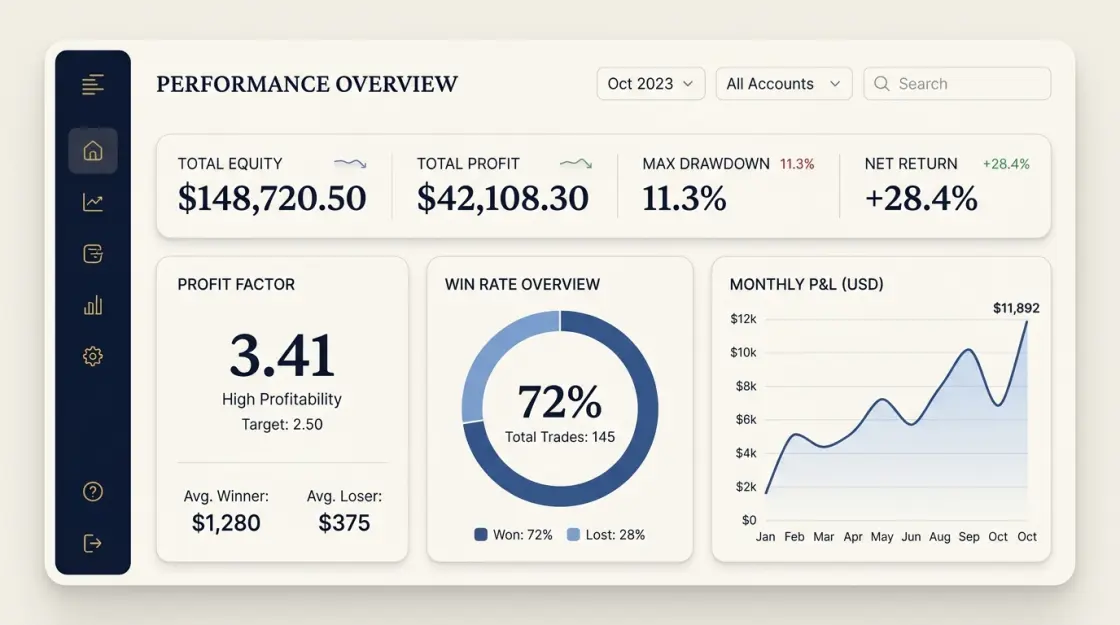
- A clean, visual dashboard that summarizes key performance metrics (win rate, average win/loss, profit factor, etc.)
- Automated trade import from a range of supported brokers, reducing manual data entry
- A calendar view that shows daily P&L at a glance
- Journaling fields for recording the reasoning, emotions, or setup behind each trade
- A backtesting feature for testing strategies against historical data
Who it's typically built for:
TradeZella tends to appeal most to U.S.-based equities and options day traders who want broker-synced data and a straightforward analytics dashboard without a steep learning curve. Traders with simpler journaling needs — or those who mainly want a fast way to see whether last month was profitable — often find the core feature set sufficient.
For authoritative, first-party information about TradeZella's current feature set and pricing, refer directly to TradeZella's official website, since pricing tiers and feature availability can change.
Why Traders Look for TradeZella Alternatives
No single platform fits every trader, and the reasons people search for alternatives are usually practical rather than emotional. The most common ones include:
1. Pricing structure. Some traders trade multiple asset classes or accounts and find that tiered subscription pricing doesn't scale well with their usage. Others are simply price-sensitive and want to compare value across platforms before committing annually.
2. Different workflows. Not every trader logs trades the same way. Options traders need different fields than forex traders. Swing traders reviewing weekly setups have different needs than scalpers reviewing dozens of trades a day.
3. AI features. As AI-assisted analysis has become more common in trading tools, some traders specifically want a platform that goes beyond static charts — for example, tools that attempt to surface behavioral patterns (like revenge trading after a loss, or oversizing positions after a win) rather than just reporting raw statistics.
4. Customization. Traders with unique strategies sometimes want custom tags, custom fields, or custom playbooks that map to their specific setups rather than fitting into a fixed template.
5. Performance analysis depth. Some traders want to slice their data by strategy, by asset, by time of day, or by setup type — not just an overall win rate.
6. Risk management tools. Position sizing, risk-per-trade planning, and R-multiple tracking matter a lot to traders focused on capital preservation, and not every entry-level journal emphasizes this equally.
7. Learning curve. Some platforms pack in a lot of features, which can be a double-edged sword — powerful for advanced users, overwhelming for beginners just trying to build a consistent journaling habit.
None of these reasons make TradeZella a "bad" product — they simply explain why the market for trading journals has diversified, and why comparison shopping makes sense before committing to an annual plan.
What Makes a Great Trading Journal?
Regardless of which platform you choose, certain core features separate a genuinely useful trading journal from a glorified spreadsheet. When evaluating any tool — including TradeZella and its alternatives — it's worth checking for the following:
Trade Logging The foundation of any journal. It should be fast, ideally with broker sync or CSV import, and flexible enough to capture entry/exit price, size, asset, strategy tag, and notes without becoming a chore.
Performance Analytics Win rate alone tells you very little. A strong journal breaks performance down by strategy, asset class, time of day, day of week, and holding period so you can identify where your edge actually exists — and where it doesn't.
Trading Psychology Some of the most costly trading mistakes are behavioral, not technical: revenge trading, FOMO entries, moving stop losses, or oversizing after a win streak. A journal that helps you tag and review the emotional context of trades can surface these patterns before they compound.
Risk Management Tools that let you plan position size, risk-per-trade, and R-multiples before you enter a trade — not just log the outcome after the fact — help reinforce discipline rather than just measuring the aftermath.
Strategy Tracking A "playbook" feature that lets you define your setups in advance, then tag trades against them, is one of the clearest ways to see which strategies are statistically working for you and which aren't.
Asset Performance Breaking down results by individual ticker, currency pair, or asset class helps identify whether your edge is concentrated in specific instruments rather than spread evenly.
Reports Weekly, monthly, and custom-range reports that summarize performance in a digestible format make it easier to review progress without manually recalculating metrics.
Goal Tracking Setting and tracking specific, measurable goals (e.g., consistency targets, risk limits, win-rate thresholds) turns a journal from a passive record into an active accountability tool.
Cloud Access Being able to log a trade or review your dashboard from any device — not just one desktop — matters for traders who want to journal in real time.
AI Analysis Increasingly, platforms are layering AI on top of raw statistics to help identify patterns a trader might not notice manually — such as a tendency to cut winners short or let losers run.
A useful mental checklist when comparing platforms: does the tool help you understand why a trade worked or didn't, not just whether it did?
DailyTraderz as an Alternative
DailyTraderz is one of the newer entrants in the trading journal space, built around the idea that a journal should do more than store historical trade data — it should actively help a trader identify patterns and make more disciplined decisions going forward. Here's a neutral look at how its core features map to the categories above.
Trading Journal DailyTraderz provides a structured trade-logging system covering entries, exits, position size, and setup tagging, aiming to make consistent logging fast enough that traders actually keep up with it rather than abandoning the habit after a few weeks.
AI Analysis The platform includes an AI-driven analysis layer designed to review logged trade data and surface patterns across a trader's history — for example, identifying whether performance tends to dip after consecutive losses, or whether certain setups are statistically weaker than others. As with any AI-generated insight, it should be treated as a starting point for further review rather than a definitive verdict.
AI Coach Built on top of the analysis layer, the AI Coach feature is positioned as an ongoing feedback mechanism — offering observations based on a trader's own logged history rather than generic trading advice. It's worth noting this is behavioral pattern recognition based on the trader's own data, not predictive market guidance.
Strategy Playbook This feature lets traders define their strategies or setups ahead of time and tag trades against them, similar in spirit to the "strategy tracking" concept outlined above. Over time, this makes it possible to see performance broken down strategy-by-strategy rather than as one blended average.
Asset Performance DailyTraderz breaks down performance data by individual asset or instrument, which is useful for traders who trade across multiple tickers, pairs, or asset classes and want to know where their results are actually concentrated.
Trade Risk Planner This tool is built around pre-trade planning — helping a trader define position size and risk parameters before entering a position, rather than only reviewing risk after the trade has closed. This aligns with the risk-management category described earlier as a hallmark of stronger journaling tools.
Goals A goal-setting module lets traders define specific, trackable targets — for consistency, risk discipline, or performance benchmarks — and monitor progress against them over time.
Reports Automated reporting summarizes performance across custom timeframes, intended to reduce the manual work of recalculating stats after every session.
P&L Calendar A calendar-style view shows daily profit and loss at a glance, similar in concept to the calendar views found in other journaling platforms, making it easy to spot winning and losing streaks visually.
Taken together, DailyTraderz's feature set is built around a similar philosophy to what serious traders look for in any journal: fast logging, deep analytics, behavioral awareness, and pre-trade risk planning — with AI layered in as a pattern-recognition aid rather than a replacement for the trader's own judgment. You can review the full current feature list on the DailyTraderz features page and compare plans on the pricing page.
If you're new to the broader concept of trade journaling and want more foundational context before comparing tools, this ultimate guide to becoming a more consistent trader is a useful starting point.
Which Traders Benefit Most From Each Platform?
There's no universal "best" trading journal — only the best fit for a given trader's style, experience level, and asset class. Here's a general breakdown of how different trader profiles tend to prioritize features.
Beginners New traders generally benefit most from simplicity: fast logging, clear visual dashboards, and enough structure to build a consistent journaling habit without feeling overwhelmed. A platform with a strategy playbook or template can help beginners think in terms of repeatable setups from day one rather than trading reactively. Starting from a trading plan template can also help beginners define their rules before they start logging trades.
Swing Traders Traders holding positions for days or weeks tend to value strategy-level breakdowns and asset performance views more than minute-by-minute analytics, since their trade volume is lower but each trade carries more context (news catalysts, technical setups, multi-day trends).
Day Traders High-frequency traders need fast logging (ideally via broker import), a P&L calendar to track daily consistency, and time-of-day analytics to identify whether performance clusters around specific market sessions.
Forex Traders Currency traders often prioritize asset performance tracking by pair, since results can vary significantly across majors, minors, and exotics — plus risk management tools that account for leverage and lot sizing.
Crypto Traders Traders in crypto markets — which run 24/7 and often see higher volatility — tend to value flexible tagging (since strategies can range from spot to derivatives) and risk planning tools that account for wider price swings.
Stock Traders Equity traders often lean on broker-sync features and reporting tools to reconcile journal data with brokerage statements, plus asset-level breakdowns across sectors or individual tickers.
Professional Traders More experienced or professional traders tend to prioritize granular analytics — custom reporting, R-multiple tracking, and psychology tagging — since they're usually refining an already-profitable process rather than building one from scratch.
The practical takeaway: rather than asking "which platform is objectively better," ask "which platform's feature set matches how I actually trade and what I'm trying to improve this quarter." Reviewing both platforms' current feature and pricing pages side by side — TradeZella's site and DailyTraderz's features page — is a reasonable next step before committing.
For traders who want to go deeper on performance measurement specifically, these guides cover the topic in more detail:
Frequently Asked Questions
1. What is the best TradeZella alternative in 2026? There isn't a single "best" alternative for every trader — it depends on your asset class, experience level, and which features (AI analysis, risk planning, strategy tracking) matter most to you. DailyTraderz is one option worth evaluating alongside TradeZella.
2. Is DailyTraderz cheaper than TradeZella? Pricing changes over time for both platforms, so it's best to compare current plans directly on DailyTraderz's pricing page and TradeZella's official site.
3. Does TradeZella have an AI trading coach? TradeZella's feature set evolves over time; check TradeZella's official documentation for the most current list of AI-related features.
4. What is an AI trading journal? An AI trading journal uses machine learning or pattern-recognition tools to analyze a trader's logged history and surface behavioral or statistical patterns — such as recurring mistakes or strategy-level performance gaps — beyond what manual review would typically catch.
5. Can a trading journal improve my win rate? A journal itself doesn't improve your win rate — it provides data and insight that you can use to refine your strategy, risk management, and discipline. Improvement depends on how consistently you log trades and act on what the data shows.
6. Is TradeZella good for beginners? TradeZella is generally considered approachable for traders with some familiarity with core performance metrics, though beginners should evaluate whether its feature depth matches their current needs versus a simpler tool.
7. What features should a trading journal have? At minimum: trade logging, performance analytics, risk management tools, strategy tracking, and reporting. More advanced journals add psychology tracking, goal setting, and AI-driven pattern analysis.
8. Does DailyTraderz support forex trading? DailyTraderz's asset performance tracking is designed to work across asset classes, including forex; see the features page for current details.
9. Does DailyTraderz support crypto trading? DailyTraderz's logging and analytics tools are designed to be asset-agnostic, making them usable for crypto traders as well as equities and forex traders; check the features page for specifics.
10. What's the difference between a trading journal and a trading platform? A trading journal (like TradeZella or DailyTraderz) is used to log, review, and analyze trades after they're placed. A trading platform or broker is where trades are actually executed. Journals typically integrate with brokers via import or sync rather than replacing them.
11. How does a strategy playbook work in a trading journal? A strategy playbook lets you predefine your trading setups (e.g., "breakout retest," "trend pullback") and tag trades against them, so you can later review performance broken down by strategy rather than as one blended statistic.
12. What is an R-multiple and why does it matter? An R-multiple expresses a trade's profit or loss relative to the amount risked. Tracking R-multiples (rather than just dollar P&L) helps traders evaluate whether their risk-to-reward discipline is consistent across trades.
13. Do trading journals connect directly to my broker? Many trading journals, including TradeZella, support broker sync or CSV import for a range of brokers. Supported broker lists vary by platform and change over time, so check each platform's current documentation.
14. Is trading journal software worth it for casual traders? It depends on trading frequency and goals. Casual traders may benefit from lightweight logging and periodic review, while active traders often get more value from deeper analytics and daily habit-building tools.
15. What is trading psychology tracking? It's the practice of tagging trades with emotional or behavioral context (e.g., "revenge trade," "FOMO entry," "followed plan") so patterns in decision-making — not just outcomes — become visible over time.
16. Can I switch from TradeZella to another trading journal without losing my data? Data portability depends on export/import support on both platforms. Most journals allow CSV export, but the ease of migrating full historical data varies — check both platforms' support documentation before switching.
17. Are AI trading journal insights guaranteed to be accurate? No. AI-generated pattern analysis is a decision-support tool based on the trader's own logged data, not a guarantee of future performance or a substitute for independent judgment.
18. What is a P&L calendar? A P&L calendar is a monthly calendar view that displays daily profit or loss at a glance, making it easy to visually identify winning streaks, losing streaks, or overall consistency trends.
19. Do I need a funded or live account to use a trading journal? No — many traders use journaling software with paper trading, demo accounts, or backtested strategies before committing real capital, since building the habit of structured review is useful at any stage.
20. Where can I find official information about TradeZella's current features and pricing? Always refer to TradeZella's official website for the most current and accurate information, since features and pricing can change without third-party sources being immediately updated.
Conclusion
Choosing between TradeZella and an alternative like DailyTraderz isn't about finding the "objectively best" platform — it's about matching a tool's strengths to your own trading style, asset class, and the specific gaps you're trying to close. If you're an equities day trader who wants a well-established, broker-synced dashboard, TradeZella's feature set may suit you well. If you're looking for deeper AI-driven pattern analysis, pre-trade risk planning, or a strategy-playbook-centric workflow, DailyTraderz is worth evaluating directly against your current tool.
The most reliable way to decide is the least glamorous one: create a free account or trial where available, log a week or two of real trades on each platform, and see which analytics and workflow actually change how you trade — not just how the dashboard looks. Whichever platform you choose, the real value comes from consistent logging and honest review, not the software itself. And regardless of which journal you use, remember that no tool can eliminate trading risk — always trade within a risk framework you understand, and consult resources like the CFTC and FINRA for broader investor protection guidance.





