
This contentious question got a fresh impetus on March 08, 2021, when the Banning of Cryptocurrency and Regulation of Official Digital Currency Bill, 2021 was tabled in Lok Sabha. The bill was branded as something to block all private virtual currencies or cryptocurrencies and create a framework for issuing a state-owned cryptocurrency under the ambit of RBI.
However, later the government issued a clarification on its intention. Finance Minister Nirmala Sitharaman has recently admitted that a blanket ban on cryptocurrency may not be on the cards. Talks are on with the Reserve Bank of India, and the ministry is committed to taking a calibrated position on the matter. “We want to make sure there is a window available for all kinds of experiments which will have to take place in the crypto world. It is not as if we are going to look inwards and say we are not going to have any of this. There will be a very calibrated position,” the FM told CNBC-TV18.
Issuance of a state-governed coin is like a mirage in a desert because it will compromise the very ethics of blockchain or cryptocurrency – decentralization. The best that government should do is to regulate it to stop its misuse in money-laundering, drug trafficking, and so on. On that part, its top exchanges like PCEX Member have become strict on KYC norms. Therefore, only a verified user can buy and sell cryptocurrency from their registered bank account.
Take a look at how the ban will affect Indians and the economy. We hope it will help you find the answer yourself.
Opportunity Loss for Investors
Bitcoin is on a bull run, and banning it will stop Indian investors from reaping the dividends. The below graph depicts the increase in the BTC price from June 2018 to March 02, 2021. From USD10,000 to USD50,000 – this is a spectacular rise. It’s hard to imagine a business or bank that can fetch this high return in a short time.
Cryptocurrency investors in India are of primarily two types. First, who wants an investment portfolio that has high growth potential.

They have a high-risk appetite and enjoy the volatility. These are mainly young investors who are low in patience when it comes to earning money. They may be proficient with technical analysis skills regarding investment or non-tech ones.
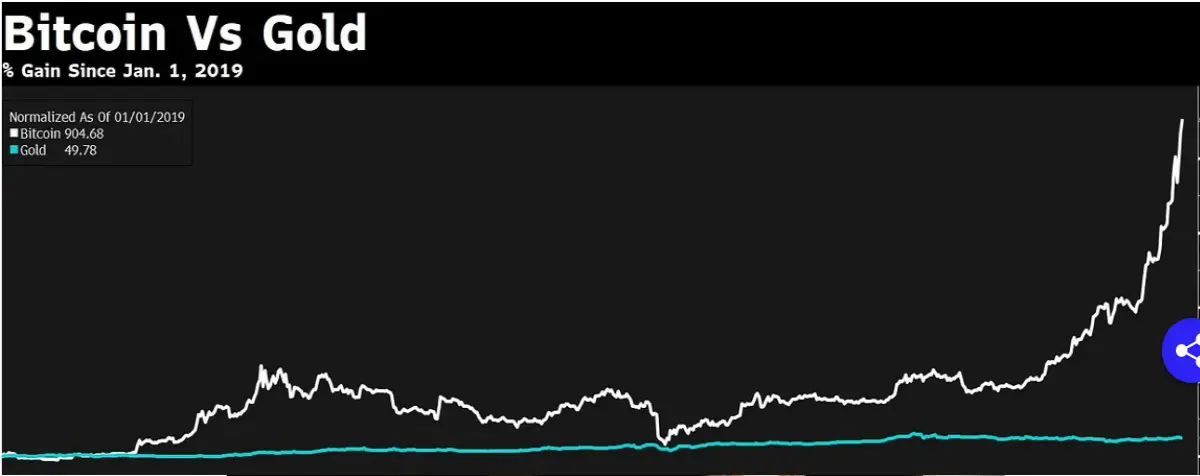
Second, there are investors who are a bit conservative. They see bitcoin investment as a hedging option against the growing market inflation. Compare the appreciation of bitcoin and gold from the above illustration, the traditional asset. Investment in bitcoin has a much higher ROI than the investment in gold. Bitcoin’s value has increased like anything, while gold stayed consistent. So, Indians are losing the charm in gold and shifting towards bitcoin. These investors are primarily the senior Indians who have witnessed the transition from a featured phone to a smartphone.
Opportunity Loss for Startups
Despite the regulatory vacuum in India, startups including fintech firms and cryptocurrency trading exchanges are quite optimistic about the growing usage and use-cases of cryptos and the underlying technologies.
The number of fintech, as well as cryptocurrency exchange startups in India, has skyrocketed. Today India is home to around 2174 FinTech startups that are active across the following business verticals.
Payments: 405
Lending: 365
WealthTech: 313
Personal Finance Management: 173
InsurTech: 111
RegTech + Cybersecurity: 58
Other Segments
It’s difficult to figure out individuals who do not use fintech applications like Paytm, PhonePe, or similar. These firms are eating away a considerable portion of the traditional banking system. The blanket ban will also mean discouraging the use of the underlying technologies of cryptos like blockchain, RippleNet, or Ethereum Network in their payment settlement process.
The emergence of crypto trading platforms like PCEX Member has transformed India into a global destination for crypto trading. They not just facilitate investors a platform to trade in BTC, ETH, or other assets, but also provide employment to a large chunk of the workforce and make a handsome contribution towards corporate tax. All this will only grow over time as cryptocurrency popularly gains momentum with a constructive legal framework. India’s fintech companies have evolved as role models on the global stage. Startups have expressed their satisfaction over the finance minister stand.
Revenue Loss for Governments
Banning cryptocurrency in India will cause a double loss (direct and indirect tax) for the state exchequer. Extending the current tax regime to include the income through cryptocurrency trading will help governments to collect direct taxes. Corporate direct taxes we already highlighted above.
Besides, the legitimacy will encourage the acceptance of bitcoin by merchants, which means they will able to sell products and take payments in the form of bitcoin or other cryptos. Some businesses have started it accepting, but still, the merchant’s acceptance remains in its infancy. The ban will derail the government’s dream of building a cashless economy to counteract black-money.
“Should India ban bitcoin?” Drop your comments…





