
In June 2011, a friend of yours stated the following: Bitcoin, a virtual currency, began at $1 two months ago and has since increased to $28. After hearing that from him or her, you were energized and quickly calculated the following: I would now have $28,000 if I had purchased $1,000 two months ago when Bitcoin was only one dollar.

You then inquired about how to purchase those cryptocurrencies after making your calculation in those few seconds.
You were shown how. Consequently, you purchased Bitcoin with $50,000 worth of your savings at the time. After that, you went to bed with your bitcoins in your wallet and dreamed of wealth, the kind of car, house, traveling, and new trips, among other things. The next morning, you checked your bitcoins to see how much you had gained. You discovered that your $50,000 had increased to $57,000. You expressed your gratitude to God, and you were overjoyed.
After the day was over, you went to bed content, and when you awoke, you checked to see how much more money you had earned and how much money you had left over. However, you discovered that the 57 thousand dollars had vanished, had lost all value, and were only worth 17 dollars.
What you saw left you in awe. You restarted your computer, restarted your modem, and even logged into the wallet from another device after locking and relocking it. However, the number remained unchanged until your friend called to inform you that the value of one bitcoin had plummeted to one cent. Even though the story above is tragic, there are many more horrible ones that actually happen.
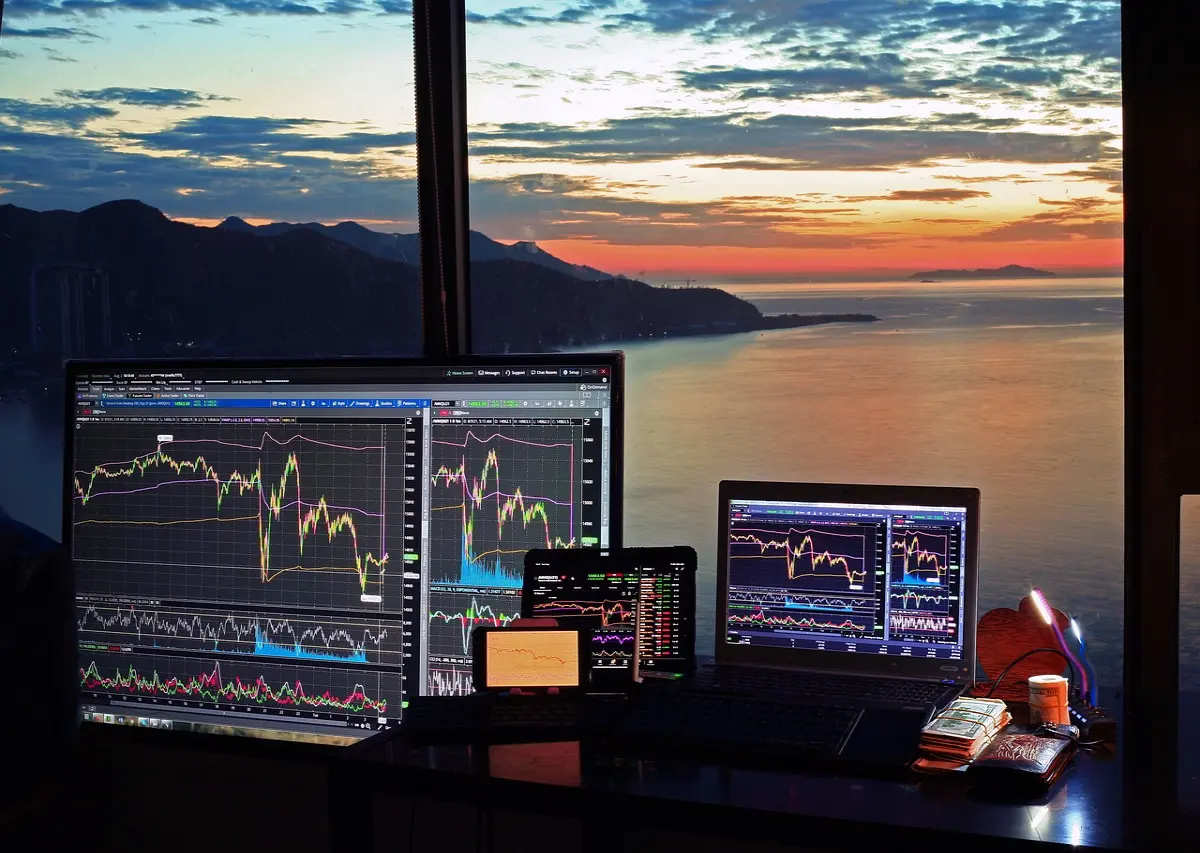
One of the most violent and volatile markets is the cryptocurrency market. Within a few hours or days, there are ups and downs with terrible gaps. For instance, the price of Bitcoin reached $1,000 in November 2013 and plummeted to just $170 14 months later in January 2015. To give you a better idea, just a year ago, in November 2021, the price of a single bitcoin reached 68 thousand dollars. However, just a few days ago, the price plummeted to just 15 thousand dollars.
These changes don't just happen to Bitcoin; they also happen to other cryptocurrencies. We need to slow down and ask some important questions because we are in the plunge phase, or one of the worst times for the cryptocurrency market. Examples of these questions include:
Why do prices of cryptocurrencies fluctuate so significantly? Who is in charge of them? How can we track industry insiders to predict market movement? And foremost: When is the best time to enter the digital currency markets and invest? Which is the most effective approach to investing?
We have witnessed a dramatic decline in the value of cryptocurrencies over the past few months and weeks as a result of a number of factors including the global economic climate, rising inflation, economic recession, and the fact that the majority of central banks worldwide, led by the US Federal Reserve, have adopted raising interest rates. Other factors include a series of market turmoils, such as the collapse of Terra Lab, which issued Luna and its stable currency USTC.
In addition to the tendency of Russia to prohibit digital currency trading at the beginning of 2022, specifically prior to the Russian war on Ukraine. Investors are moving away from high-risk assets like cryptocurrencies in favor of safer havens in such a bleak global economic climate.
As a result, this was reflected in the prices of digital currencies, which have already fallen continuously for a whole year. Particularly in November 2021, when the price of the most important and well-known digital currency, Bitcoin, reached $ 65,000,
The aforementioned factors caused the market to continue falling until FTX, the crypto empire founded by Sam Bankman-Fried, collapsed a few days ago. Particularly, after Binance, the world's largest digital currency platform, made an offer to acquire the troubled FTX platform and then withdrew within 24 hours.

The cryptocurrency industry was rocked by this. The market fell even further after FTX declared bankruptcy.
Supply and demand have an impact on cryptocurrency prices, just like they do on fiat currencies. Therefore, users' fear and withdrawal from the market as a result of the FTX platform's implosion led to an increase in supply and a decrease in prices.
Another group of investors waits for such catastrophes to occur before entering the market and purchasing.
Buy the dip is an old investment strategy used by these seasoned investors. Because it has the potential to provide an answer to a question that may be on the minds of many people at the moment, it is necessary to slow down with such a strategy in this instance. Isn't it a chance to buy and invest at a discount if the market plummets?
We will discover that the "buy the dip" strategy provides an explanation for this circumstance... What exactly does this strategy merely imply? Look, buying a dip simply and briefly entails purchasing an asset after its price has fallen. As a result, the idea is that investors and traders see the asset's falling price as a profitable deal because it won't last forever. It is only natural that its value will eventually begin to recover and that its price will rise once more.
As a result, market crashes are regarded as an appropriate time for them to enter the market and purchase at a discount in the hope of making a profit when the market recovers.
However, investors and traders face the challenge of estimating the downward trend when implementing this strategy, despite the possibility of significant gains.
The strategy is based on the idea that price drops are just temporary outliers that will eventually get better. But what if they aren't sporadic outliers?
The issue is that not every asset that has decreased in value has presented a good opportunity for purchase. This indicates that we will lose and may be required to keep the losing asset until the trend reverses if we miscalculated the downward trend and the asset we purchased continues to decline, for instance. Timing and the direction of the market must be monitored.
This won't happen unless we know everything that's going on, so when we make a decision, it's based on solid information. Now, if we wanted to put the buy the dip strategy into a few simple words, they would read as follows:
Buying occurs when the market as a whole is selling, not when it is overbought. If you carefully examine the display, you will notice two things in this chart: The price of Bitcoin is represented by the black curve above it, and the number of wallets that contain at least one Bitcoin is represented by the orange curve below it. The movement of the two curves reveals that whenever a collapse occurs and the price of Bitcoin falls, the number of wallets containing one Bitcoin rises. This indicates that there are individuals who employ the buy-the-dip strategy and step in to buy Bitcoin when prices fall, this period is referred to as accumulation.
So, Which party uses supply and demand control to raise and lower industry wages in accordance with its own interests?
To be clear, the market's top holders or industry whales; These are not the typical investors who would step in and purchase something for a thousand dollars or ten thousand dollars, for instance. No, those whales enter the market with millions—or even billions—of dollars in order to disrupt the market and generate revenue. Who exactly are those whales, you ask? These whales could be investment funds, large financial institutions, or even a single individual who oversees a sizable number of cryptocurrency portfolios. The person who owns at least 1,000 bitcoins, for instance, is what we call a whale, according to industry expressions.
The problem isn't always limited to large whales; small fish can make a lot of money following the movements of whales using the whale alert tool, which monitors any movements in wallets that contain a lot of cryptocurrencies and have the potential to affect the market.
Once you knew that a wallet with $50 million in Bitcoin had moved its coins from a cold wallet to a trading platform, it became simple to predict how prices would change. How can that be? because this largely indicates that this quantity has been transferred for sale.
When the whales realized that their movements had been monitored and that investors and traders had been making investment decisions based on them, they devised deft ploys in which they moved a significant amount of their cryptocurrency to fool the market into believing that they were going to sell it. For instance, a shock wave struck the users, prompting them to sell.
However, they only wait for the price to fall below a predetermined threshold before making a purchase. As an example, rather than transferring the equivalent of 3,000 bitcoins to the platform, they withdraw those bitcoins from the platform to put them back in the wallet. This time, however, they put 3500 bitcoins into the wallet after the price falls and buys another quantity.
The truth is that they entered the market at a time when whales were making money and were naive.
In an effort to attract more and more customers, they were shaking up the market and raising prices. The value of Bitcoin at the time astonished him or her. They made the decision to buy, but they did so impulsively and without a thorough education or knowledge of the market's nuances.
He or she was under the impression that the prices would continue to rise after making the purchase; however, once the market has become saturated and the prices have reached a certain value, the whales begin to sell in order to obtain the profits that they had intended from the beginning.
I'm going to share with you some rules that you need to follow if you want to get into this business.

Only put money into it that you can afford to lose.
That is, we shouldn't buy or invest everything we have. Keep in mind that there are individuals whose entire possessions were converted into USTC currency, and the currency suddenly depreciated to zero.
They were negatively impacted by this, and some of them even took their own lives. Furthermore, a collapse of the currency is not the only way to lose everything. It is possible to hack millions of dollars, including your own. The platform might crash, like what happened to FTX a few days ago; therefore, you should only invest money that won't hurt your life.
Avoid emerging or trending currencies
You might come across people who predict that a certain coin, which is worth one cent, will reach $100 or $300. You'll get to know a lot of those people. Run away from them when this happens. This kind of currency was designed to defraud and collect the most dreamers of quick wealth, who end up in trouble and lose the cash.
Meep an eye on the major currencies.
Keep an eye on the major currencies—also known as the top 10—when making decisions. Don't take a chance investing in currencies that are still not well-known for their ability to withstand turbulent times because these currencies have seen many ups and downs since they first appeared and are still solid.
Diversify your investment portfolio
While Bitcoin may have piqued your interest and you may be tempted to put all of your money into it, it is more prudent to diversify your currency portfolio in order to steer clear of any potential market volatility in the currency in which you have invested all of your money.
■Last Rule:You can earn crypto from completing tasks + surfing ads.....join it from here😉👇(i will really appreciate it )
https://www.coinpayu.com/?r=Jake8a
Finally,I hope that you found this post valuable😊
Don't forget to follow me here on publish0x🙂😉






