During a bull market, almost everyone is looking for the same thing: the next token that could outperform Bitcoin, the next narrative that could attract liquidity, or the next opportunity capable of producing life-changing returns.
But there is one uncomfortable truth that receives far less attention:
Making money in crypto is only valuable if you can keep control of it.
Every market cycle brings new users, rising prices, increased speculation, and a wave of scams designed to exploit excitement and urgency. The higher portfolio values climb, the more attractive crypto holders become to attackers.
The biggest threat is not always an advanced technical exploit. In many cases, it is a small mistake made during a rushed moment.
Here are seven security habits that may matter more than finding the next 100x asset.
1. Treat Your Recovery Phrase as the Master Key
Your wallet recovery phrase is not a password that can simply be reset.
Anyone who obtains it can usually restore the wallet and move the assets without needing your hardware wallet, phone, email account, or approval.
Avoid storing a recovery phrase in:
- Phone screenshots
- Cloud storage
- Email drafts
- Messaging applications
- Password managers connected to the internet
- Notes saved on a computer
The safest principle is simple:
A recovery phrase should remain offline from the moment it is created.
Writing it on paper is better than saving it digitally, although paper can be damaged by fire, water, humidity, or physical wear. Some users therefore choose more durable offline backup methods.
Regardless of the material used, the essential goal is the same: prevent unauthorized access while ensuring that the backup remains recoverable.
2. Never Enter a Recovery Phrase Because a Website Tells You To
One of the most common crypto scams begins with a message that creates fear or urgency.
Examples include:
- “Your wallet must be verified.”
- “Your account has been compromised.”
- “Your wallet needs to be synchronized.”
- “Claim your airdrop before the deadline.”
- “Upgrade your wallet to avoid losing access.”
The user is then directed to a website that asks for a recovery phrase.
A legitimate wallet application may require a recovery phrase during the official wallet restoration process. However, random websites, customer support agents, Telegram administrators, and direct messages should never need it.
Once a recovery phrase is entered into a malicious website, the wallet should be considered compromised.
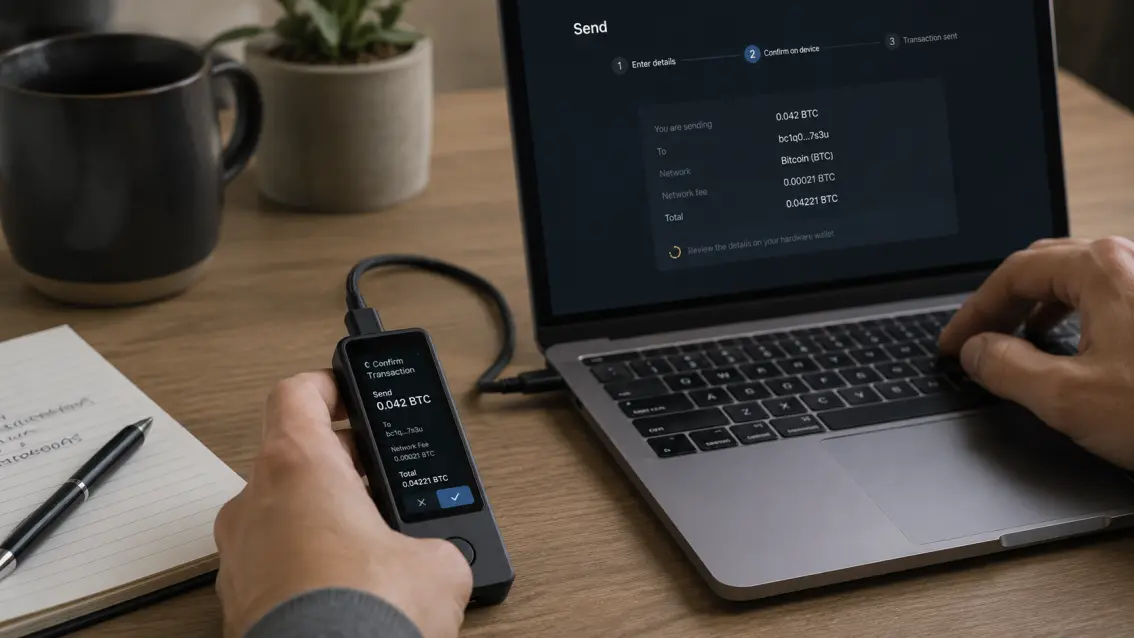
3. Verify Addresses on the Trusted Device Screen
Clipboard malware can detect when a cryptocurrency address is copied and replace it with an attacker’s address.
The substituted address may look similar, especially if users check only the first and last few characters.
Before confirming a transaction:
- Compare the address shown in the wallet application with the address displayed on the hardware wallet screen.
- Check more than the first and last four characters.
- Confirm the network and asset being used.
- Review the amount before approving the transaction.
The computer or phone should not be treated as the final source of truth. The trusted hardware device screen is designed to provide an independent confirmation point.
This verification may feel repetitive, but repetition is exactly what makes it effective.
4. Use a Small Test Transaction
When sending a large amount to a new address, first send a small test transaction.
This can help identify:
- Incorrect recipient addresses
- Unsupported networks
- Exchange deposit requirements
- Missing destination tags or memos
- Wallet compatibility issues
- User-interface mistakes
After the test transaction arrives successfully, verify that the receiving address is still correct before sending the remaining amount.
A test transaction does not eliminate every risk, but it can reduce the chance of losing a large balance because of one avoidable mistake.
Transaction fees may make this inconvenient on some networks. Even so, the cost of a small test is often insignificant compared with the potential cost of an irreversible error.
5. Separate Trading Funds From Long-Term Holdings
Keeping every asset in one wallet or on one exchange creates a single point of failure.
A more resilient structure may include:
- An exchange account for active trading
- A hot wallet for decentralized applications
- A separate wallet for long-term holdings
- An isolated wallet for experimental protocols and new token approvals
This separation limits the damage if one account, application, or wallet is compromised.
For example, connecting a long-term storage wallet to an unknown decentralized application exposes assets that did not need to be exposed.
Convenience encourages users to combine everything. Security often requires deliberate separation.
6. Review Token Approvals
Interacting with decentralized applications often requires granting smart contracts permission to use tokens.
Some approvals are limited to a specific amount. Others may allow a contract to access an unlimited quantity of a token.
Users frequently approve permissions and then forget about them.
Over time, a wallet may accumulate approvals connected to:
- Decentralized exchanges
- NFT marketplaces
- Yield protocols
- Bridges
- Experimental applications
- Abandoned platforms
If a previously trusted contract is compromised, an active approval may become a risk.
Regularly reviewing and revoking unnecessary permissions can reduce wallet exposure. However, users should access approval-management tools through verified sources rather than links received in unsolicited messages.
7. Create a Recovery Plan Before You Need One
Many users focus on preventing theft but ignore another important question:
What happens if you lose access to your device?
A practical recovery plan should consider:
- Where the backup is stored
- Whether the backup is readable
- Whether the recovery procedure has been tested safely
- Whether trusted family members know that a plan exists
- How assets could be recovered during an emergency
- What happens if the owner becomes unavailable
A recovery plan should not expose the recovery phrase unnecessarily. It should provide clear instructions without creating an easy path for theft.
Security is not only about keeping attackers out. It is also about ensuring that legitimate access remains possible.
The Bull Market Security Trap
Bull markets create a dangerous psychological environment.
As prices rise, users may:
- Transfer funds more frequently
- Connect to more applications
- Chase unfamiliar opportunities
- Respond quickly to time-sensitive offers
- Ignore warning signs because they fear missing out
Attackers understand this behavior.
They do not always need to break encryption or compromise a blockchain. They only need to convince a user to approve the wrong transaction, reveal a recovery phrase, install fake software, or visit a fraudulent website.
The technology may be sophisticated, but the attack often targets human attention.
Security Is a Process, Not a Product
Buying a hardware wallet does not automatically make someone secure.
Using an exchange with two-factor authentication does not eliminate risk.
Writing a recovery phrase on metal does not help if the words are exposed to another person.
Security depends on a complete process:
- Protect the recovery phrase
- Verify addresses
- Separate funds
- Review permissions
- Use official software
- Avoid urgency-driven decisions
- Maintain a recovery plan
No single tool can compensate for unsafe behavior.
The strongest security system is usually a collection of simple habits followed consistently.
Final Thoughts
The crypto market rewards opportunity, but it punishes carelessness.
A successful trade can produce a temporary profit. A strong security process protects the ability to benefit from that profit over the long term.
Before searching for the next high-return asset, it may be worth asking a more important question:
If your portfolio increased ten times in value tomorrow, would your current security setup be strong enough to protect it?
Which crypto security habit do you think most users ignore?






