
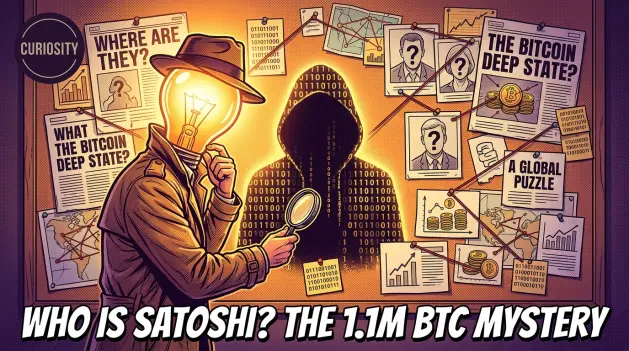
On October 31, 2008, the publication of a whitepaper signed by Satoshi Nakamoto forever altered the trajectory of the global financial system. The document presented Bitcoin, a peer-to-peer electronic cash network immune to censorship and free from central authorities. However, behind the revolutionary technology based on cryptography and decentralized consensus, a mysterious void remained: who, after all, is the individual or group behind this pseudonym? Nakamoto's decision to disappear in 2011 transformed their name into the greatest urban legend of the modern digital age, fueling conspiracy theories, journalistic investigations, and ongoing debates both inside and outside the crypto community.
The Most Popular Theories Regarding the True Identity of Bitcoin’s Creator
Over the years, several prominent figures from the cypherpunk movement and computer science have been identified as potential authors of the Bitcoin protocol. Among the most frequently cited suspects is Hal Finney, the first programmer to receive a BTC transaction directly from Nakamoto and one of the early pioneers of public-key cryptography. Another name constantly linked to the legend is Nick Szabo, creator of Bit Gold, whose proof-of-work consensus mechanism served as a conceptual foundation for Bitcoin. A similar thesis points toward Adam Back, inventor of Hashcash and current CEO of Blockstream, due to structural similarities between his original work and the network's mining design. While most of these experts strongly deny authorship, the linguistic precision, coding style, and multidisciplinary expertise exhibited on the BitcoinTalk forum suggest Satoshi was either a brilliant scholar or a highly talented consortium.
The Enigma of the Intact Wallets and the Financial Impact of 1.1 Million BTC
On-chain metrics indicate that the original wallets mined by Satoshi Nakamoto contain approximately 1.1 million Bitcoins, which have remained completely untouched since the earliest days of the network. This unspent supply represents one of the largest concentrations of wealth on the planet and stands as a double-edged sword for the ecosystem. On one hand, the fact that Satoshi has never cashed out a single Satoshi demonstrates an unyielding philosophical commitment to decentralization and the original vision of the currency as a public good. On the other hand, the mere existence of this multi-billion dollar balance introduces an element of systemic risk: if these wallets were suddenly moved for any reason, the global crypto market could face a severe liquidity shock and intense panic-driven volatility.
Scheduled Disappearance as a Guarantee for Network Decentralization
Satoshi Nakamoto’s decision to walk away from the project in April 2011, sending a final message to Gavin Andresen stating that they had "moved on to other things," was a crucial strategic maneuver for Bitcoin’s survival. Had the network retained a central leadership figure, the ecosystem would have remained permanently vulnerable to regulatory pressure, legal subpoenas, and social engineering attacks. By relinquishing control and transferring source code governance to the open community of developers and miners, Satoshi ensured that Bitcoin became genuinely decentralized. The absence of an accessible founder converted the protocol into collective property for humanity, where consensus rules strictly supersede individual or corporate preferences.
The Creator’s Legacy and the Future of the World’s Leading Cryptocurrency
The persona of Satoshi Nakamoto transcends mere technology; it embodies a fundamental paradigm shift regarding the nature of value, monetary issuance authority, and individual financial privacy. As Bitcoin solidifies its standing as a strategic reserve asset for major financial institutions, global corporations, and even sovereign nations, the relevance of its mythical creator remains untouched. History demonstrates that Nakamoto’s ultimate achievement was not merely engineering a flawless consensus architecture, but possessing the philosophical discipline to disappear, allowing the creation to mature without human reliance. The ecosystem will continue watching the blockchain for any sign of activity from those ancestral coins, fully aware that Bitcoin’s greatest strength lies in its creator belonging to everyone and no one simultaneously.
What is your personal theory on the true identity of Satoshi Nakamoto? Do you believe these original Bitcoin reserves will ever be moved?
Disclaimer: The content provided in this article is strictly for educational and informational purposes and should not be construed as financial advice, investment recommendations, or endorsement of any kind. Always conduct your own research (DYOR) before making any investment decisions in the crypto asset market.





