All financial markets can be roughly divided into primary and secondary markets, and the emerging Web3 market is no exception.
While you are in the secondary market staring at K-line charts, waiting for a pullback, or chasing a trend, another group of people seems to always secure “cheaper chips” much earlier. By the time the hype builds and you see the project on the trending search list for the first time, they are already positioned.
The difference often lies not in speed, but in Information and Rules: You are participating in the volatility of the public market; they are participating in the “Source” before liquidity opens.

What is the Web3 Primary Market?
Essentially, the Web3 primary market is the early stage of a project before it enters public circulation. You can think of it as the “Seed Round / Early Round” — completing fundraising and allocation before the hype spreads.
Many projects in hot sectors have high price volatility and fast rhythms. Once liquidity opens and attention floods in, prices can undergo dramatic changes. However, we must be clear: Early access does not equal guaranteed profit. It is more like a high-uncertainty “early experiment” — it could go to the moon, or it could crash to the ground.
If the opportunity exists, why are most people stuck grinding in the secondary market? It usually comes down to three barriers:
1. Information Asymmetry When does a good project open? How do you get in? Who gets the allocation? You often don’t know; by the time you do, it’s usually the tail end of the opportunity.
2. High Entry Barriers Complex processes, numerous requirements, and scattered paths mean many opportunities are not accessible just because you want to participate.
3. Security Anxiety Who holds the money? Will it be misappropriated? How do I verify it? Can I exit? This is the most realistic fear for ordinary people.
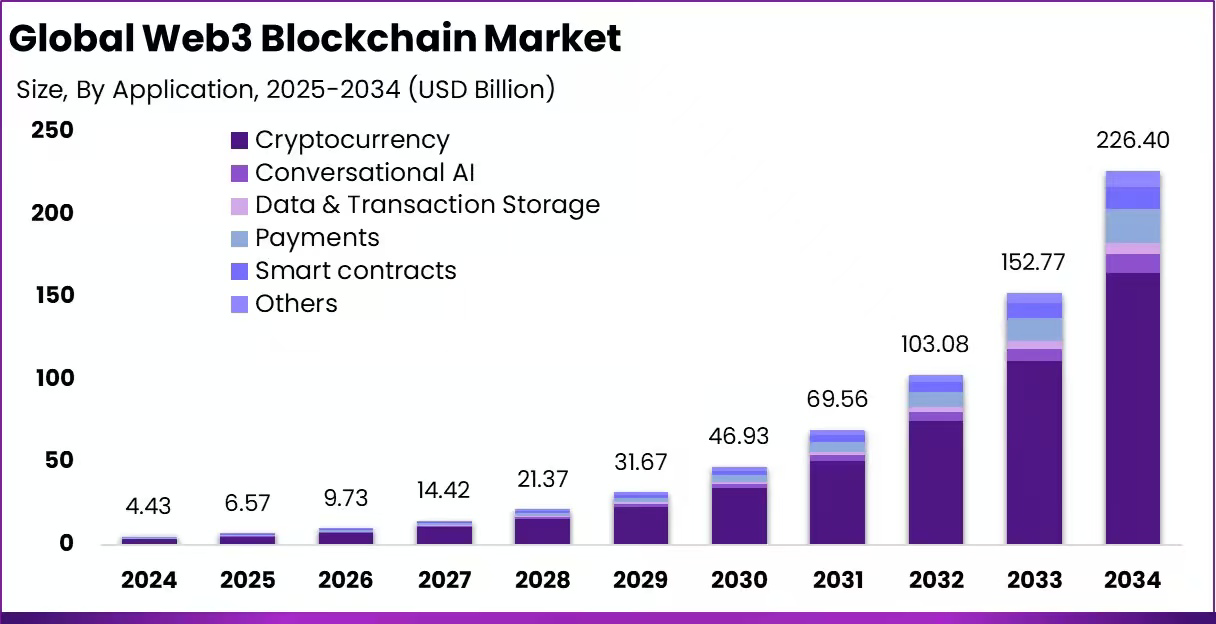
Data Insight: The Web3 market is growing rapidly. It is projected to grow from $6.57 billion in 2025 to approximately $226.4 billion by 2034, with a Compound Annual Growth Rate (CAGR) of 48.2% during the forecast period.
What is the Correct Way to Participate?
Here are three principles for newcomers:
- Principle 1: You must be able to see where the money is. You should be able to check the status of funds at any time, rather than transferring them to an individual and leaving it to fate.
- Principle 2: You must be able to exit at any time. You are participating in an opportunity, not signing a deed of sale. The more transparent the process and the clearer the exit, the better.
- Principle 3: Trust Rules, Not Words. If something relies entirely on “Bro, trust me,” you should not trust it.
It is precisely because of these pain points that we developed a new solution: Can we make the “early access channels” previously reserved for institutions more transparent, lower the barrier to entry, and standardize the process?
This is the opportunity behind Synbo’s birth. Synbo is positioned as “Infrastructure that moves the early participation process on-chain and manages it through rules.” Its core is not shouting slogans, but solving the three things I just mentioned: Where is the money? Who can move it? How do I exit? How do I verify?
When participating in early opportunities, you fear two things most:
- Access: You can’t get in (the barrier to the primary market).
- Safety: You can’t control the funds (the security issue after investment).
Synbo: Constraining On-Chain Investment with Rules
In the infrastructure built by Synbo, you can connect your crypto wallet to the primary market gateway. You verify the URL, the chain, and the authorization. Note that on-chain wallets utilize encryption technology that is currently secure against even quantum computing threats.
Once the system detects your funds on-chain and you subscribe to official primary market information, Synbo lets you know in real-time: What you are participating in, what the rules are, and what risks you are taking.
I must emphasize: The primary market is characterized by high volatility and high uncertainty. It is not an ATM; it is early participation in high-risk projects. Your strategy should be: Small amounts, trial and error, and diversification — never “all-in.”
A Critical Question for Investors
“What if the project underperforms, or even fails?”
Synbo’s solution is the Position Proof Mechanism. This ensures that key roles involved in decision-making must bear corresponding responsibilities, creating a structure of “Incentives meet Constraints.” It forces the party raising funds within the system to pay the price for mistakes, thereby better protecting investors.
Conclusion
Let’s leave it here for today, but remember this: The primary market is not about hand speed; it is about infrastructure rules and risk management.
When others are still anxious about minor fluctuations in the secondary market, you should at least know: How the game at the source is actually played.
Follow Synbo to learn more about participating in the primary market and the future of the Web3 crypto ecosystem.